2026
𝐒𝐀𝐓𝐔𝐑𝐃𝐀𝐘, 𝟎𝟕 𝐌𝐀𝐑𝐂𝐇 𝟐𝟎𝟐𝟔: 𝟒𝟎 𝐅𝐮𝐭𝐮𝐫𝐞 𝐋𝐞𝐚𝐝𝐞𝐫𝐬 𝐖𝐞𝐥𝐜𝐨𝐦𝐞𝐝 𝐢𝐧𝐭𝐨 𝐔𝐍𝐀 𝐅𝐢𝐣𝐢’𝐬 𝐉𝐮𝐧𝐢𝐨𝐫 𝐃𝐢𝐩𝐥𝐨𝐦𝐚𝐜𝐲 𝐓𝐫𝐚𝐢𝐧𝐢𝐧𝐠 𝐏𝐫𝐨𝐠𝐫𝐚𝐦𝐦𝐞 𝟐𝟎𝟐𝟔
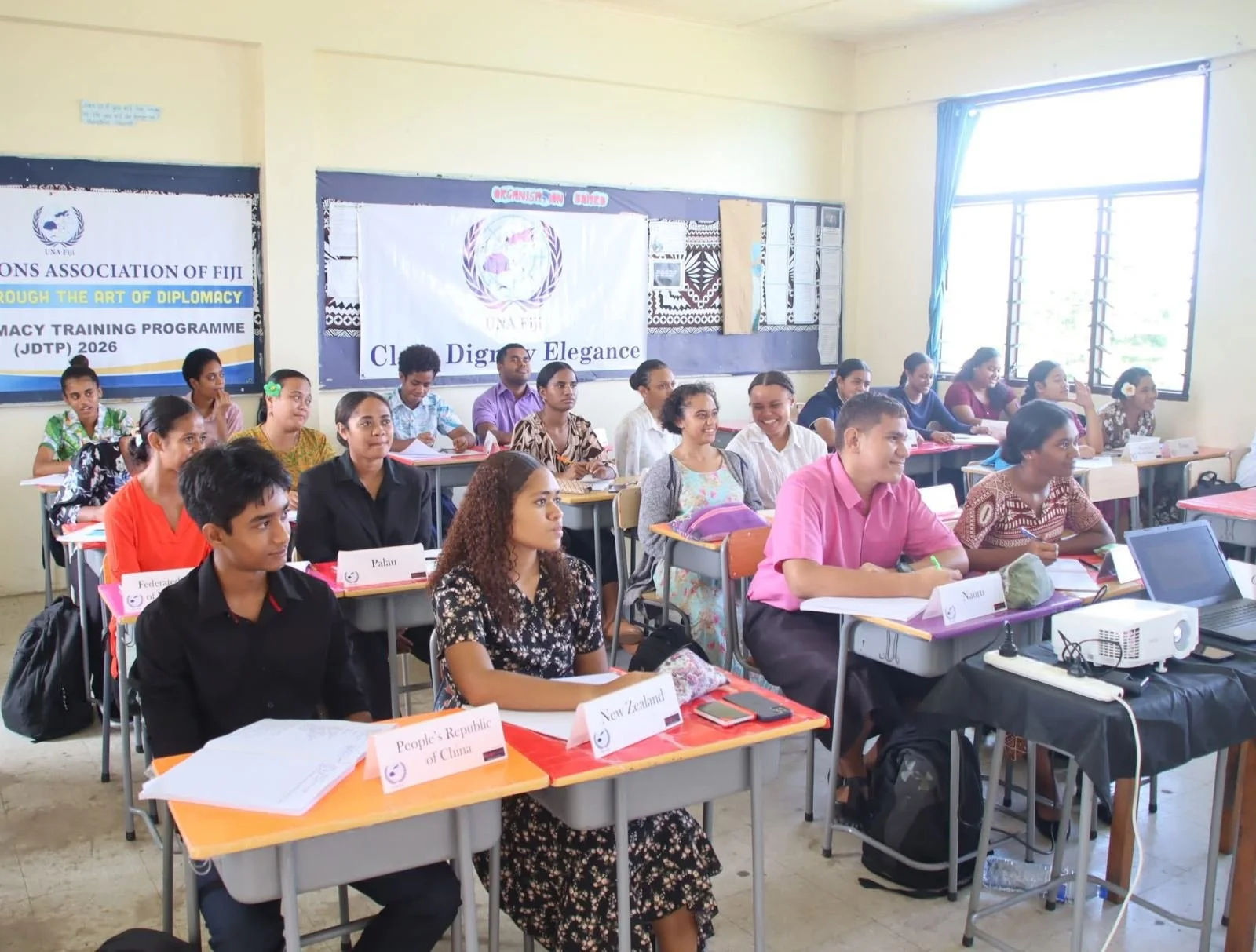
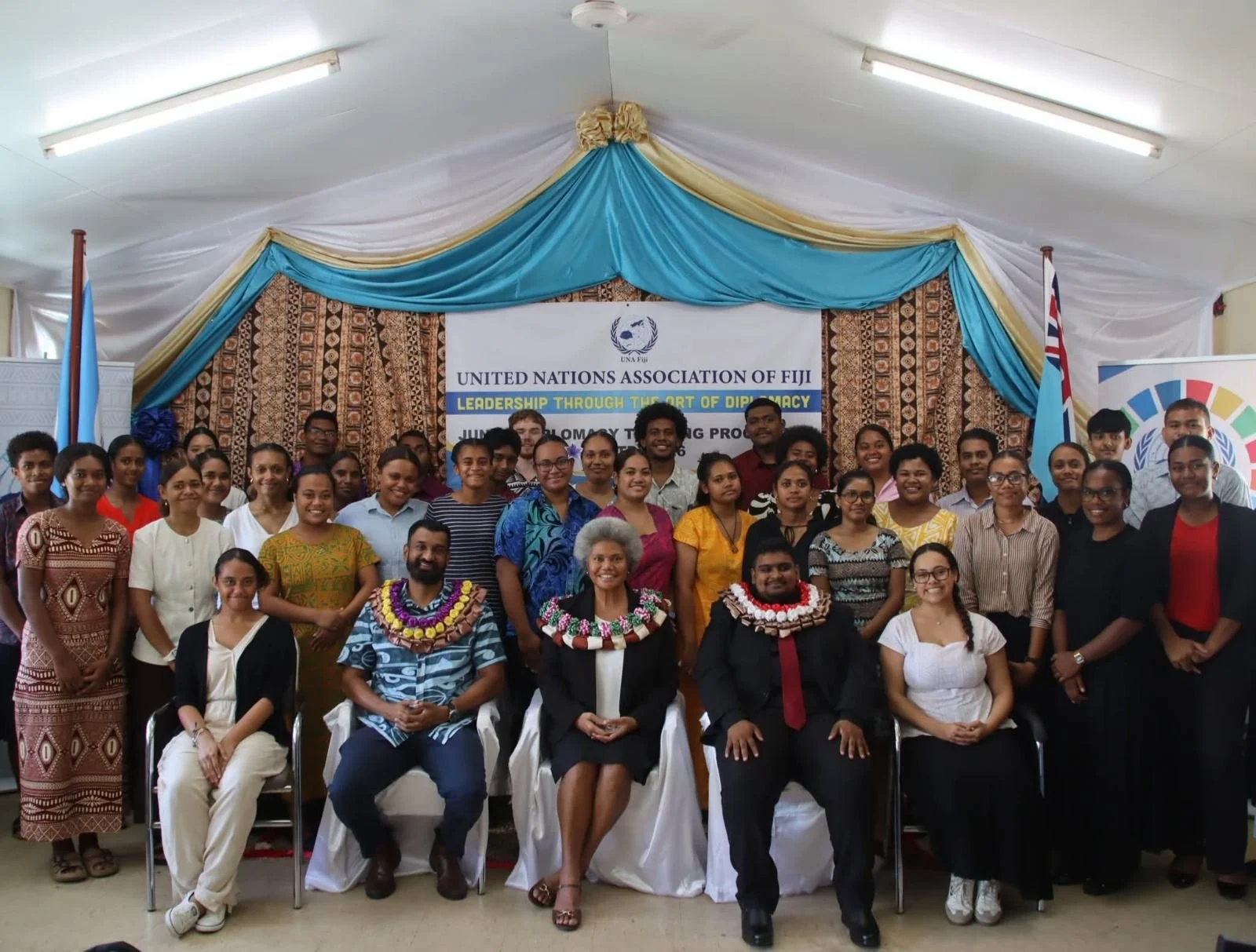
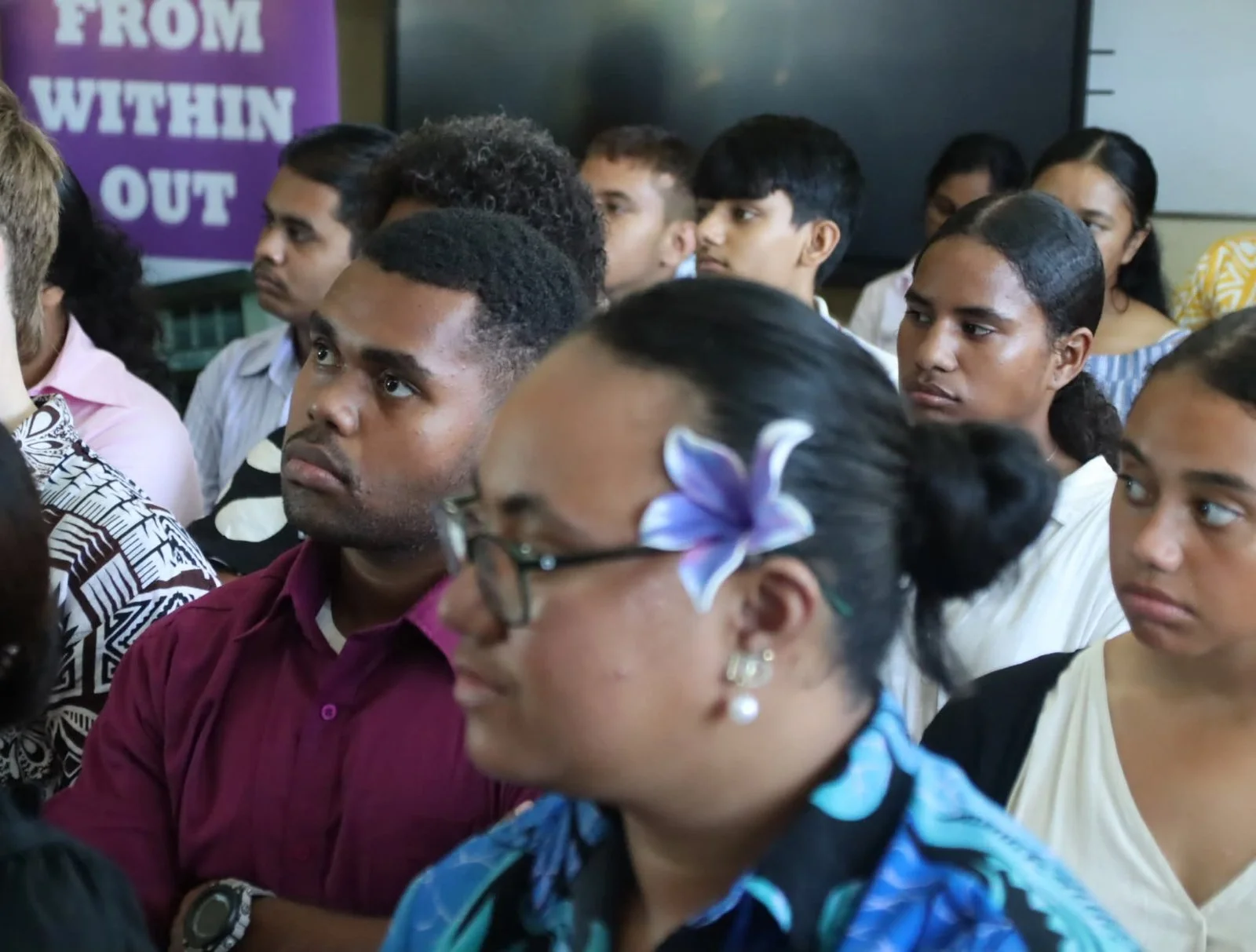
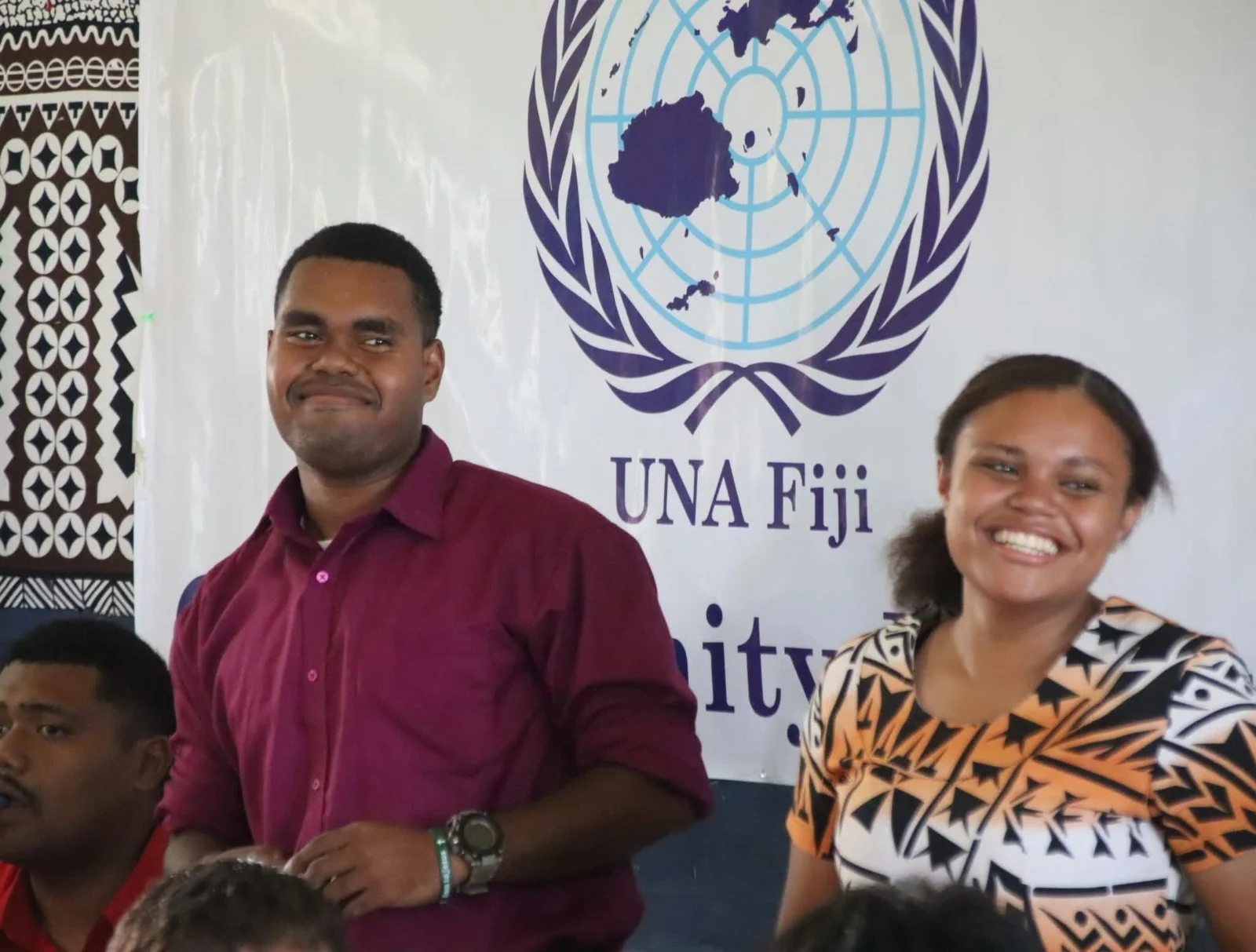
The United Nations Association of Fiji (UNA Fiji) successfully held the Orientation Ceremony for the Junior Diplomacy Training Programme (JDTP) 2026 on Saturday, 7 March 2026, formally welcoming a new cohort of 40 young participants who will undertake the programme over the coming months.
The ceremony brought together distinguished guests, advisors of the Association, members of the Executive Committee of UNA Fiji, programme facilitators, alumni, and the newly selected trainees.
The event marked the beginning of a leadership journey designed to introduce young people to diplomacy, international relations, negotiation, and global citizenship.
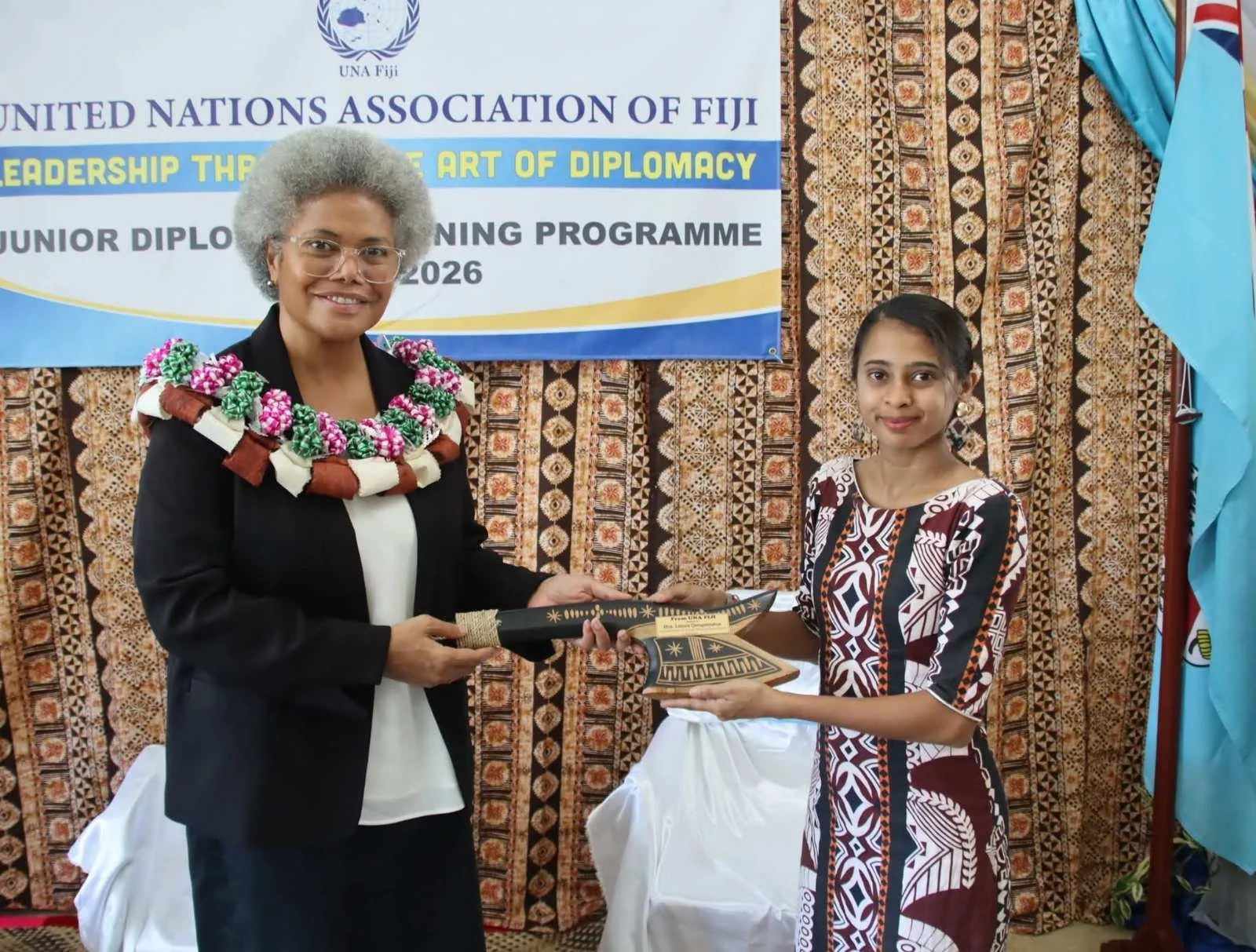
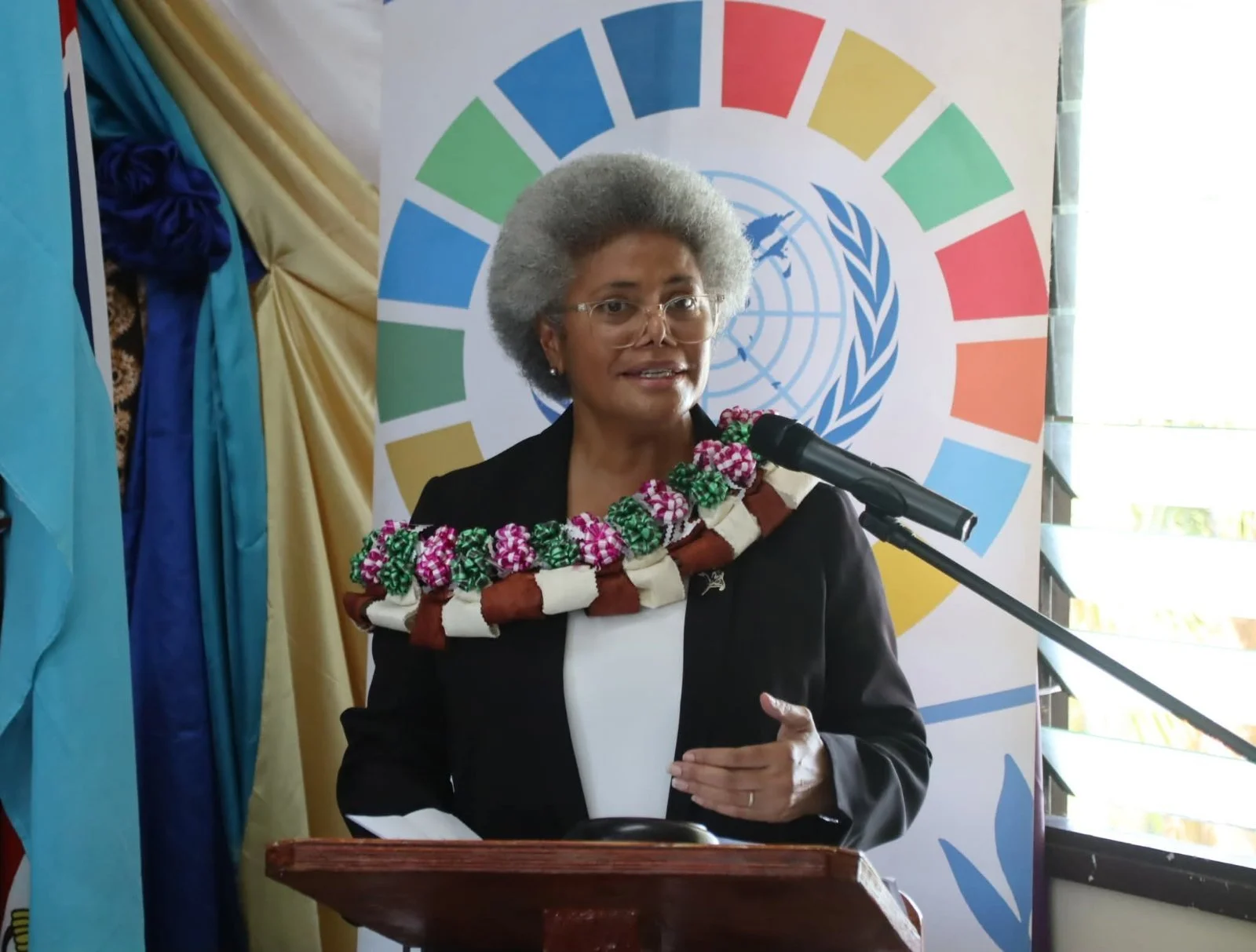
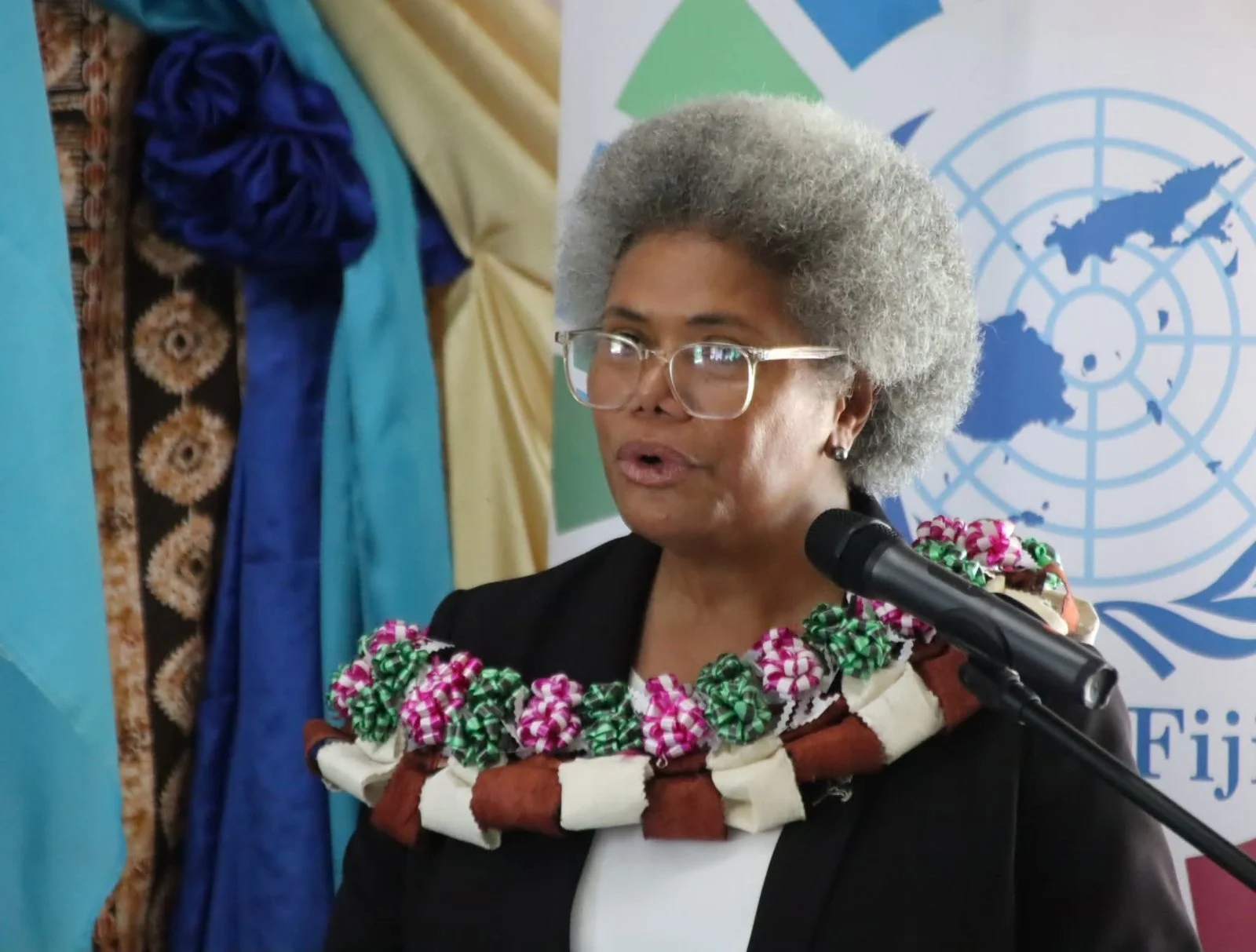
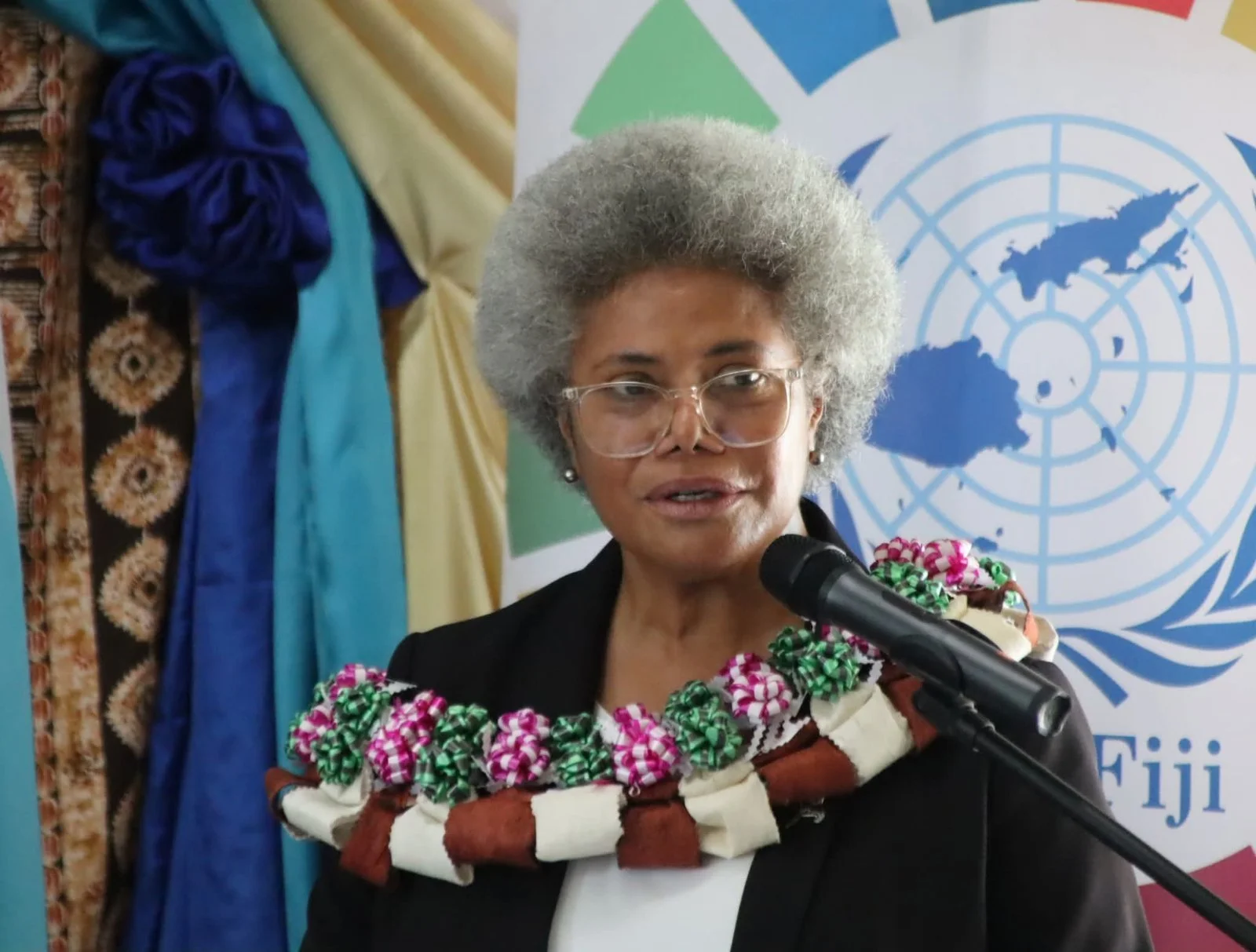
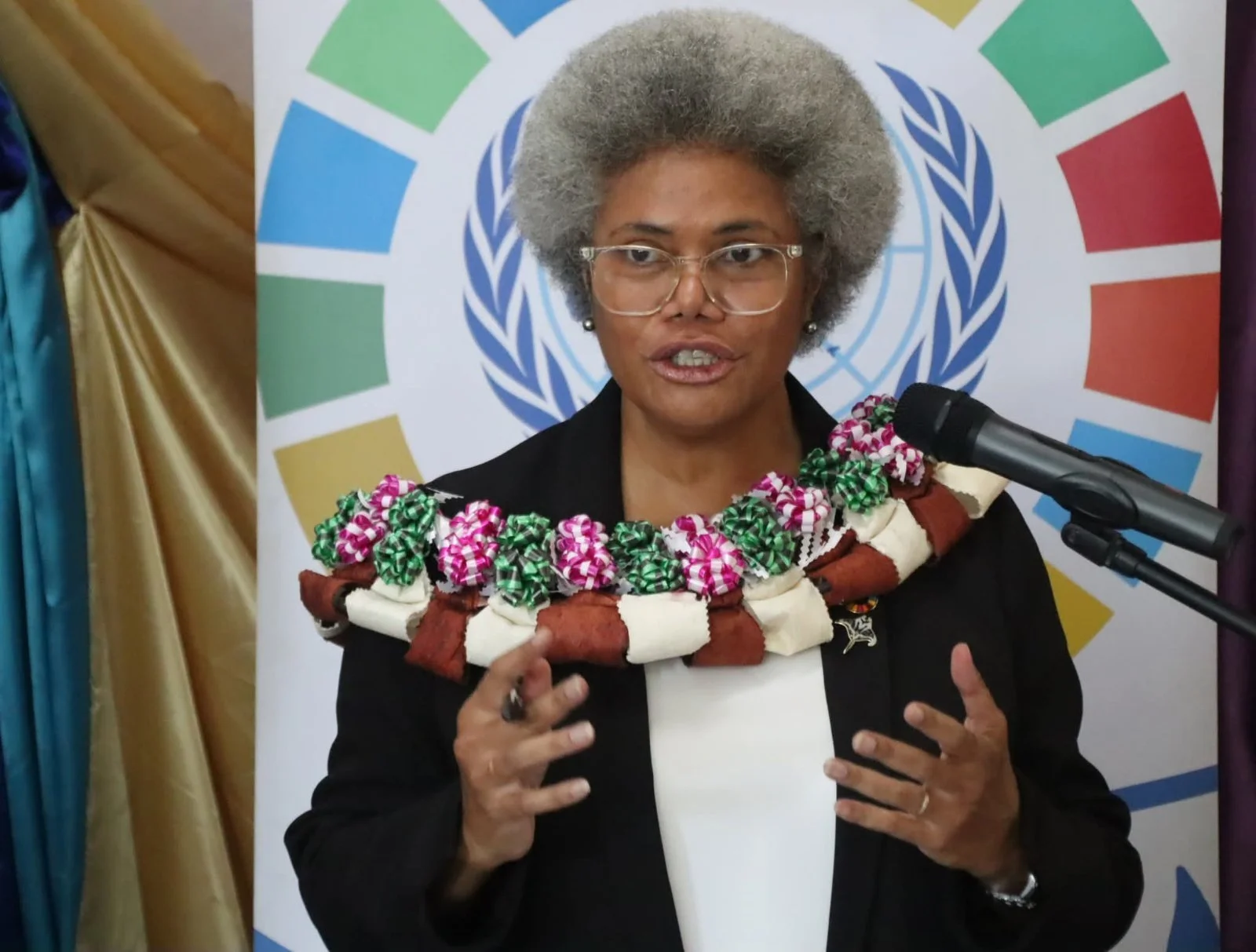
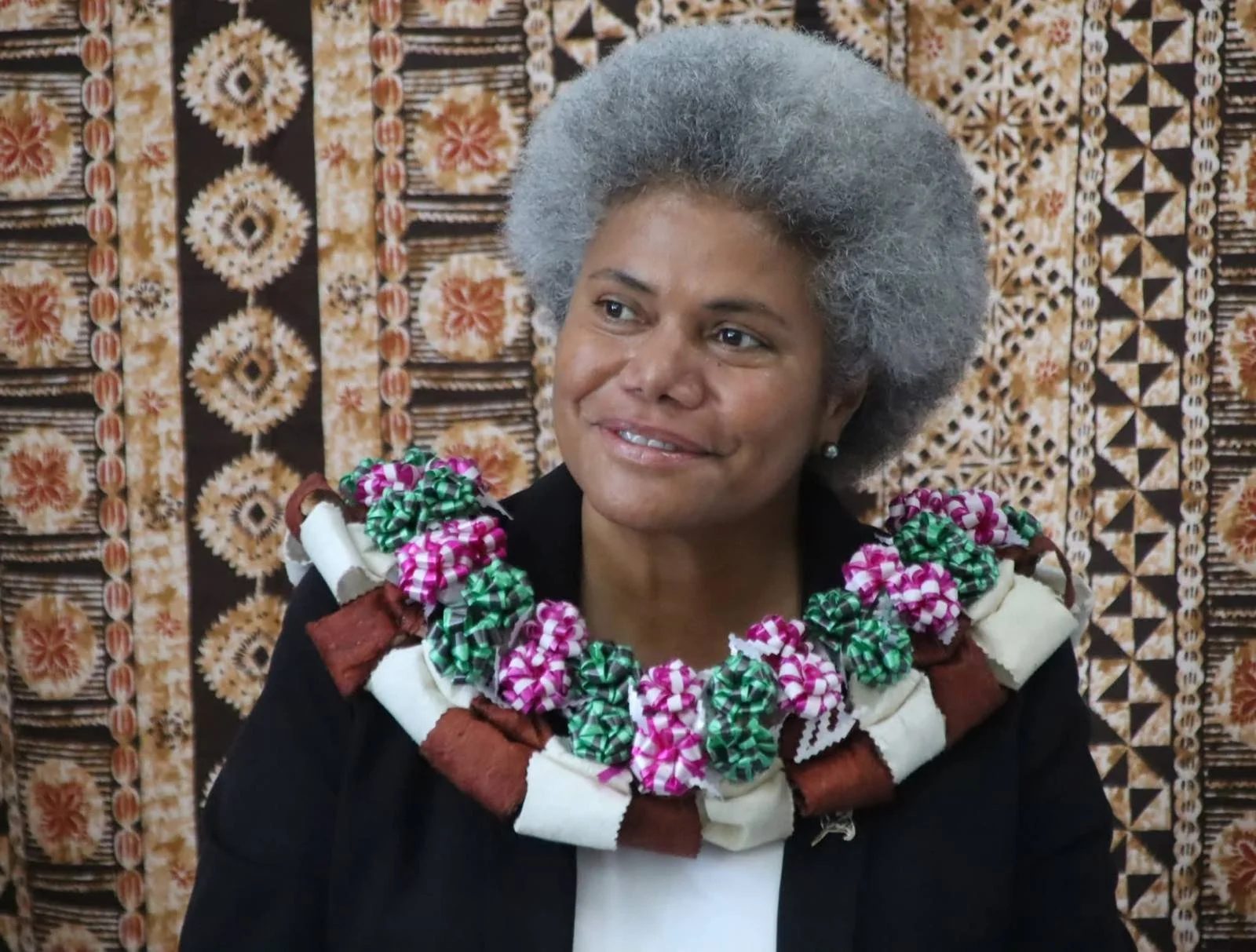
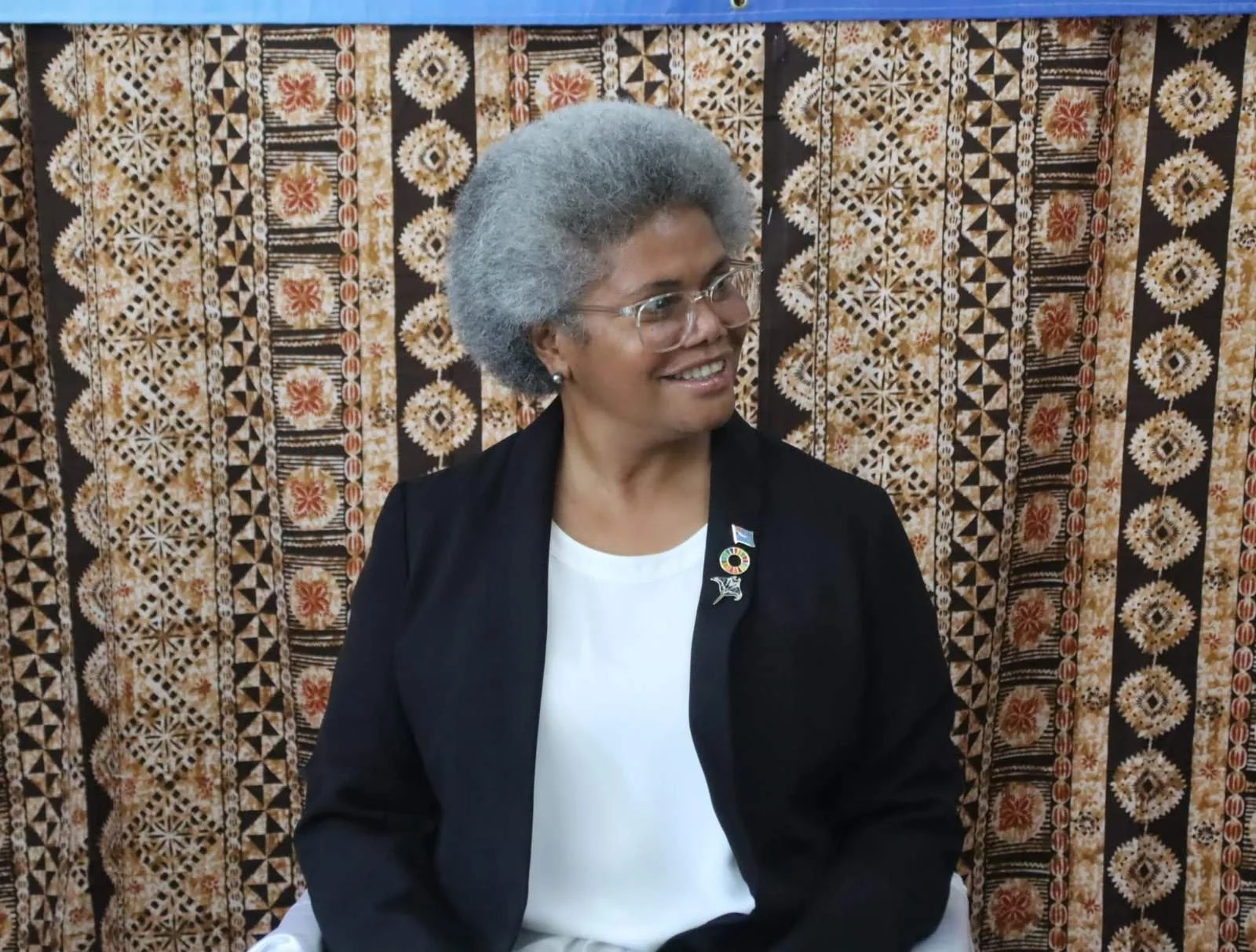
The programme was honoured by the presence of the Chief Guest, the Honourable 𝐌𝐬. 𝐋𝐞𝐧𝐨𝐫𝐚 𝐐𝐞𝐫𝐞𝐪𝐞𝐫𝐞𝐭𝐚𝐛𝐮𝐚, 𝐀𝐬𝐬𝐢𝐬𝐭𝐚𝐧𝐭 𝐌𝐢𝐧𝐢𝐬𝐭𝐞𝐫 𝐟𝐨𝐫 𝐅𝐨𝐫𝐞𝐢𝐠𝐧 𝐀𝐟𝐟𝐚𝐢𝐫𝐬 𝐚𝐧𝐝 𝐄𝐱𝐭𝐞𝐫𝐧𝐚𝐥 𝐓𝐫𝐚𝐝𝐞 𝐚𝐧𝐝 𝐃𝐞𝐩𝐮𝐭𝐲 𝐒𝐩𝐞𝐚𝐤𝐞𝐫 𝐨𝐟 𝐭𝐡𝐞 𝐏𝐚𝐫𝐥𝐢𝐚𝐦𝐞𝐧𝐭 𝐨𝐟 𝐭𝐡𝐞 𝐑𝐞𝐩𝐮𝐛𝐥𝐢𝐜 𝐨𝐟 𝐅𝐢𝐣𝐢.
In her keynote address, the Honourable Assistant Minister shared reflections from her experience in foreign affairs, diplomacy, and parliamentary leadership.
Speaking to the trainees, Ms. Qereqeretabua highlighted Fiji’s important role in international diplomacy and its growing presence in global discussions on climate change, ocean governance, regional security, and sustainable development.
She noted that Fiji continues to serve as a key voice for the Pacific in international forums, ensuring that the concerns and priorities of small island developing states are heard on the global stage.
She also emphasised the importance of regional solidarity within the Pacific, noting that Pacific Island countries must increasingly work together to strengthen their collective voice in a rapidly changing global environment.
According to the Honourable Assistant Minister, young people have an important role to play in shaping the future leadership of the country and the region.
Encouraging the trainees to actively participate in public life, she spoke about the importance of community engagement, leadership, and democratic participation. She noted that individuals who aspire to leadership must build credibility through meaningful service within their communities.
Drawing from her own experience in public service, Ms. Qereqeretabua also spoke about the importance of emotional intelligence, active listening, and cultural awareness in diplomacy.
She explained that diplomacy is not simply about representing national interests, but about understanding perspectives, building trust, and finding common ground between nations and communities.
Speaking on the eve of International Women’s Day, the Honourable Assistant Minister also addressed the experiences of women in leadership and diplomacy.
She acknowledged the challenges that women often face in professional and political spaces and encouraged young women present at the ceremony to pursue leadership roles with confidence and determination.
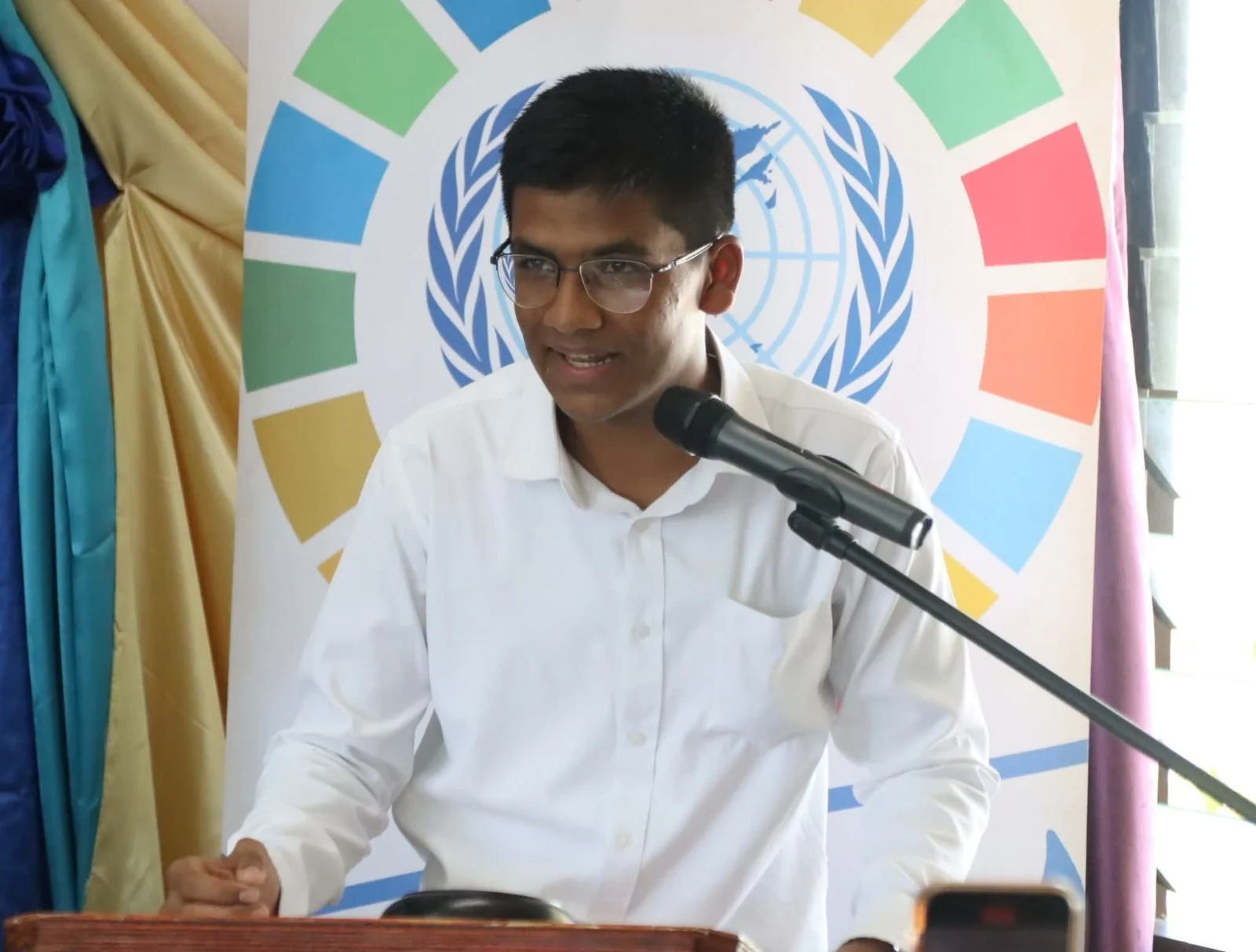
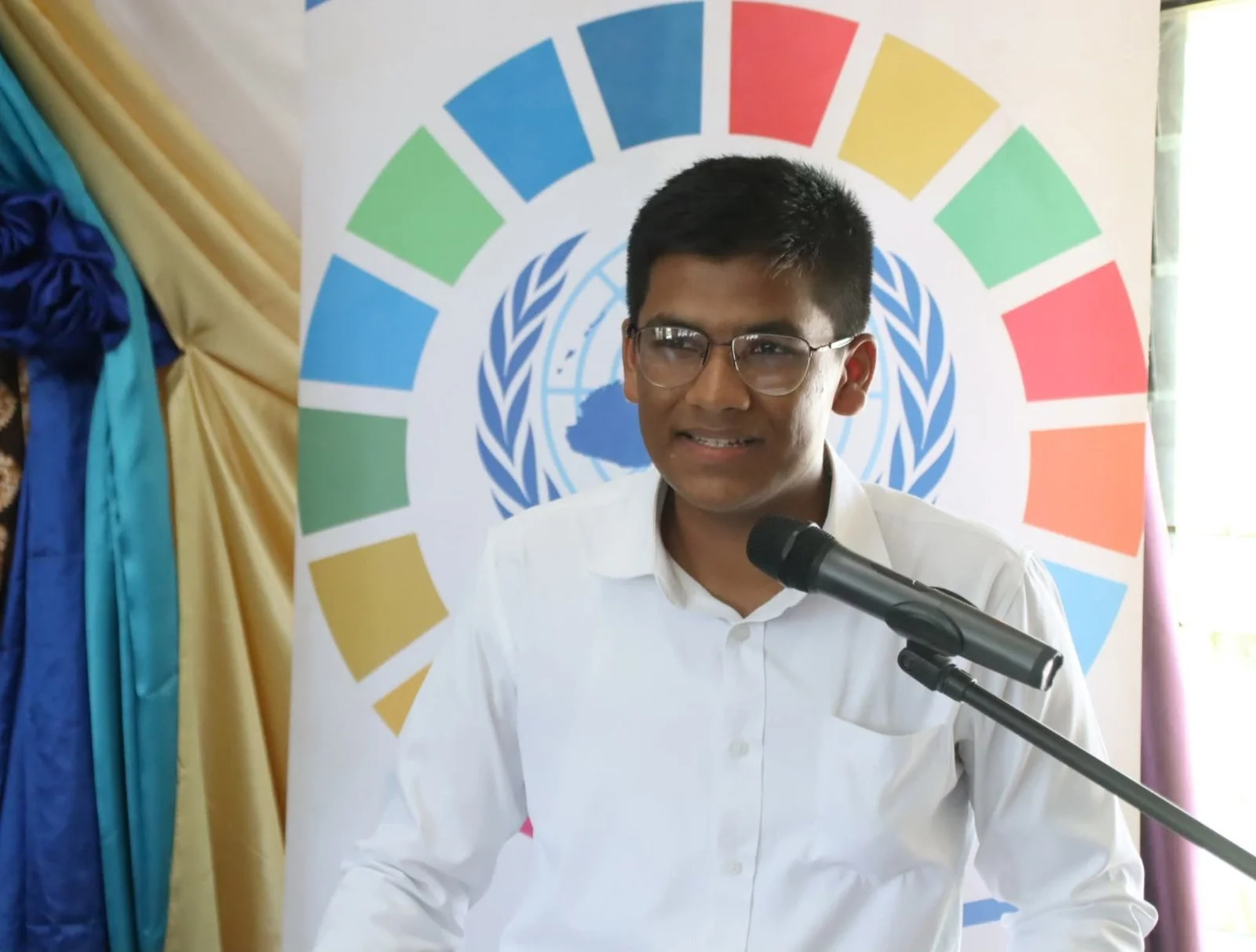
Earlier in the programme, the Vice President of the United Nations Association of Fiji, Mr. Vipin Maharaj, delivered the opening address, welcoming the trainees and guests to the Orientation Ceremony.
In his remarks, Mr. Maharaj spoke about the purpose of the Junior Diplomacy Training Programme as a platform designed to introduce young people to diplomacy and leadership while encouraging them to engage with issues affecting Fiji and the wider Pacific region.
He conveyed greetings on behalf of the Patron of UNA Fiji, His Excellency, Ambassador Amenatave Yauvoli; the Vice Patron, His Excellency, Mr. Tregor Albon Ishoda; and the President and Founder of the Association, Mr. Akmal Ali.
Mr. Maharaj acknowledged the longstanding contributions of Mr. Ali in establishing the organisation and supporting youth leadership development in Fiji and across the Pacific.
Reflecting on the progress of the Association, Mr. Maharaj highlighted several milestones achieved by UNA Fiji in recent years, including its recognition as the first organisation from a Pacific Island country to be formally registered with the World Federation of United Nations Associations (WFUNA). This recognition places Fiji within a global network of UNA’s committed to advancing the values and principles of the United Nations.
Mr. Maharaj also spoke about UNA Fiji’s participation in the European Union-funded programme titled Inclusive Climate Action for Resilience and Empowerment (ICARE), in which the Association participates as a Co-Applicant alongside the Fiji Disabled Peoples Federation and femLINKpacific, with the Rotary Pacific Water for Life Foundation serving as the Lead Applicant.
He noted that participation in such initiatives reflects the strong governance and institutional capacity maintained by the Association.
He further highlighted the organisation’s work at the community level, particularly in environmental conservation and climate resilience. Over the past several years, UNA Fiji has planted more than 39,000 mangrove trees along Fiji’s coastline in partnership with communities and organisations including the Outrigger Fiji Beach Resort in Sigatoka.
Mr. Maharaj noted that trainees of the Junior Diplomacy Training Programme will also take part in mangrove planting activities as part of their Community Impact Project.
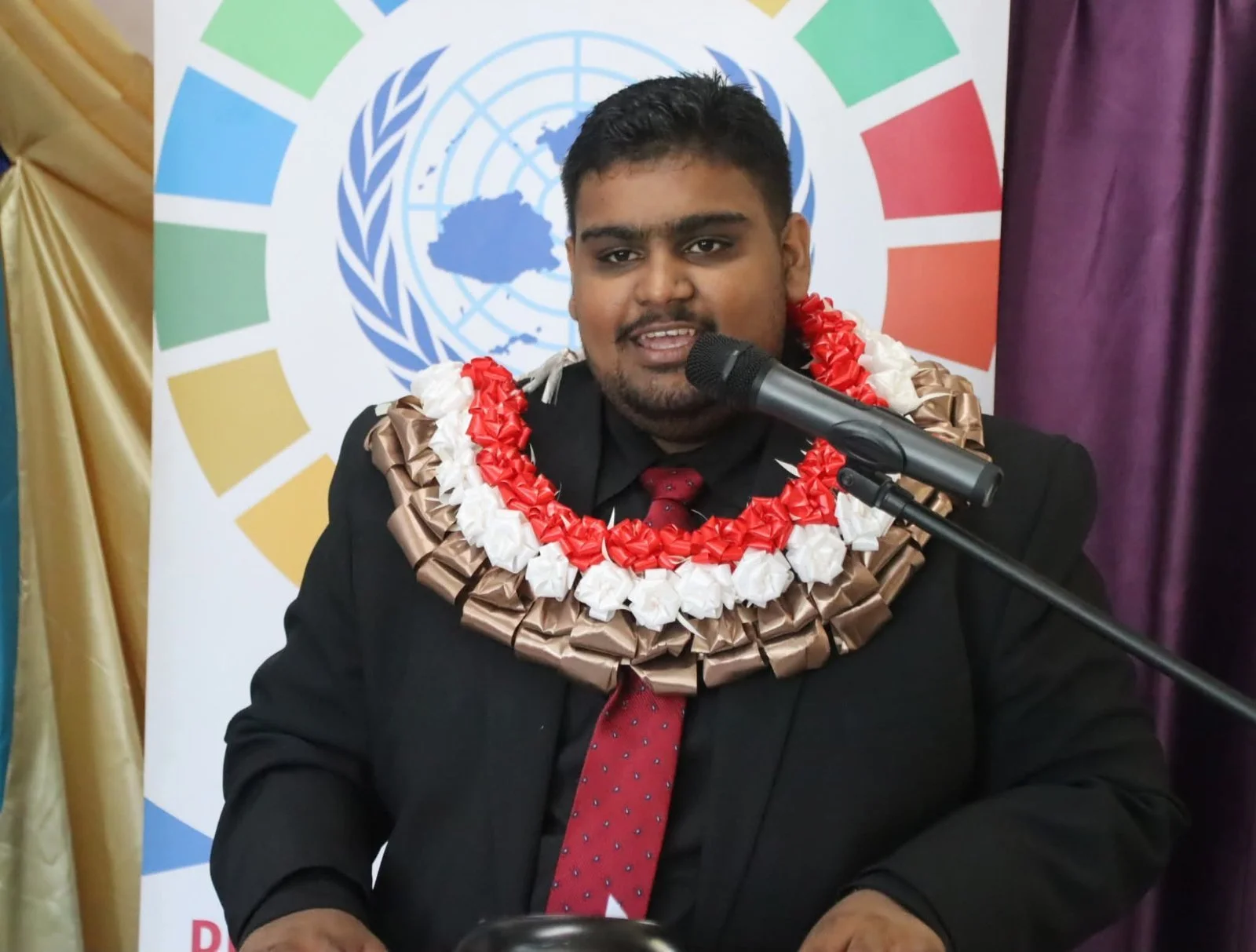
Representing the alumni of the programme, Mr. Zayne Keshwan, a graduate of the 2025 JDTP cohort and a Year 13 Prefect at Jai Narayan College, welcomed the new trainees and shared reflections from his experience in the programme.
Mr. Keshwan described the Junior Diplomacy Training Programme as a challenging yet rewarding experience that helps participants develop practical skills in public speaking, negotiation, research, diplomacy, and leadership.
He encouraged the new trainees to approach the programme with an open mind and a willingness to learn, noting that many of the most valuable lessons come from both the training sessions and the relationships built during the programme.
He also acknowledged the facilitators and coordinators of UNA Fiji for their commitment to mentoring young leaders and creating an environment where trainees are encouraged to grow both personally and professionally.
The ceremony concluded with a Vote of Thanks delivered by Mr. Rizwan Hussain, Financial Advisor of the United Nations Association of Fiji, who expressed appreciation to the Chief Guest, advisors, facilitators, partners, and trainees for their continued support of the Association’s work.
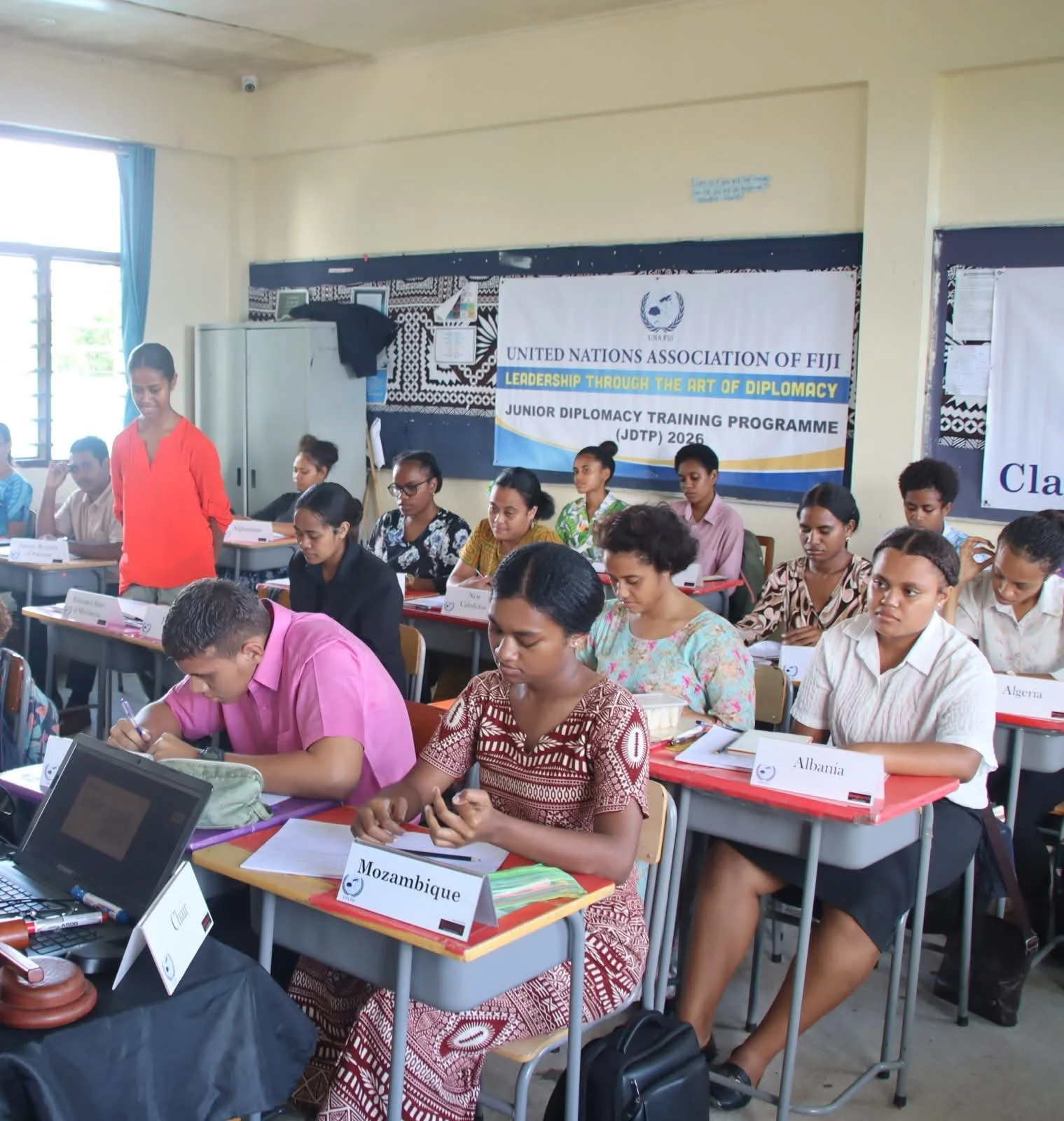
Following the formal proceedings, an orientation session was conducted to introduce the trainees to the work of the United Nations Association of Fiji and provide an overview of the Junior Diplomacy Training Programme and its expectations.
The Junior Diplomacy Training Programme remains one of the flagship youth initiatives of UNA Fiji. Through a series of training sessions and practical exercises, the programme aims to equip young people with the knowledge, skills, and confidence necessary to engage in diplomacy, leadership, and international cooperation.
By investing in the development of young leaders, the United Nations Association of Fiji continues to promote dialogue, international understanding, and responsible global citizenship among the next generation.
𝐖𝐢𝐭𝐡 𝐂𝐥𝐚𝐬𝐬, 𝐃𝐢𝐠𝐧𝐢𝐭𝐲 & 𝐄𝐥𝐞𝐠𝐚𝐧𝐜𝐞
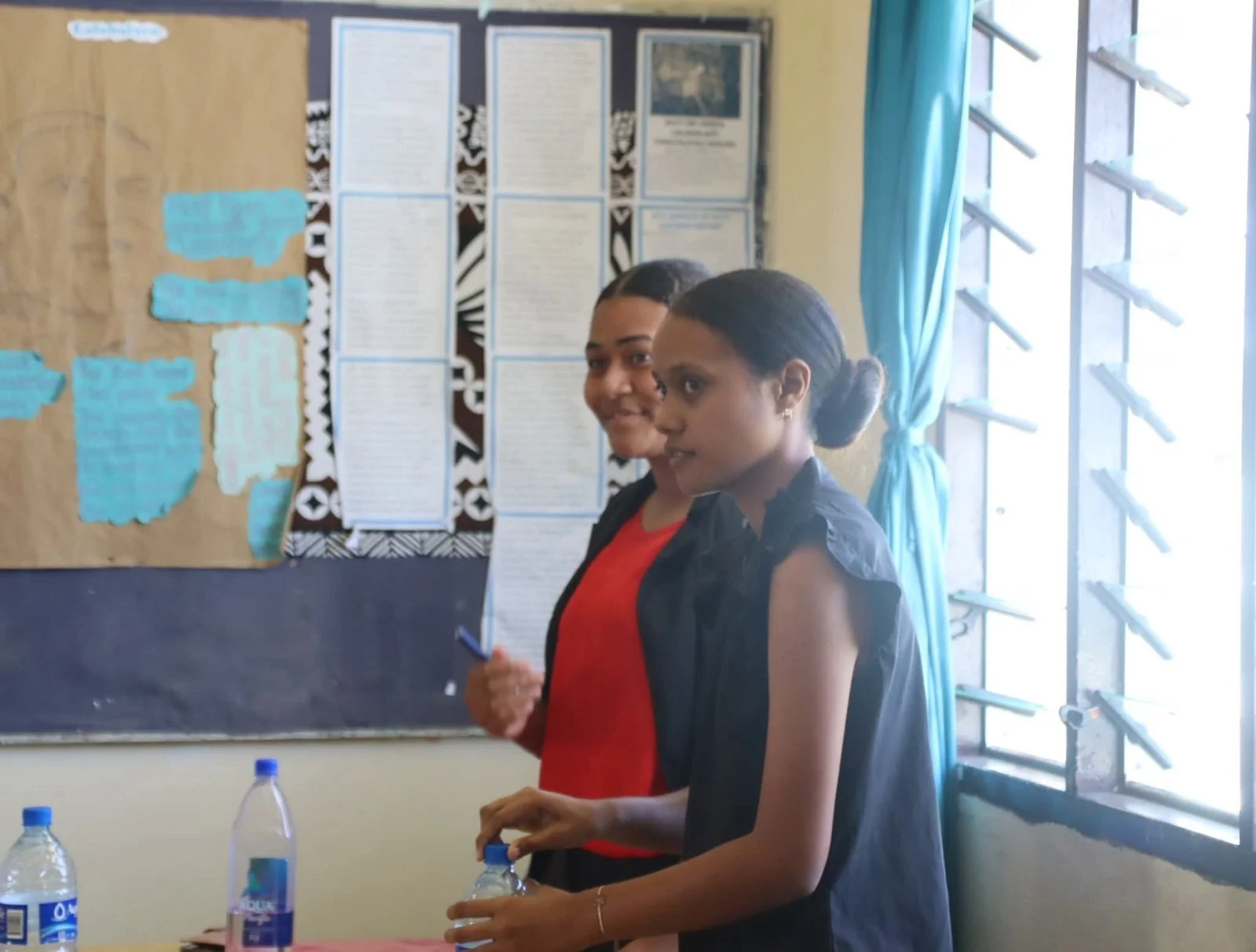
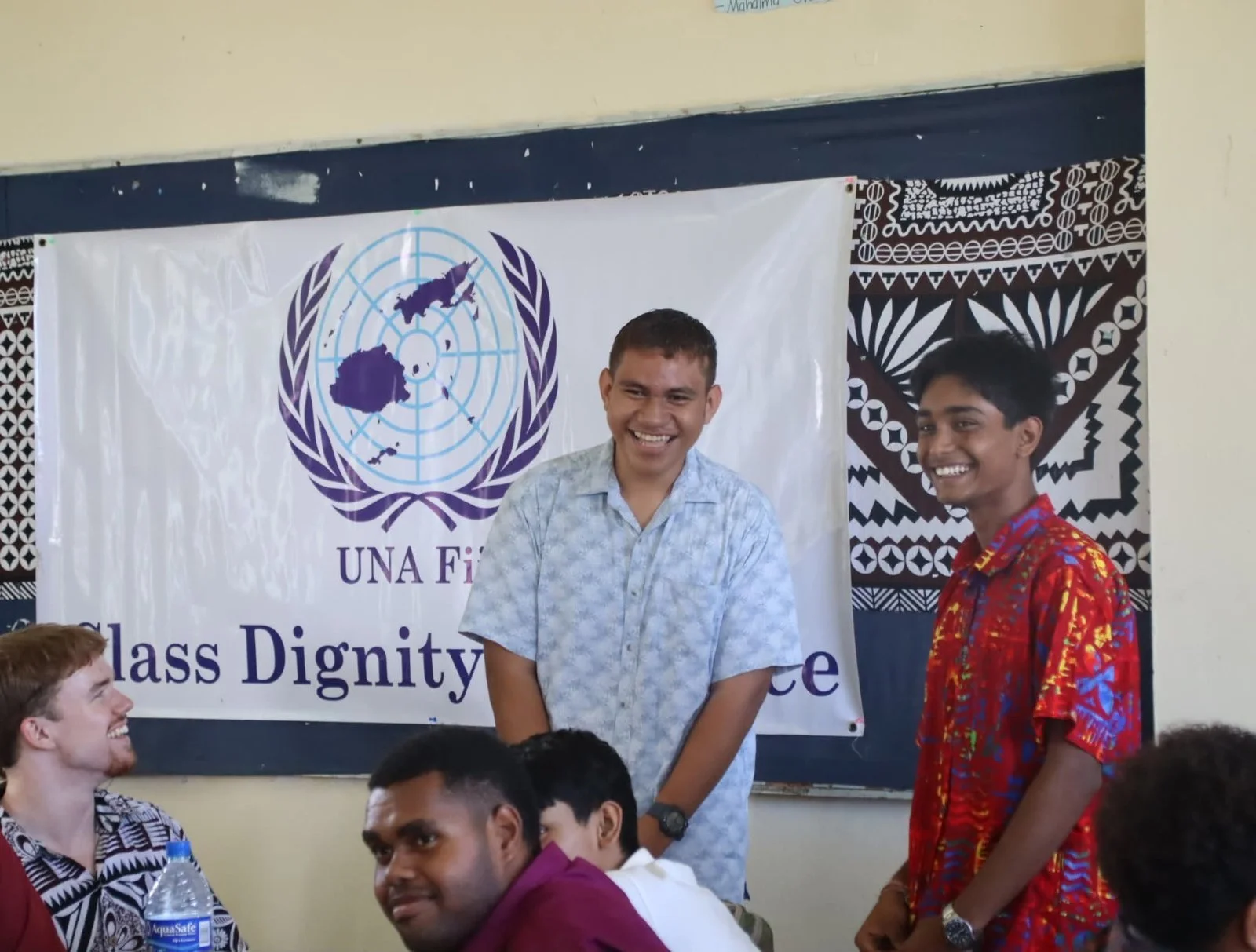
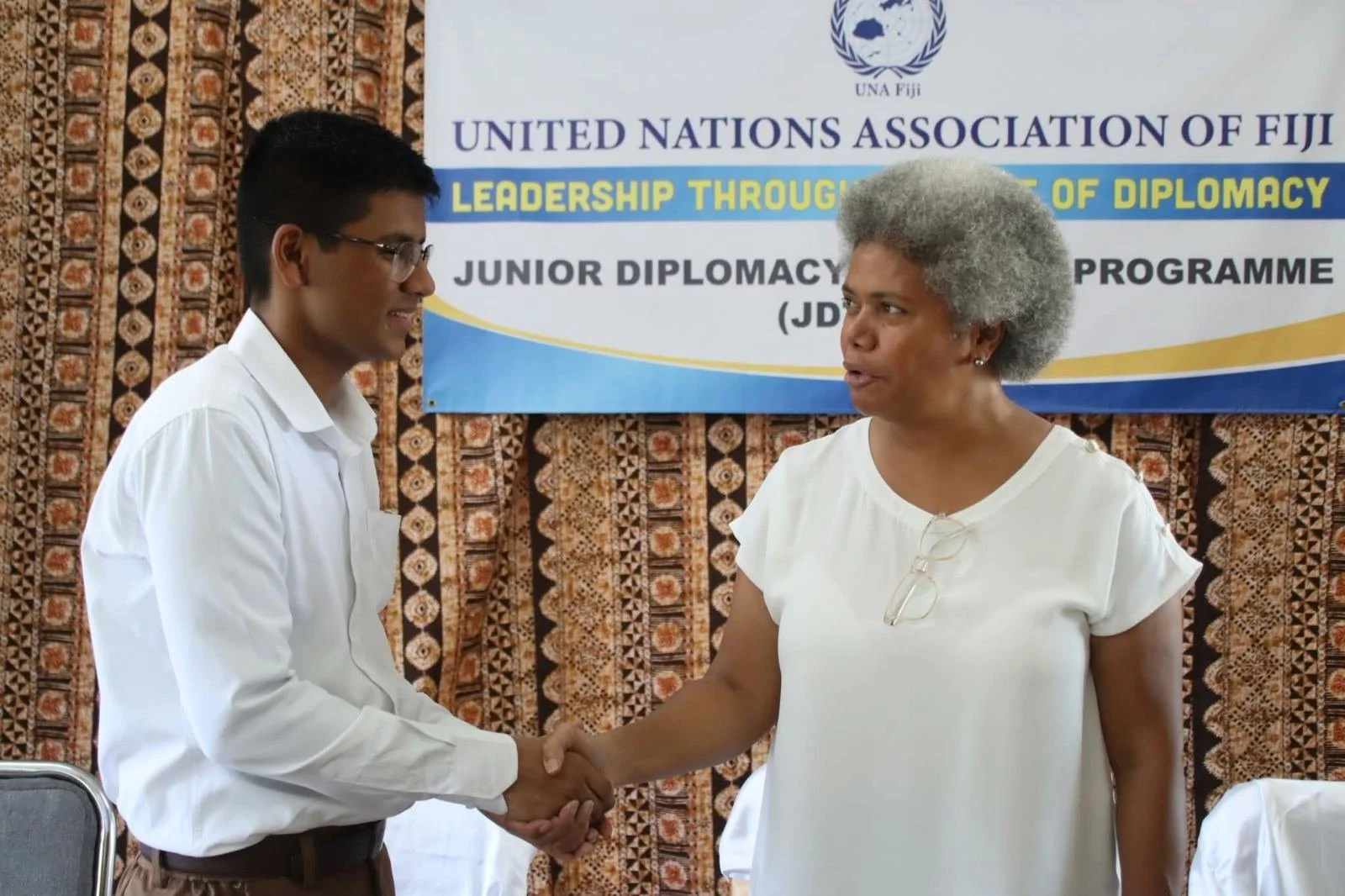
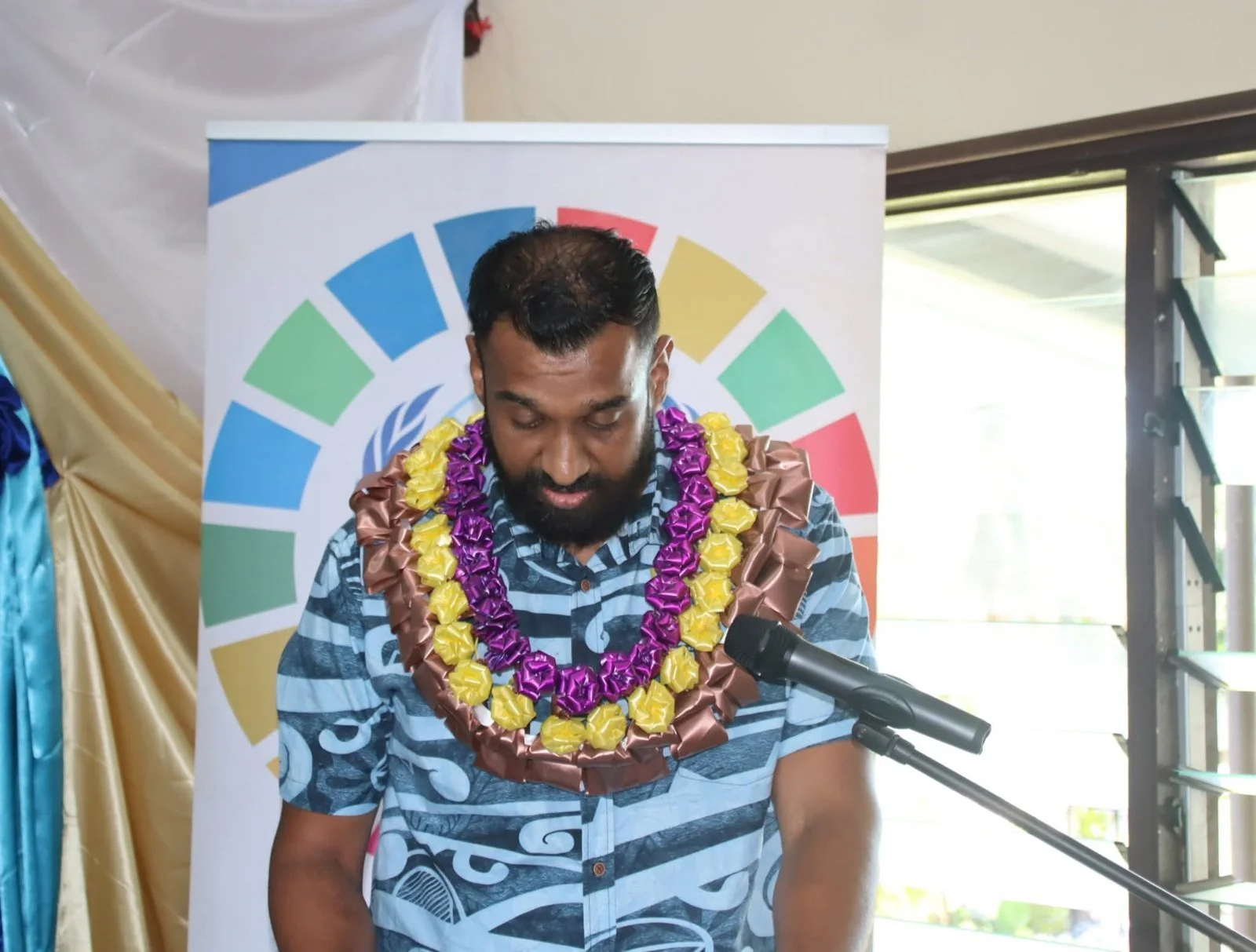
𝐉𝐔𝐍𝐈𝐎𝐑 𝐃𝐈𝐏𝐋𝐎𝐌𝐀𝐂𝐘 𝐓𝐑𝐀𝐈𝐍𝐈𝐍𝐆 𝐏𝐑𝐎𝐆𝐑𝐀𝐌𝐌𝐄 (𝐉𝐃𝐓𝐏) 𝟐𝟎𝟐𝟔 𝐂𝐋𝐀𝐒𝐒 #𝟐 𝐏𝐑𝐎𝐓𝐎𝐂𝐎𝐋 & 𝐂𝐎𝐌𝐌𝐔𝐍𝐈𝐓𝐘 𝐈𝐌𝐏𝐀𝐂𝐓 𝐏𝐑𝐎𝐉𝐄𝐂𝐓
United Nations Association of Fiji (UNA Fiji) successfully conducted Class #2 of the Junior Diplomacy Training Programme (JDTP) 2026, focusing on Diplomatic Protocol and the Community Impact Project (CIP) two essential pillars in the development of responsible and effective young leaders.
During the session, trainees were introduced to the principles of diplomatic protocol, which guide official conduct in international and institutional settings.
Protocol provides the framework through which official engagements are conducted with courtesy, professionalism, and respect, ensuring that interactions with dignitaries, government officials, and international partners are handled with the highest level of diplomatic awareness.
𝐏𝐚𝐫𝐭𝐢𝐜𝐢𝐩𝐚𝐧𝐭𝐬 𝐞𝐱𝐩𝐥𝐨𝐫𝐞𝐝 𝐤𝐞𝐲 𝐚𝐫𝐞𝐚𝐬 𝐢𝐧𝐜𝐥𝐮𝐝𝐢𝐧𝐠:
• Order of precedence and seating arrangements in official events
• Proper introductions and greetings in diplomatic settings
• Professional etiquette and interpersonal conduct
• Communication protocols and situational awareness
• Formal event etiquette and protocol procedures
The session emphasised that protocol is far more than ceremonial formality. It is a practical tool that helps create an environment of mutual respect and understanding leading to cooperation in international relations.
The second part of the training introduced trainees to the Community Impact Project (CIP)the practical implementation arm of UNA Fiji’s diplomacy programmes.
Through CIP, the leadership principles taught in programmes such as JDTP are translated into tangible community action and measurable social impact.
Importantly, trainees were formally informed of their Community Impact Project for the year, which they will collectively undertake as part of their leadership journey in JDTP 2026.
Trainees were taught that these are small things they can do to give back to their communities without the recognition from media and without developing a sense of gratification as an Act of becoming Active Fijian Citizens.
This initiative will allow participants to apply their learning beyond the classroom by contributing directly to a community-focused project aligned with UNA Fiji’s development priorities.
𝐂𝐨𝐦𝐦𝐮𝐧𝐢𝐭𝐲 𝐈𝐦𝐩𝐚𝐜𝐭 𝐏𝐫𝐨𝐣𝐞𝐜𝐭𝐬 𝐚𝐫𝐞 𝐭𝐲𝐩𝐢𝐜𝐚𝐥𝐥𝐲 𝐝𝐞𝐬𝐢𝐠𝐧𝐞𝐝 𝐚𝐫𝐨𝐮𝐧𝐝:
• Climate resilience and environmental restoration
• Youth leadership and civic responsibility
• Sustainable community development
• Local implementation of the Sustainable Development Goals (SDGs)
Over the years, UNA Fiji has successfully implemented numerous Community Impact Projects, including large-scale mangrove planting initiatives, disaster relief support, environmental clean-up campaigns, and community development activities, showing the organisation’s commitment to translating diplomacy into meaningful grassroots outcomes.
Through these initiatives, UNA Fiji continues to champion its philosophy of Diplomacy to Delivery, ensuring that leadership training results in real and lasting contributions to communities across Fiji.
As JDTP 2026 progresses, trainees will continue developing the knowledge, discipline, skills and practical experience required to become ethical leaders, future diplomats, and most of all active Fijian and Global citizens, committed to serving Fiji, the Pacific region, and the international community.
𝐖𝐢𝐭𝐡 𝐂𝐥𝐚𝐬𝐬, 𝐃𝐢𝐠𝐧𝐢𝐭𝐲 & 𝐄𝐥𝐞𝐠𝐚𝐧𝐜𝐞
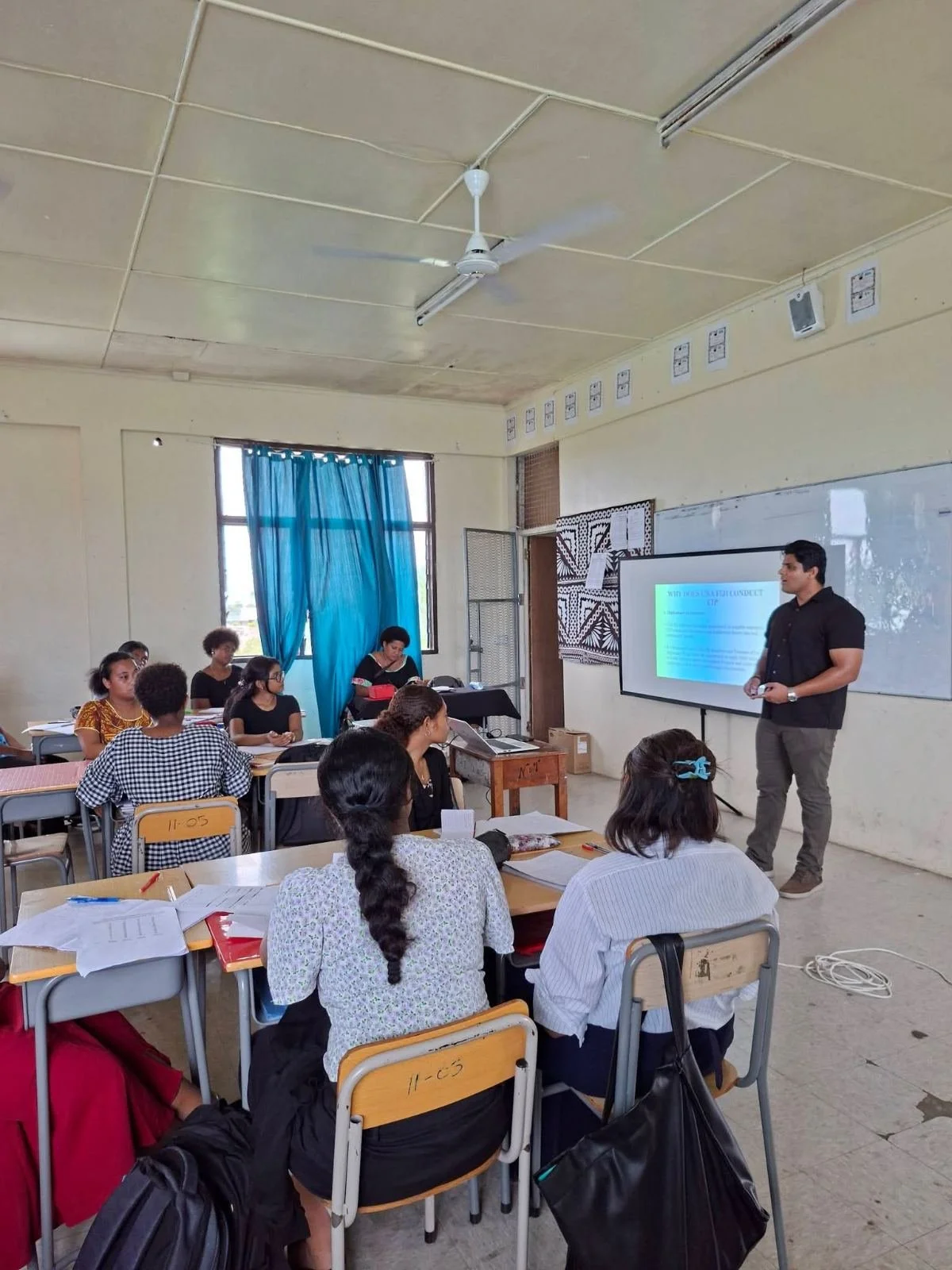
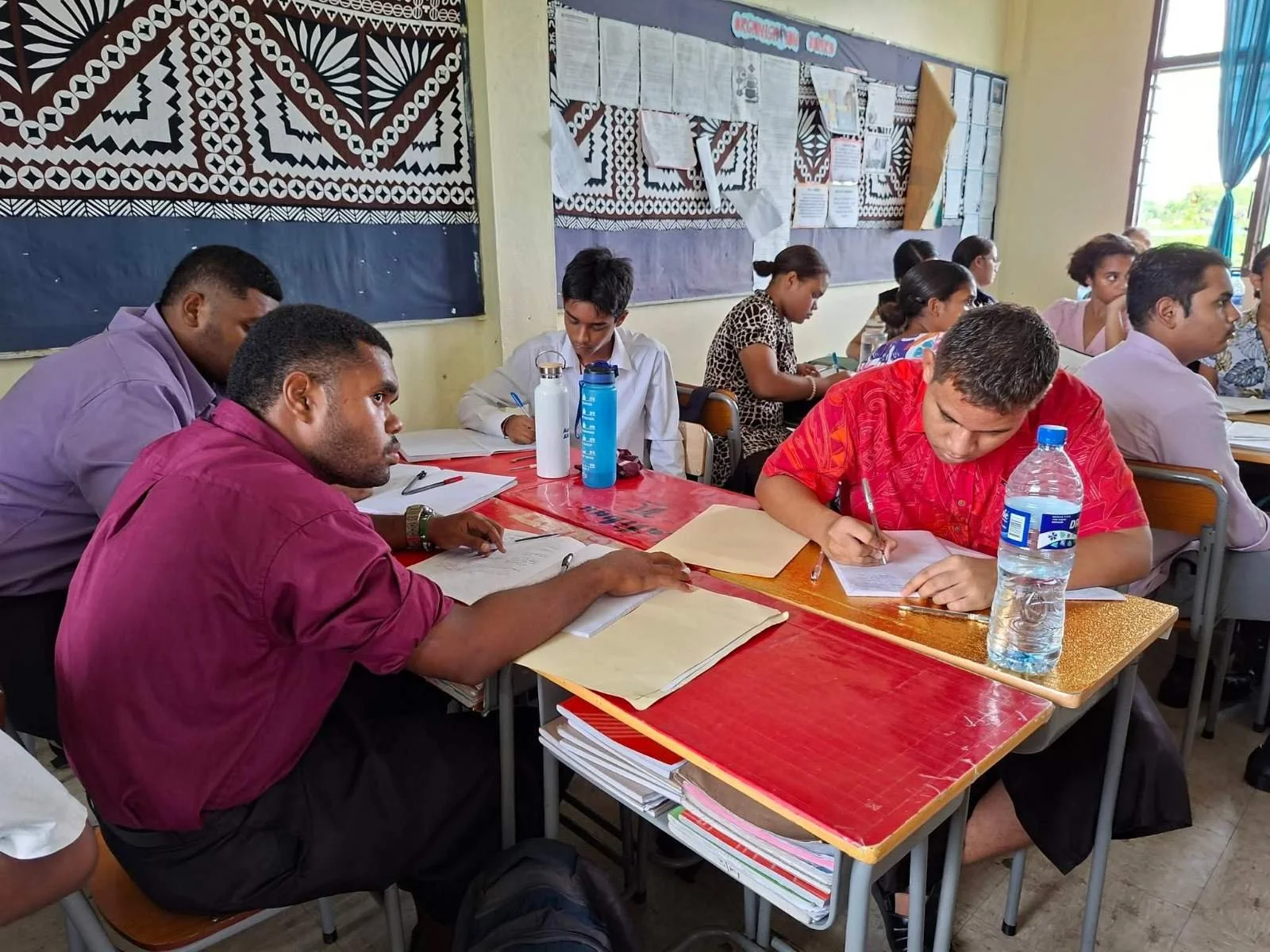
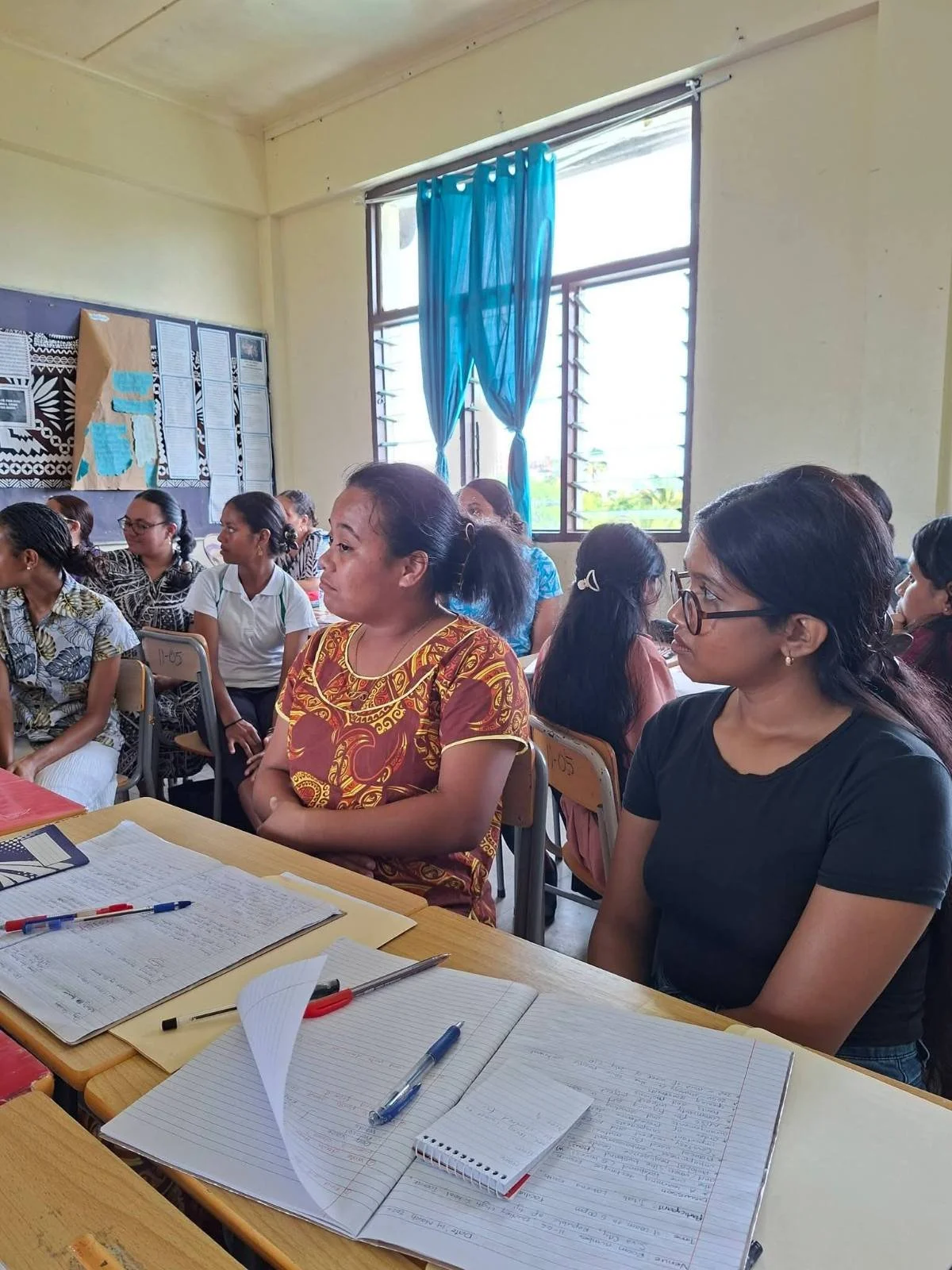
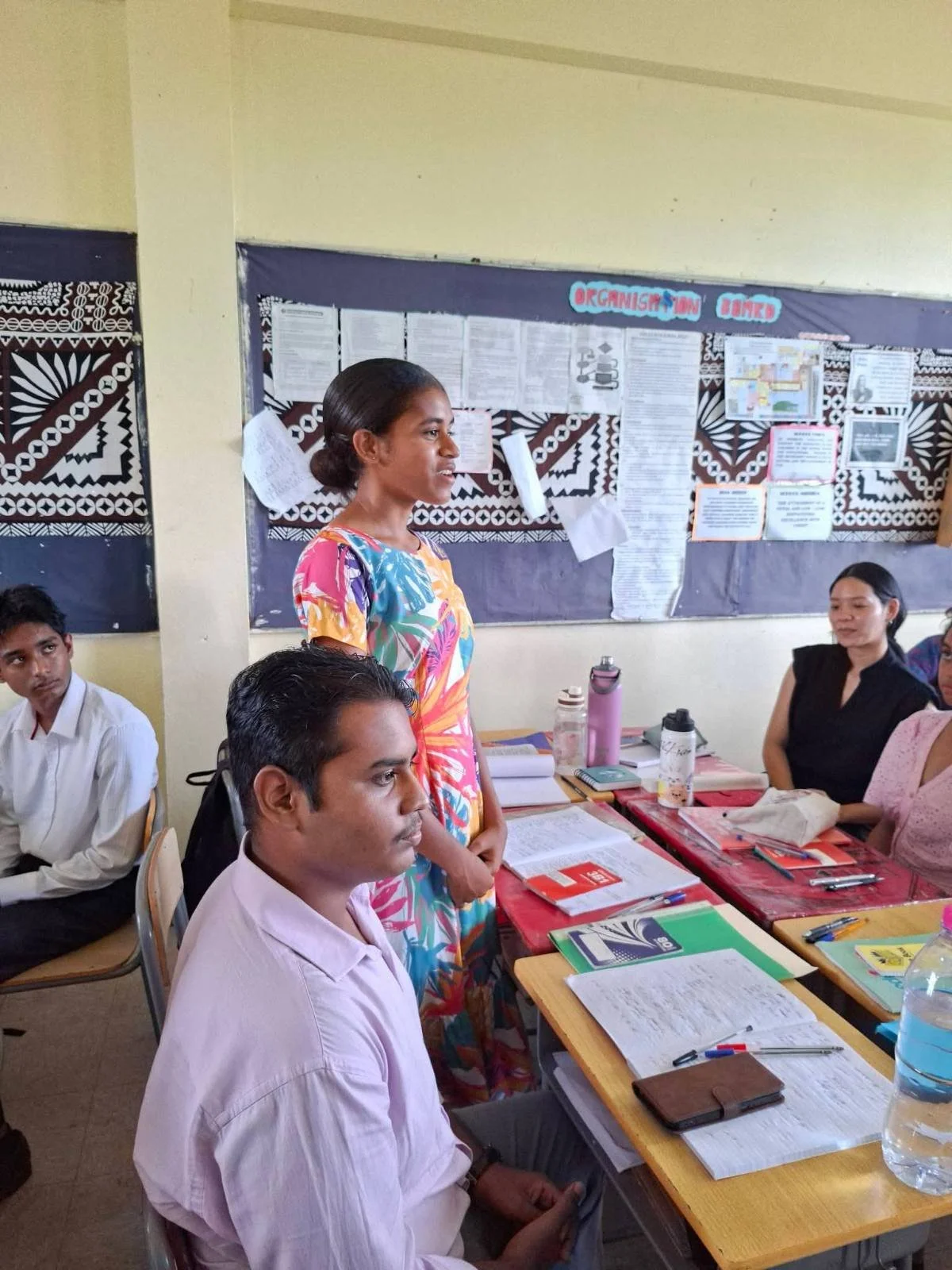
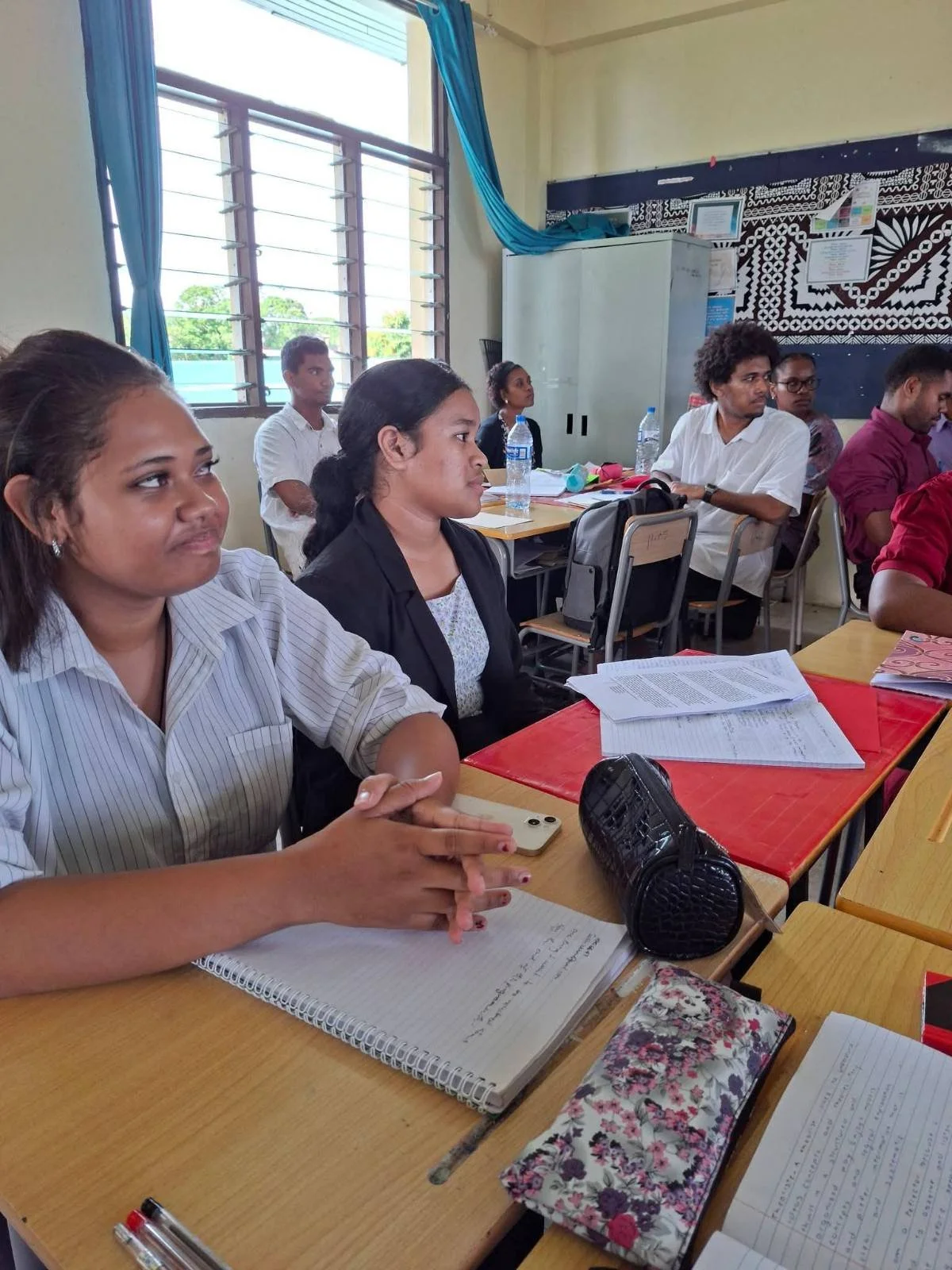
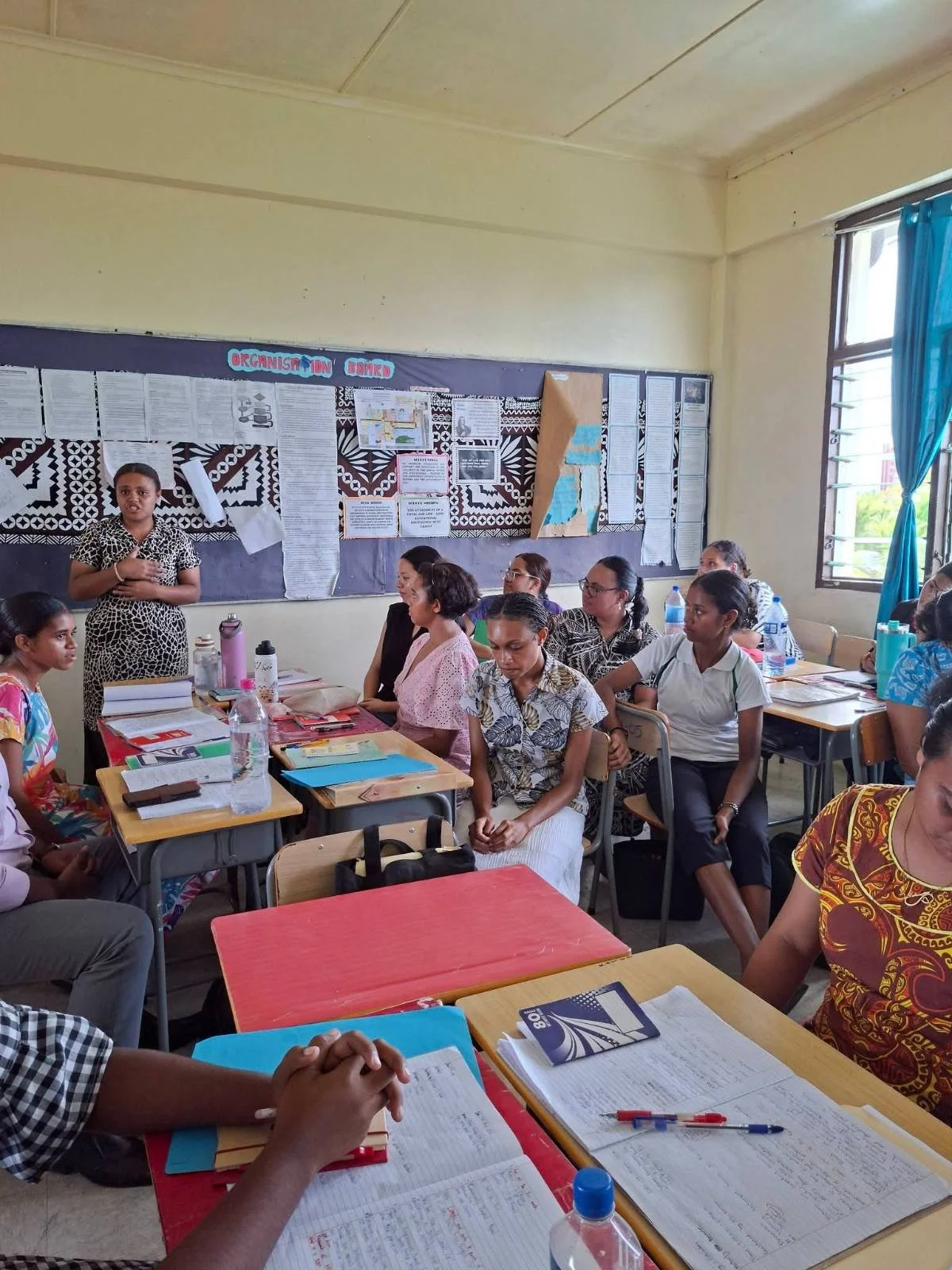
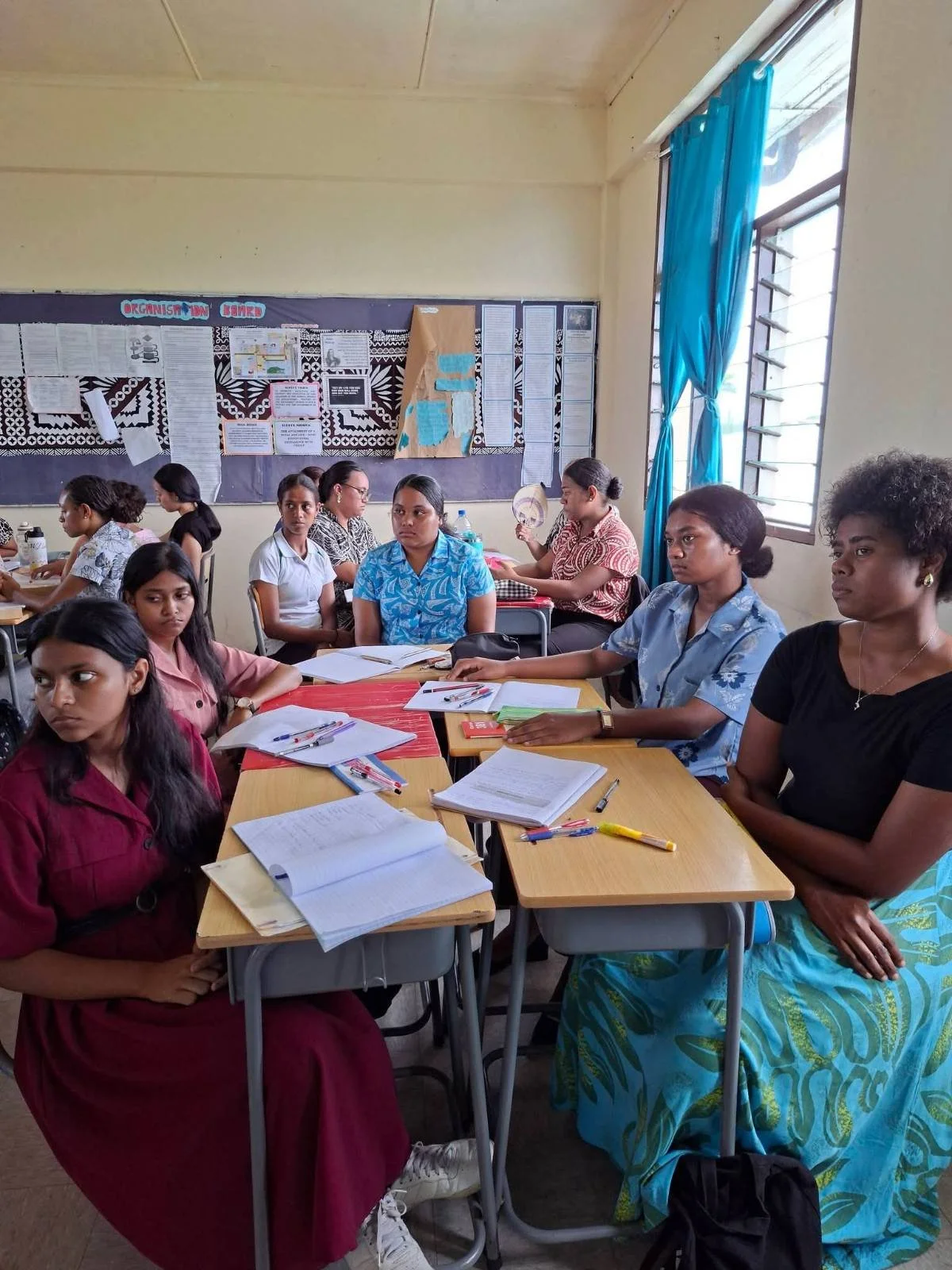
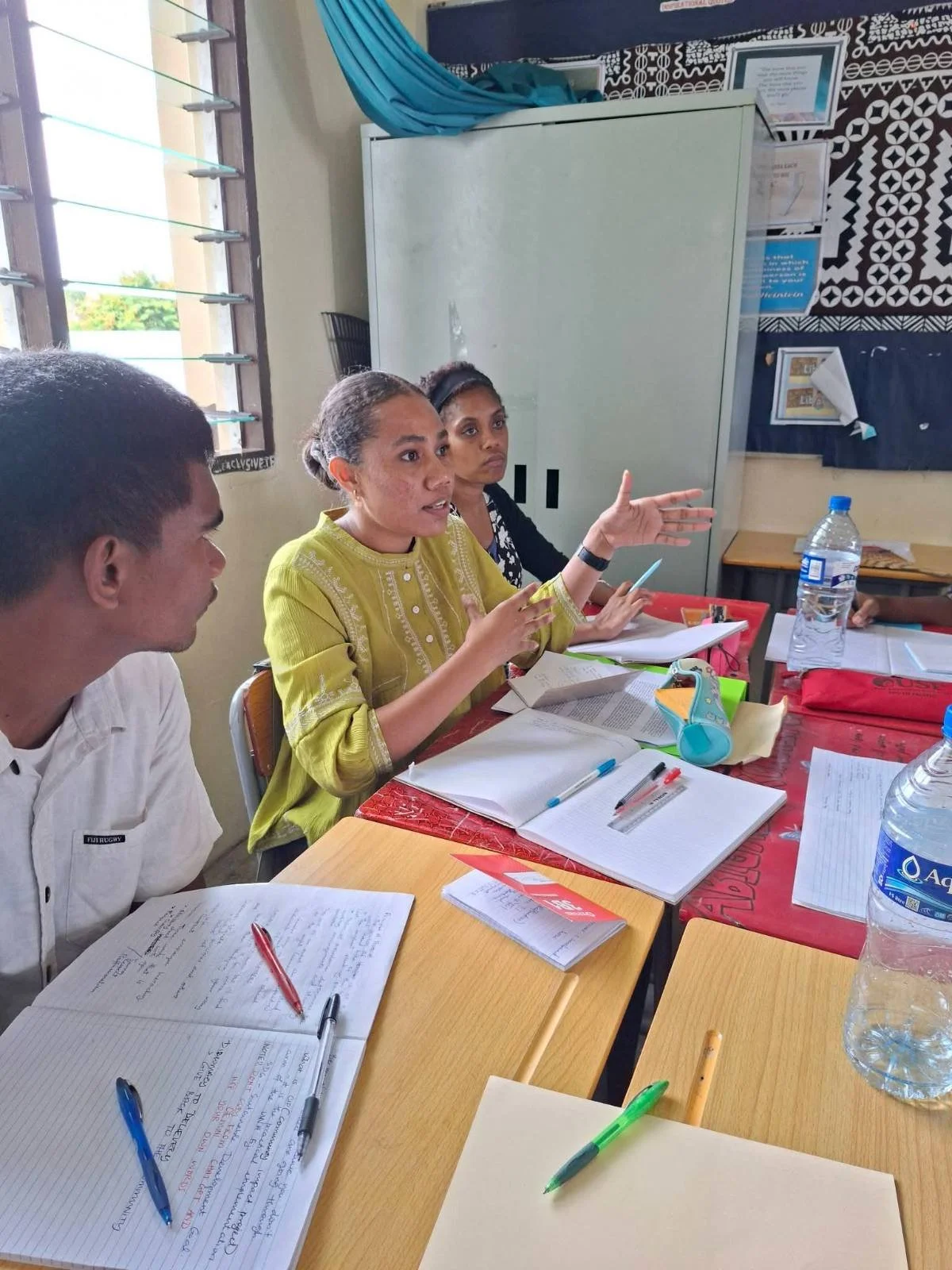
𝐉𝐔𝐍𝐈𝐎𝐑 𝐃𝐈𝐏𝐋𝐎𝐌𝐀𝐂𝐘 𝐓𝐑𝐀𝐈𝐍𝐈𝐍𝐆 𝐏𝐑𝐎𝐆𝐑𝐀𝐌𝐌𝐄 𝟐𝟎𝟐𝟔 (𝐉𝐃𝐓𝐏 𝟐𝟎𝟐𝟔) 𝐂𝐋𝐀𝐒𝐒 #𝟑 𝐒𝐀𝐓𝐔𝐑𝐃𝐀𝐘 𝟐𝟏 𝐌𝐀𝐑𝐂𝐇 𝟐𝟎𝟐𝟔 - 𝐔𝐍 𝐃𝐈𝐏𝐋𝐎𝐌𝐀𝐂𝐘 𝟏𝟎𝟏: 𝐔𝐍 𝐂𝐎𝐌𝐌𝐈𝐓𝐓𝐄𝐄𝐒
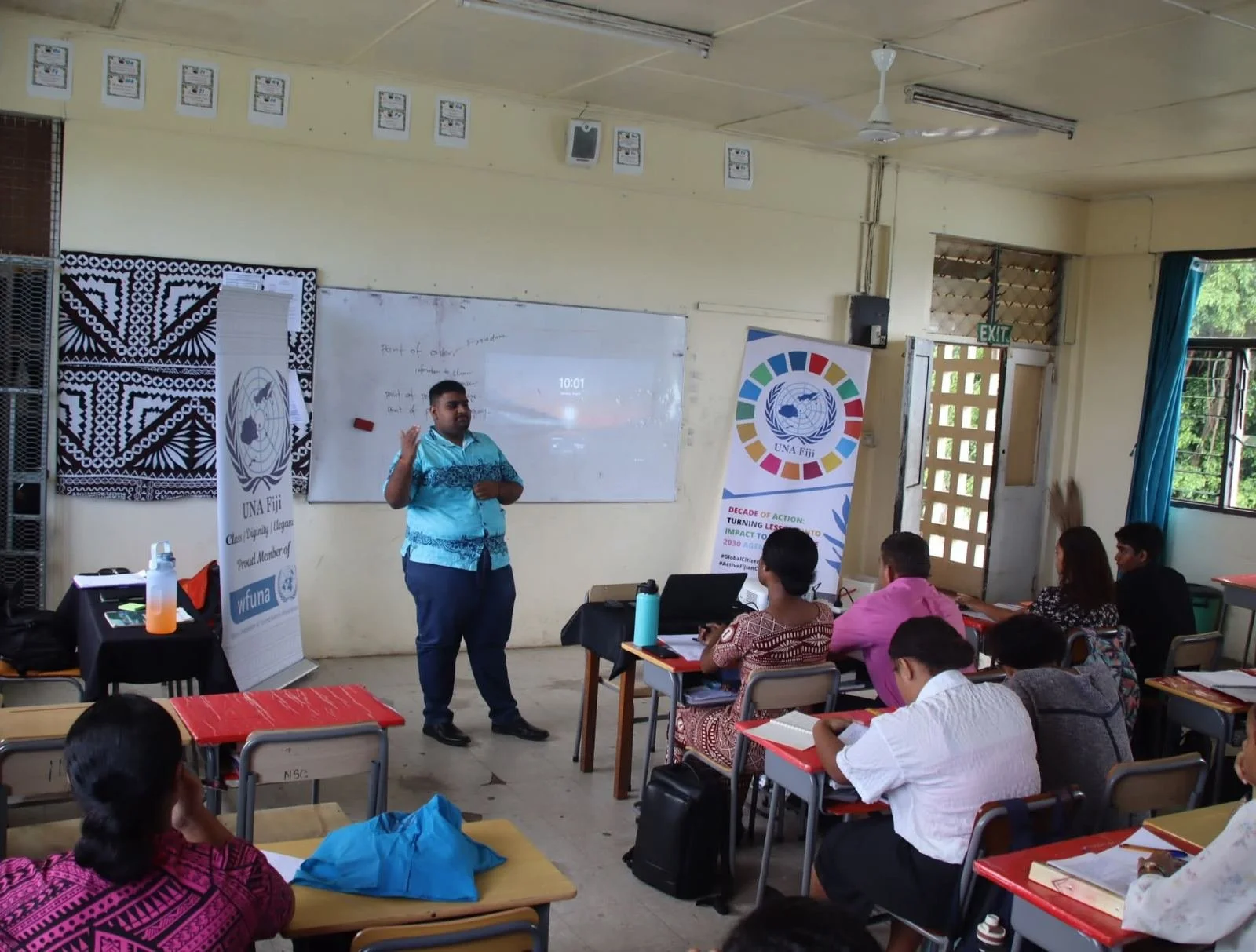
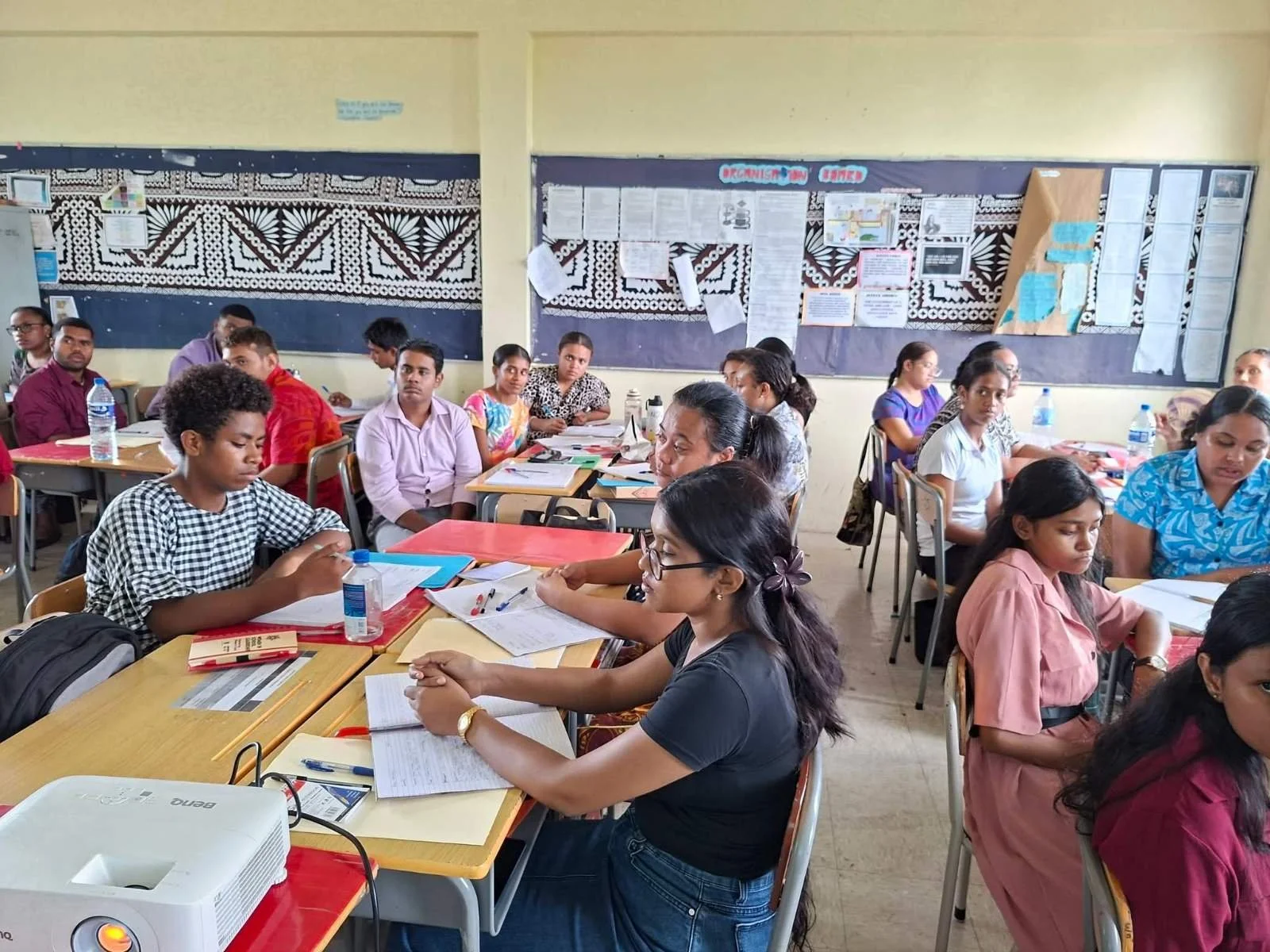
The session was facilitated by the Honourable Vice-President of the United Nations Association of Fiji, Mr. Vipin Maharaj.
The session commenced with a “getting to know each other” activity, where trainees were encouraged to participate in exercises aimed at nurturing collaboration and active communication.
The session then proceeded into the foundations of the United Nations where Mr. Maharaj expanded on the various committees and bodies that make up the UN. The Trainees also learnt about binding and non-binding resolutions and voting procedures and requirements.
Further in his session, he introduced the UN Charter and its applications, the Member States, and the voting procedures in the UN, which seeks to establish key figures such as the President and Vice-Presidents of the General Assembly, the Security Council, Judges of the International Court of Justice, and other committees and its membership.
Further discussions explored the structure and influence of the Permanent Five (P5) countries, with a focused examination of the Veto powers and their implications on international decision-making.
This training enables the trainees to understand and analyse the balance of power within the UN framework and how these frameworks influence global governance.
In his closing session, Mr. Maharaj emphasized the vital aspects of UN Member States such as Fiji and the implications of partnership with other countries.
𝐖𝐢𝐭𝐡 𝐂𝐥𝐚𝐬𝐬, 𝐃𝐢𝐠𝐧𝐢𝐭𝐲, 𝐚𝐧𝐝 𝐄𝐥𝐞𝐠𝐚𝐧𝐜𝐞
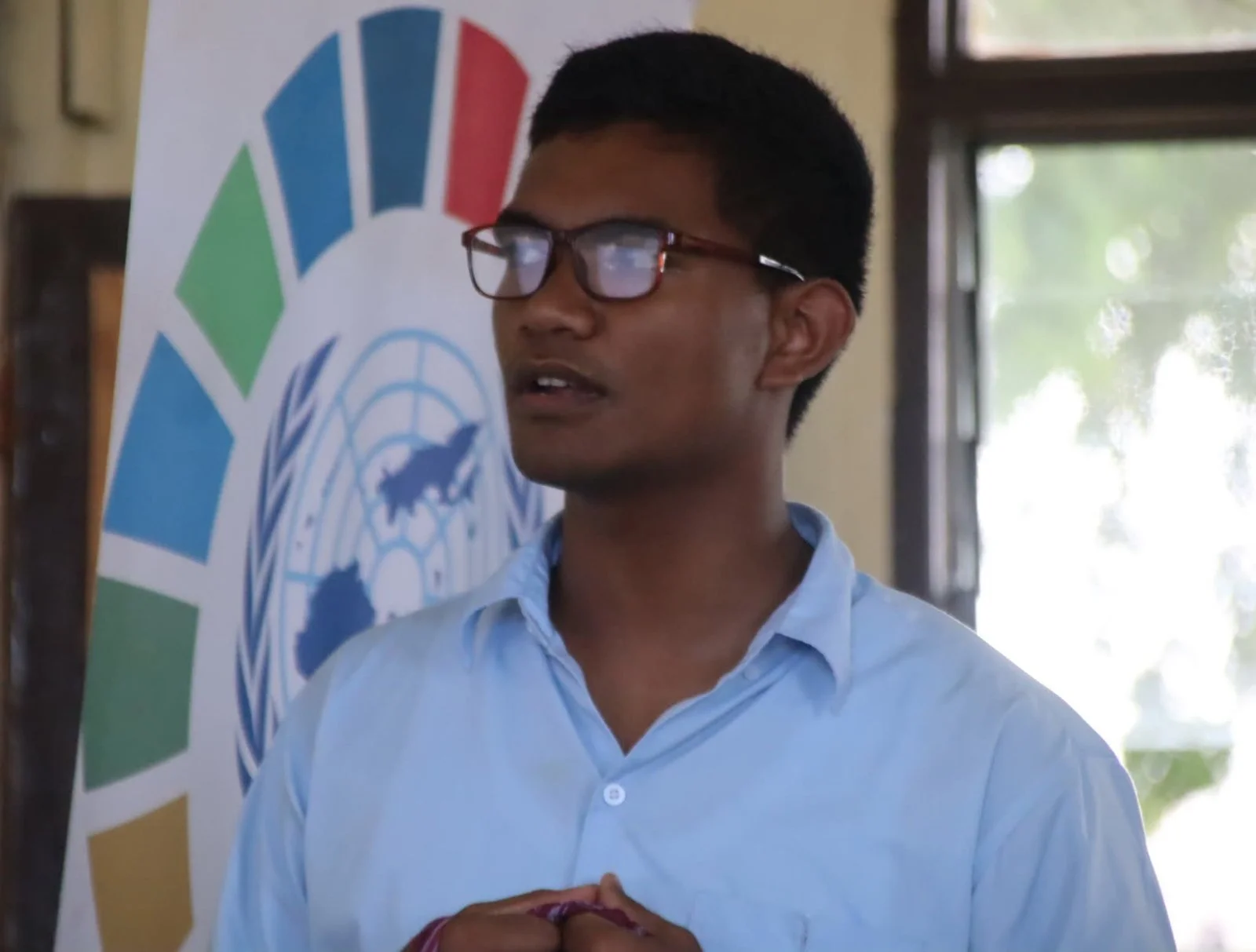
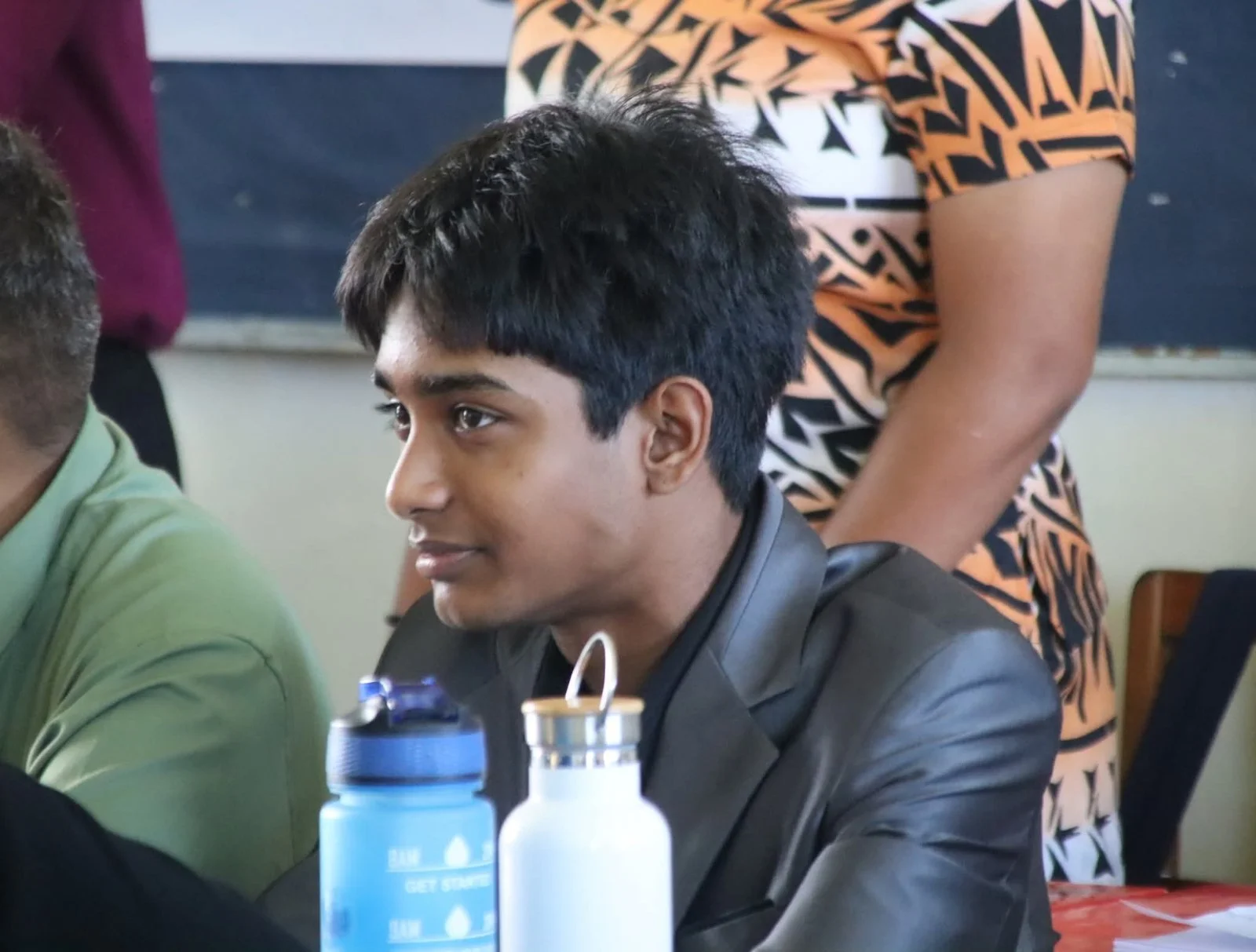
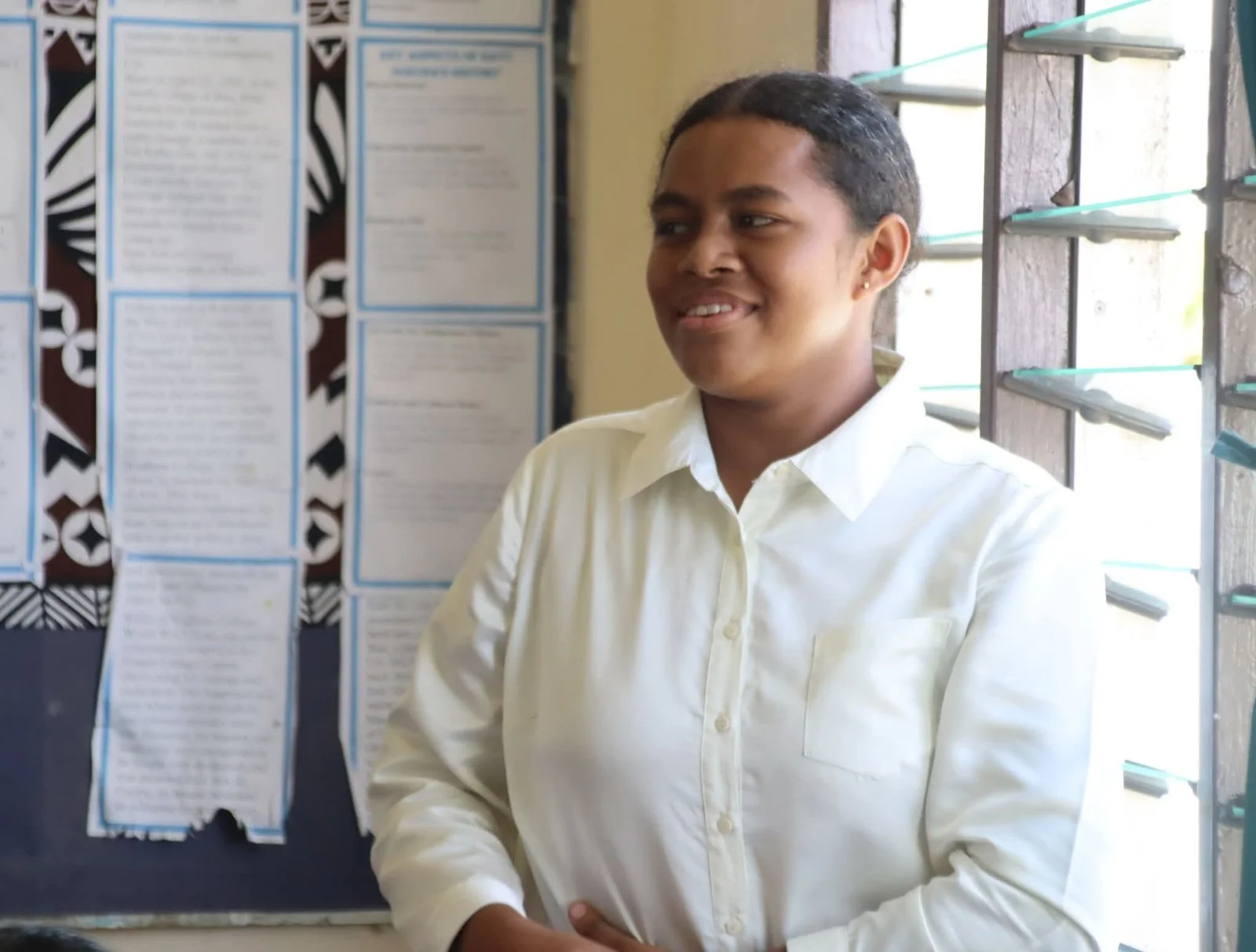
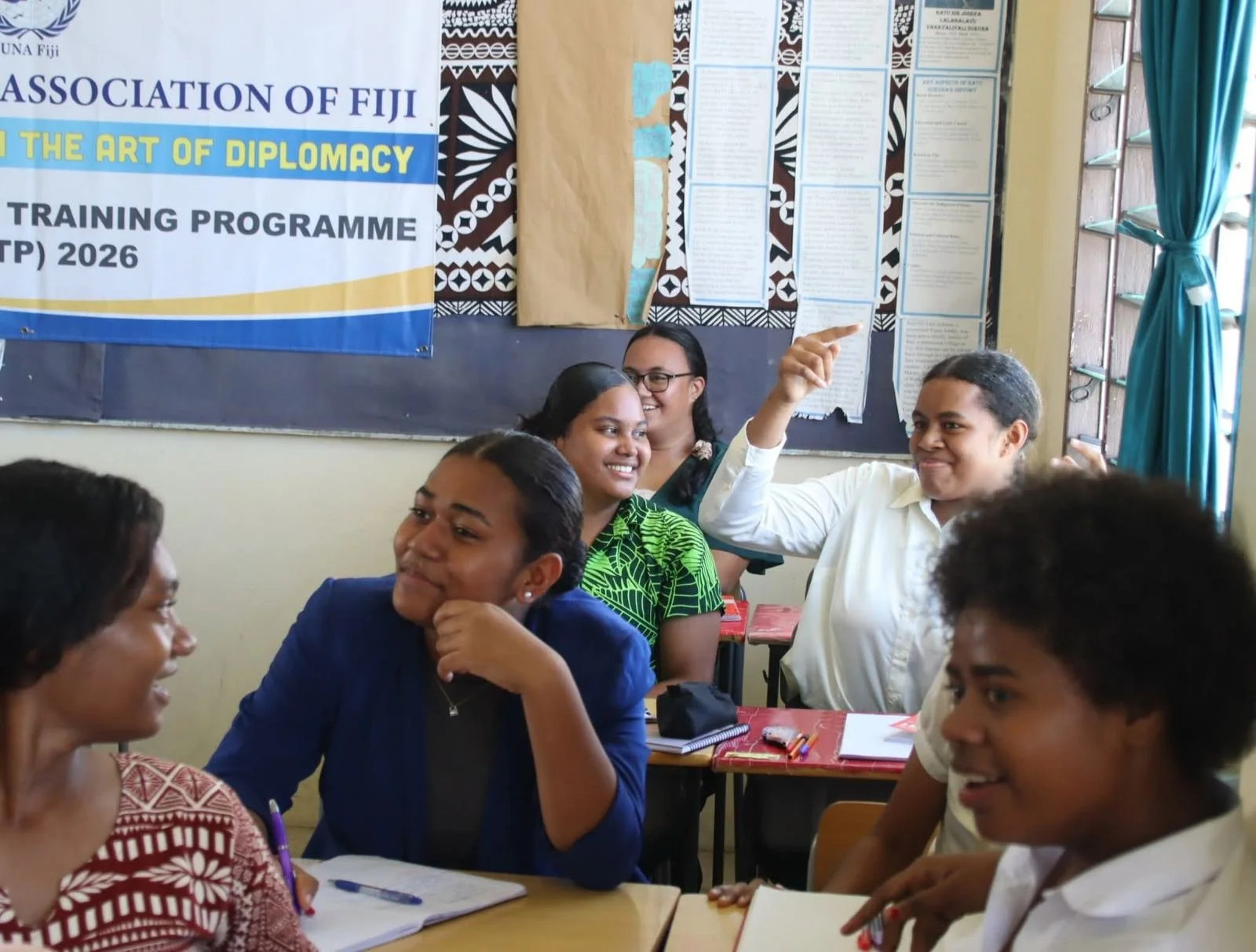
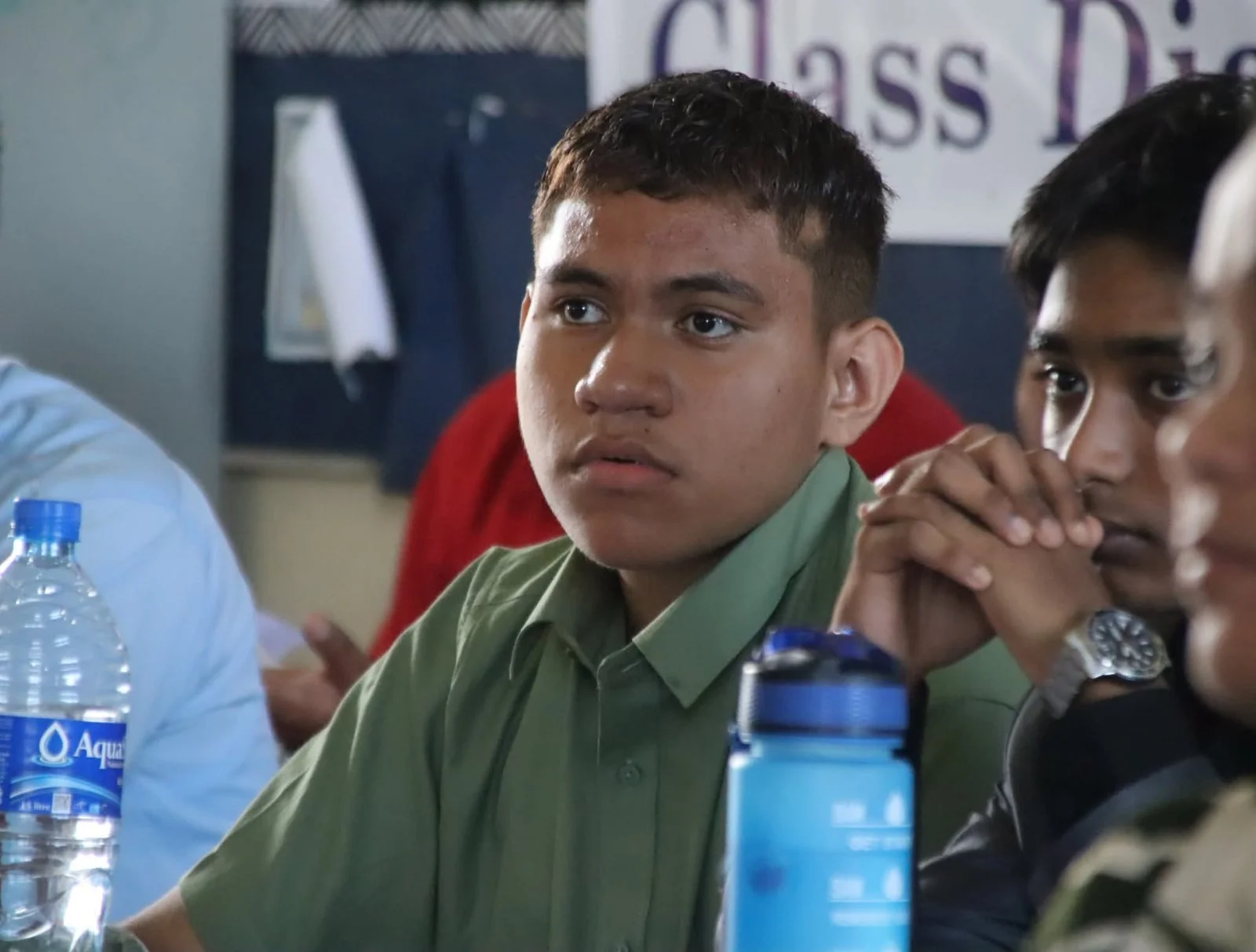
𝐉𝐔𝐍𝐈𝐎𝐑 𝐃𝐈𝐏𝐋𝐎𝐌𝐀𝐂𝐘 𝐓𝐑𝐀𝐈𝐍𝐈𝐍𝐆 𝐏𝐑𝐎𝐆𝐑𝐀𝐌𝐌𝐄 𝟐𝟎𝟐𝟔 (𝐉𝐃𝐓𝐏 𝟐𝟎𝟐𝟔) 𝐂𝐋𝐀𝐒𝐒 #𝟒, 𝐒𝐀𝐓𝐔𝐑𝐃𝐀𝐘 𝟏𝟏 𝐀𝐏𝐑𝐈𝐋 𝟐𝟎𝟐𝟔 𝐔𝐍 𝐃𝐈𝐏𝐋𝐎𝐌𝐀𝐂𝐘 𝟏𝟎𝟏: 𝐏𝐎𝐈𝐍𝐓𝐒 𝐀𝐍𝐃 𝐌𝐎𝐓𝐈𝐎𝐍𝐒
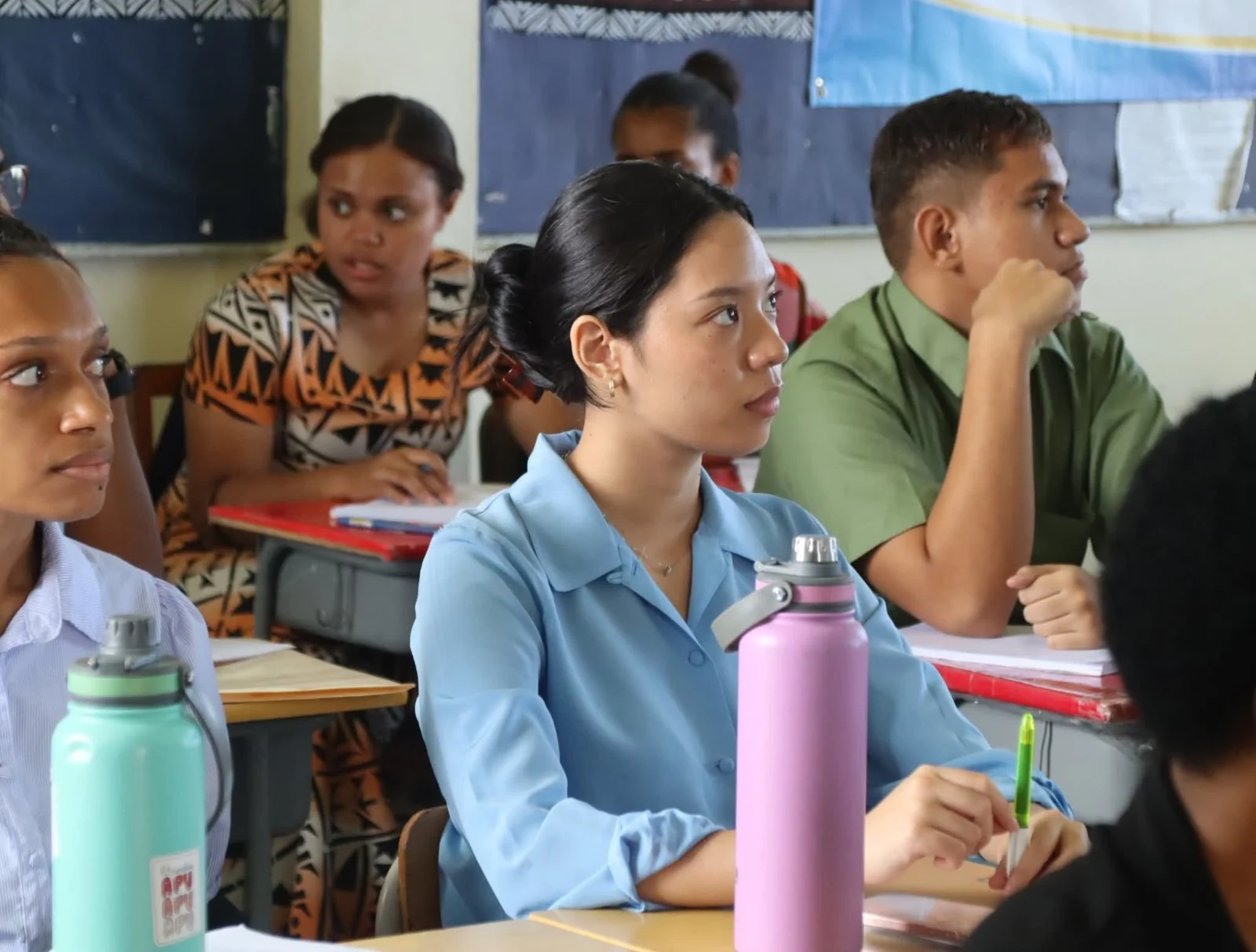
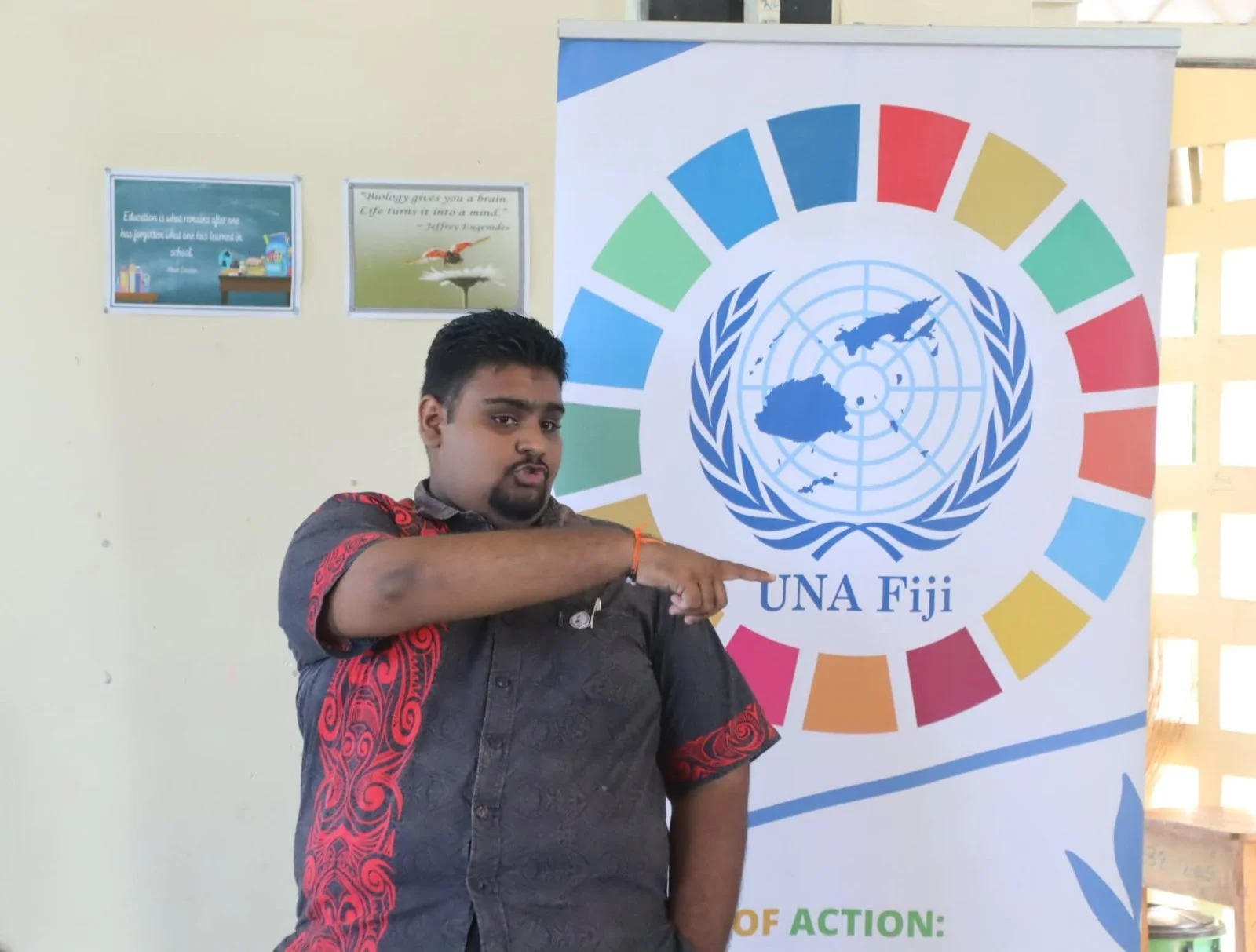
United Nations Association of Fiji (UNA Fiji) held the fourth session of JDTP 2026 this week, led by its Hon. Vice-President, Mr. Vipin Maharaj, and co-facilitated by the Trustee of UNA Fiji, Ms. Sweta Kumar.
The session opened in a simple and relatable way, with trainees sharing their Easter experiences. It was a small moment, but it helped ease everyone into the session and created a space where people felt comfortable speaking and engaging from the start.
From there, the focus shifted to Model United Nations (MUN) and the basics of how the United Nations works. Trainees were reminded that being part of this programme is a real opportunity; they are now part of a global MUN network of over 400,000 young people. That reminder grounded the session in both responsibility and pride.
Mr. Maharaj walked the trainees through the kinds of issues discussed at the UN, from past global matters to current debates and even future scenarios.
He also drew on examples from previous years’ summations, giving trainees a clearer picture of what strong participation and outcomes look like.
Important MUN terms like seconding, caucusing, and the difference between substantive and procedural matters were explained in a clear and practical way.
The message was straightforward: focus on thinking clearly and contributing meaningfully, rather than trying to sound impressive.
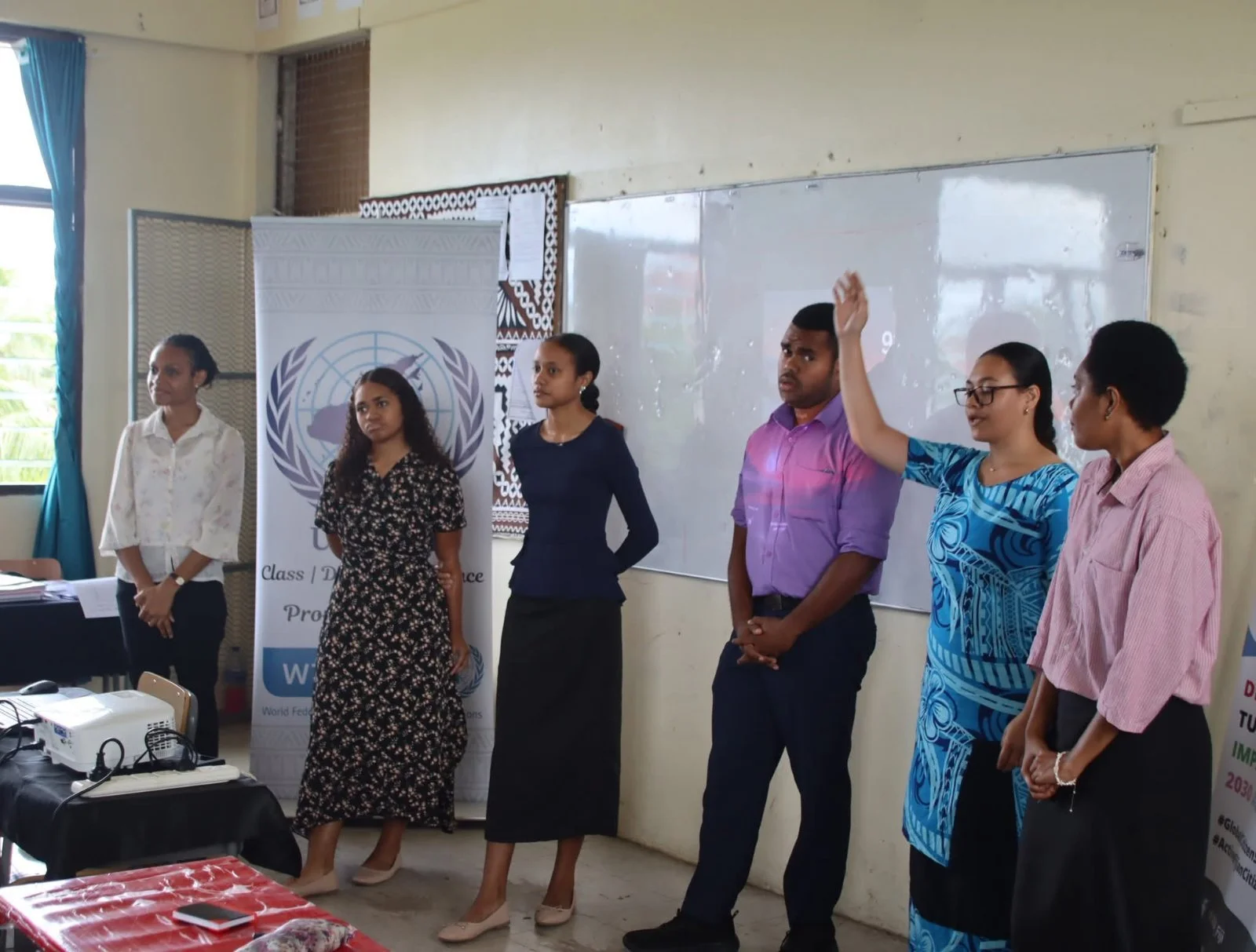
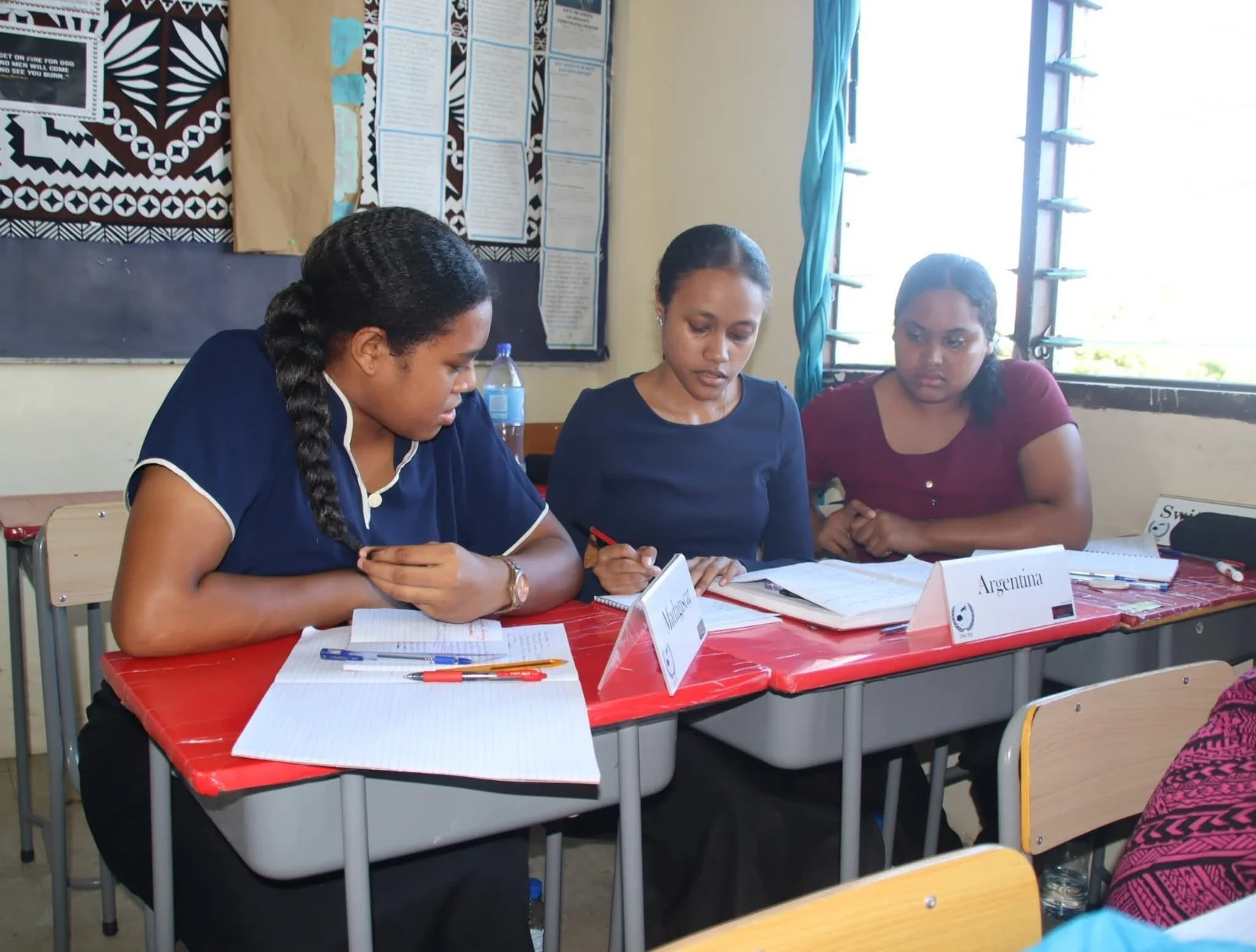
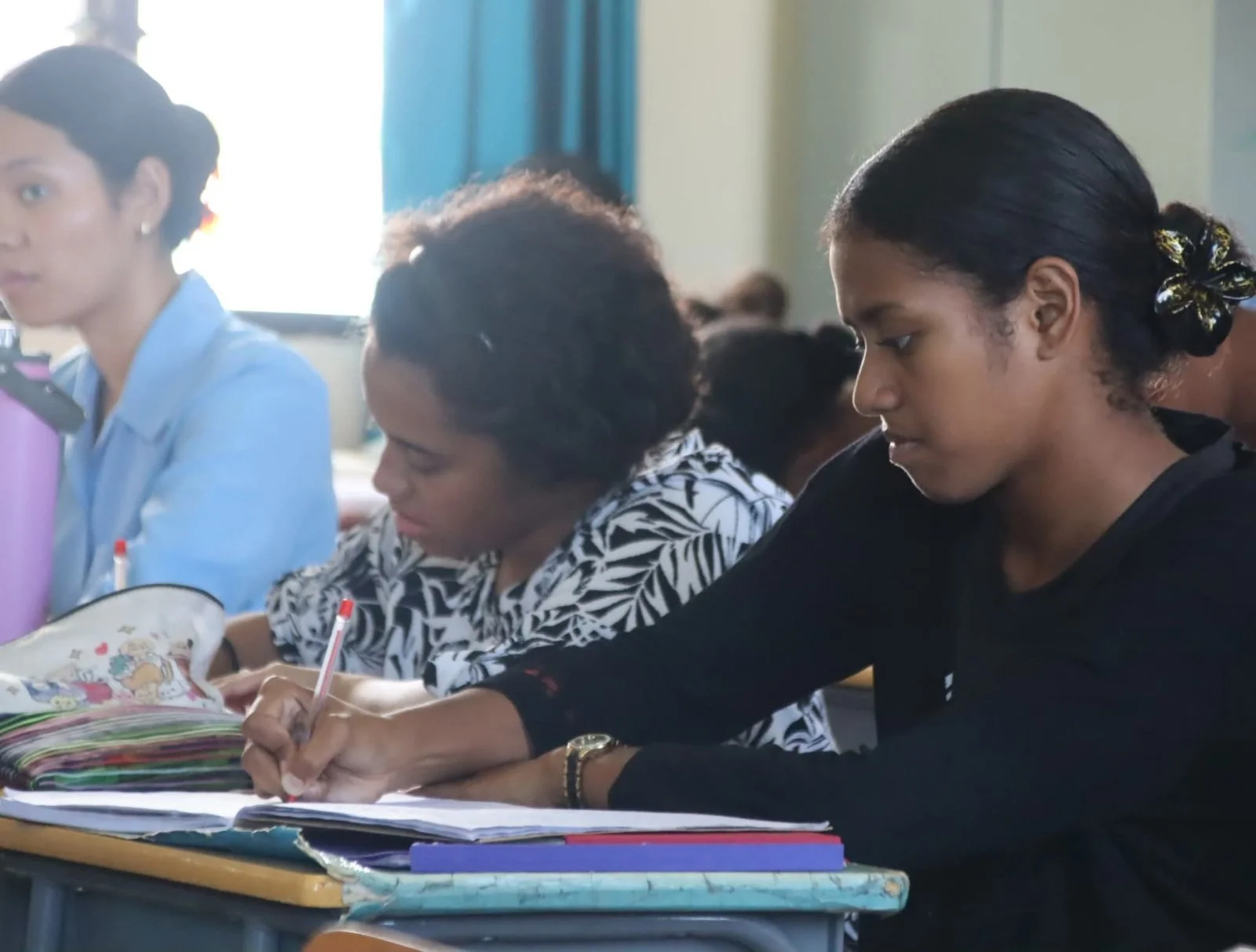
The session then became more hands-on. Trainees were split into small groups and worked on activities such as creating charts around key ideas. These exercises helped them better understand the concepts while also building confidence. Each group presented its work, which encouraged teamwork and gave everyone a chance to speak.
Attention later moved to the Community Impact Project (CIP), with a focus on mangrove planting. Trainees didn’t just talk about the idea; they looked at what it actually takes to make it work, including budgeting, cost breakdowns, and identifying stakeholders.
They were also introduced to practical skills like writing formal letters and approaching potential sponsors.
The session ended on a light note, with a bit of humour that captured both the challenge and enjoyment of the MUN experience.
More importantly, trainees left with a clearer understanding of what is expected of them and a stronger sense of confidence going forward.
𝐖𝐈𝐓𝐇 𝐂𝐋𝐀𝐒𝐒, 𝐃𝐈𝐆𝐍𝐈𝐓𝐘 & 𝐄𝐋𝐄𝐆𝐀𝐍𝐂𝐄
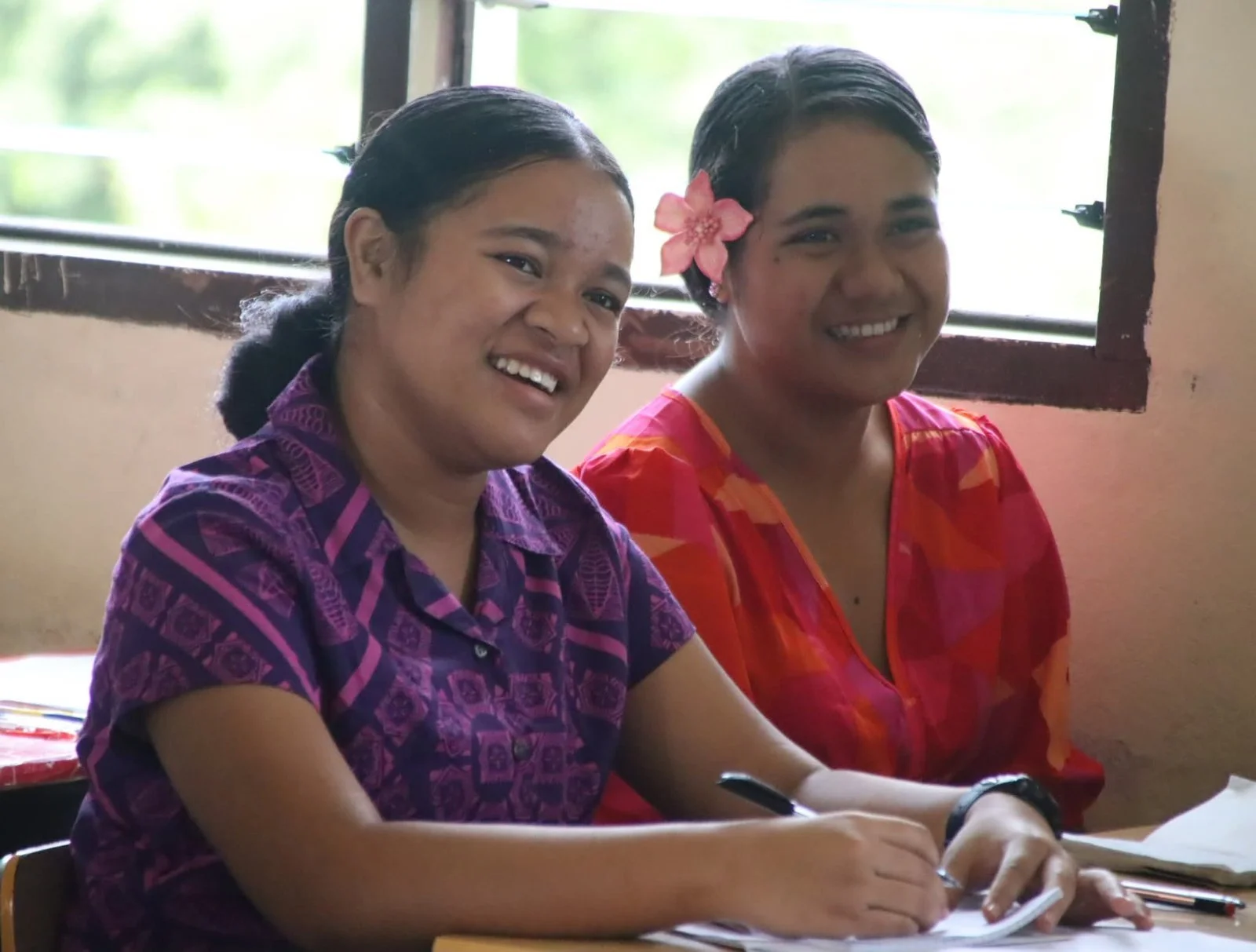
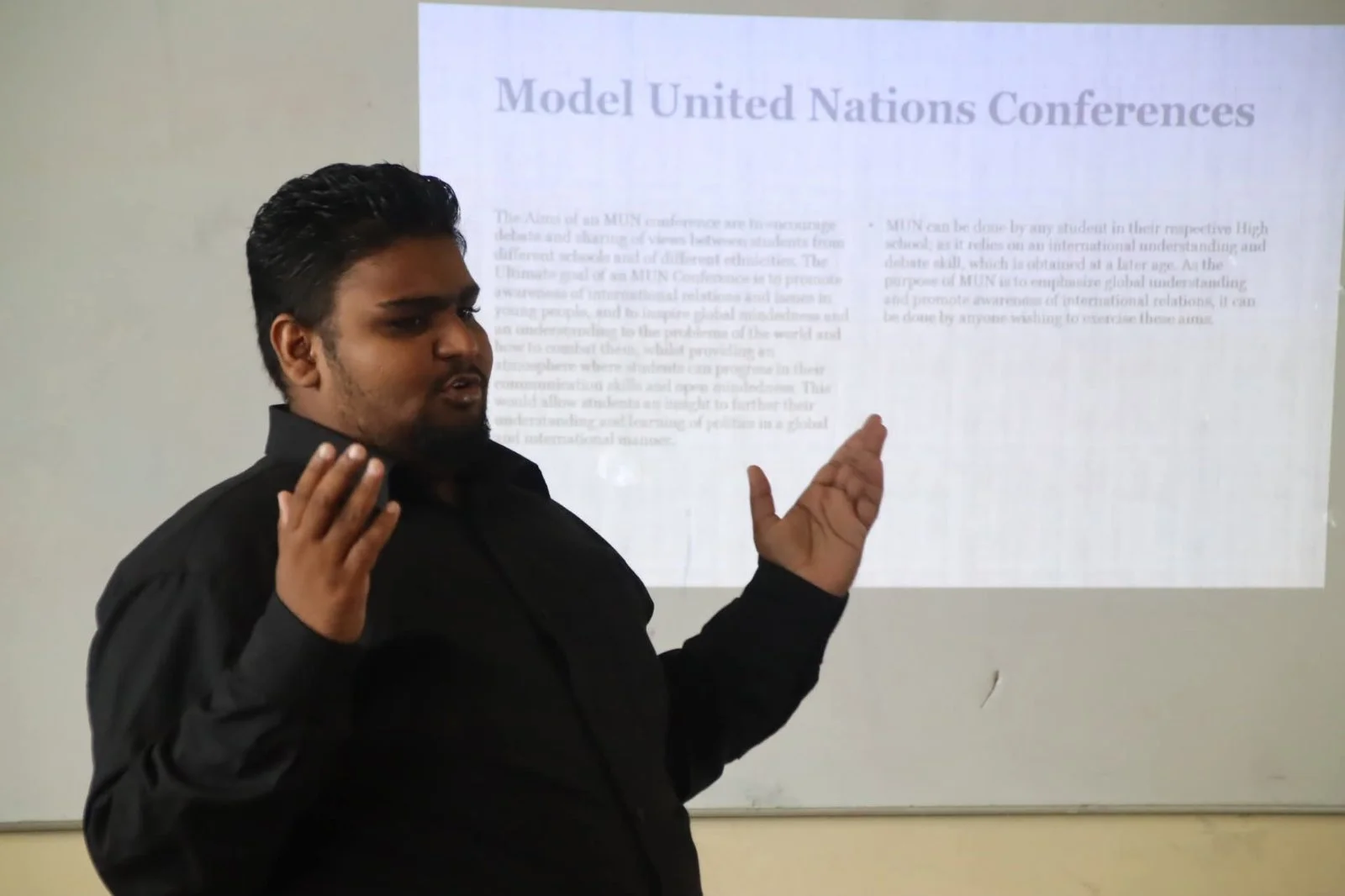
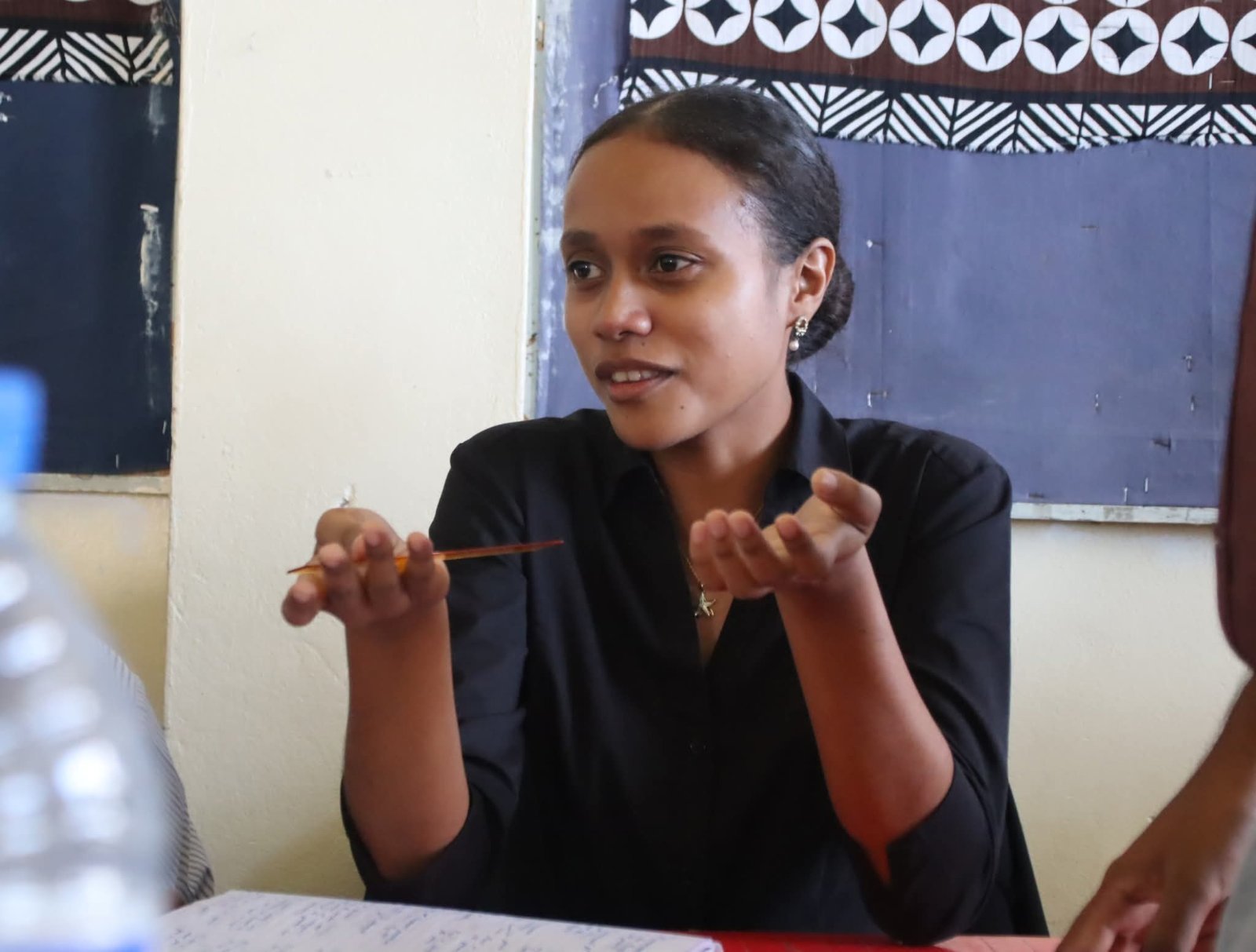
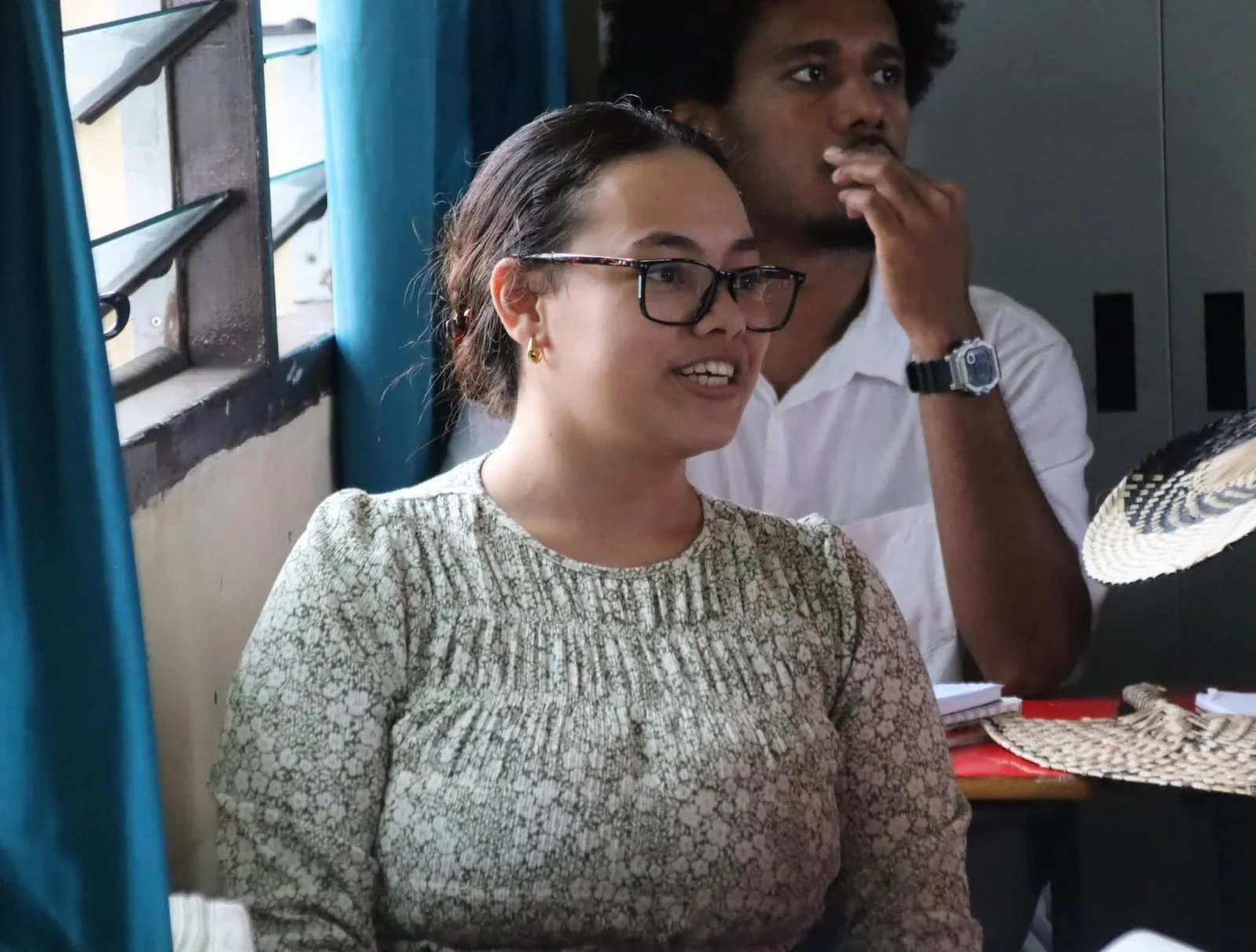
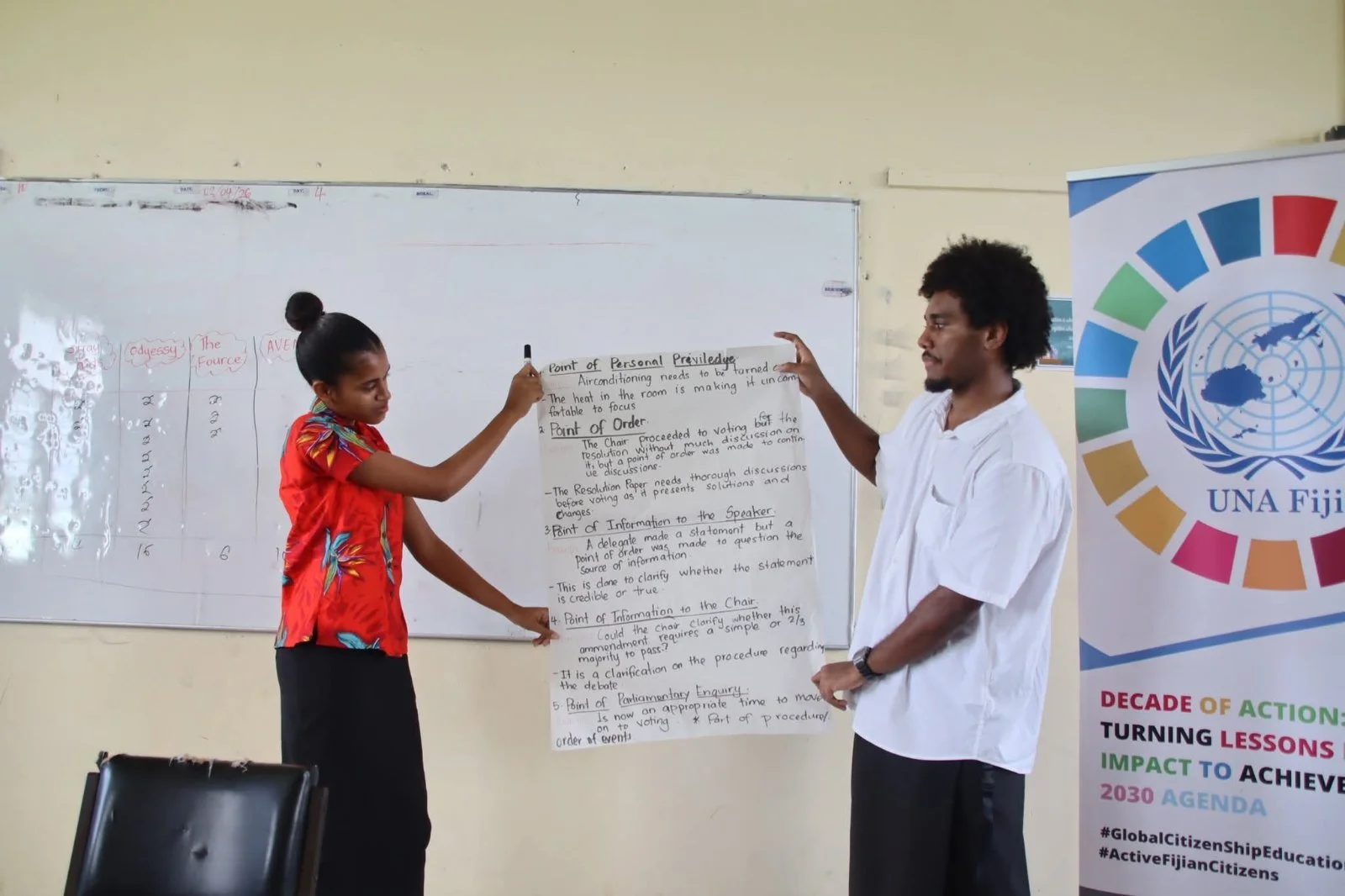
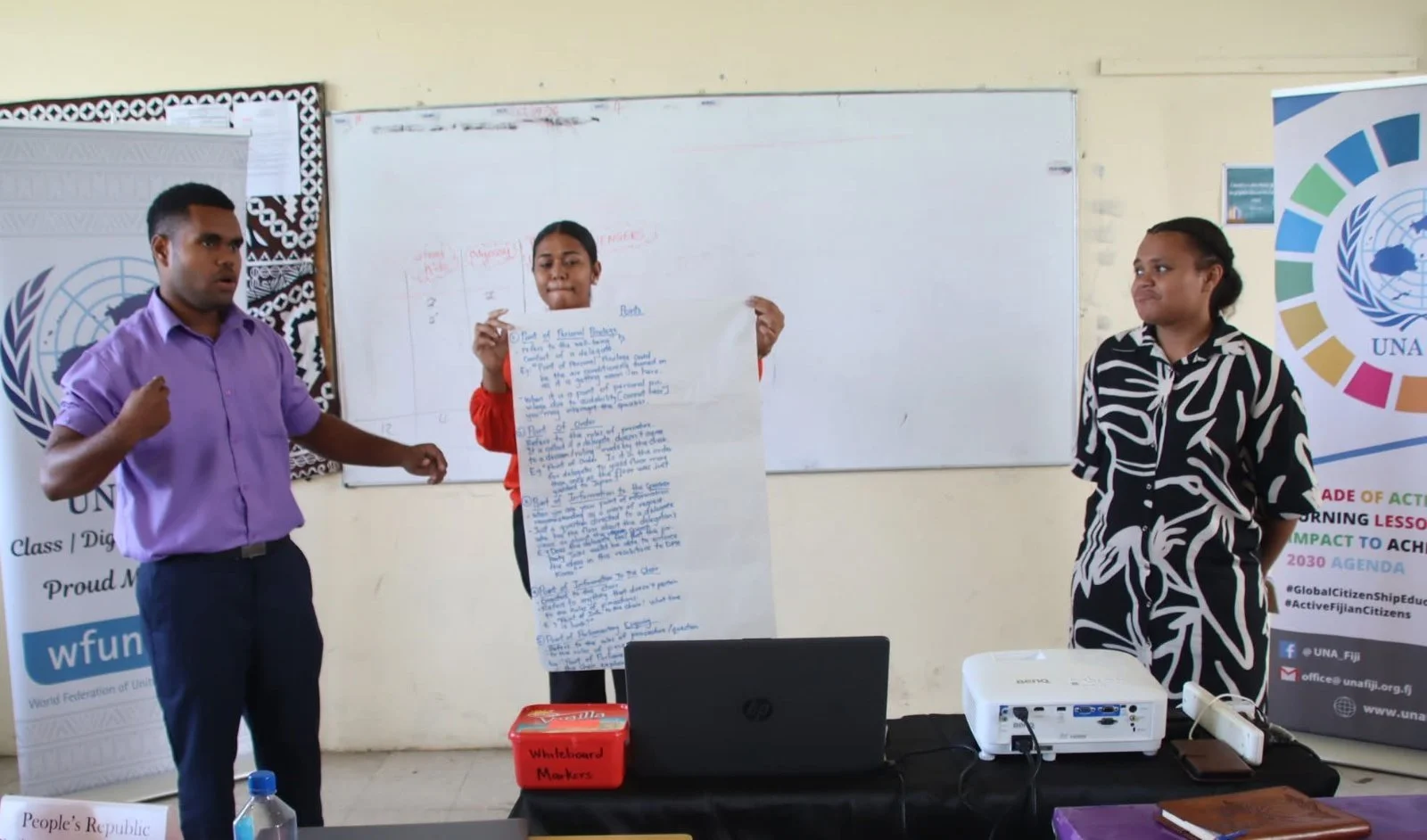
𝐉𝐔𝐍𝐈𝐎𝐑 𝐃𝐈𝐏𝐋𝐎𝐌𝐀𝐂𝐘 𝐓𝐑𝐀𝐈𝐍𝐈𝐍𝐆 𝐏𝐑𝐎𝐆𝐑𝐀𝐌𝐌𝐄 𝟐𝟎𝟐𝟔 (𝐉𝐃𝐓𝐏 𝟐𝟎𝟐𝟔) 𝐂𝐋𝐀𝐒𝐒 #𝟓 𝐔𝐍 𝐃𝐈𝐏𝐋𝐎𝐌𝐀𝐂𝐘 𝟏𝟎𝟏: 𝐏𝐎𝐈𝐍𝐓𝐒 & 𝐌𝐎𝐓𝐈𝐎𝐍𝐒 𝐂𝐎𝐍𝐓𝐈𝐍𝐔𝐄𝐃
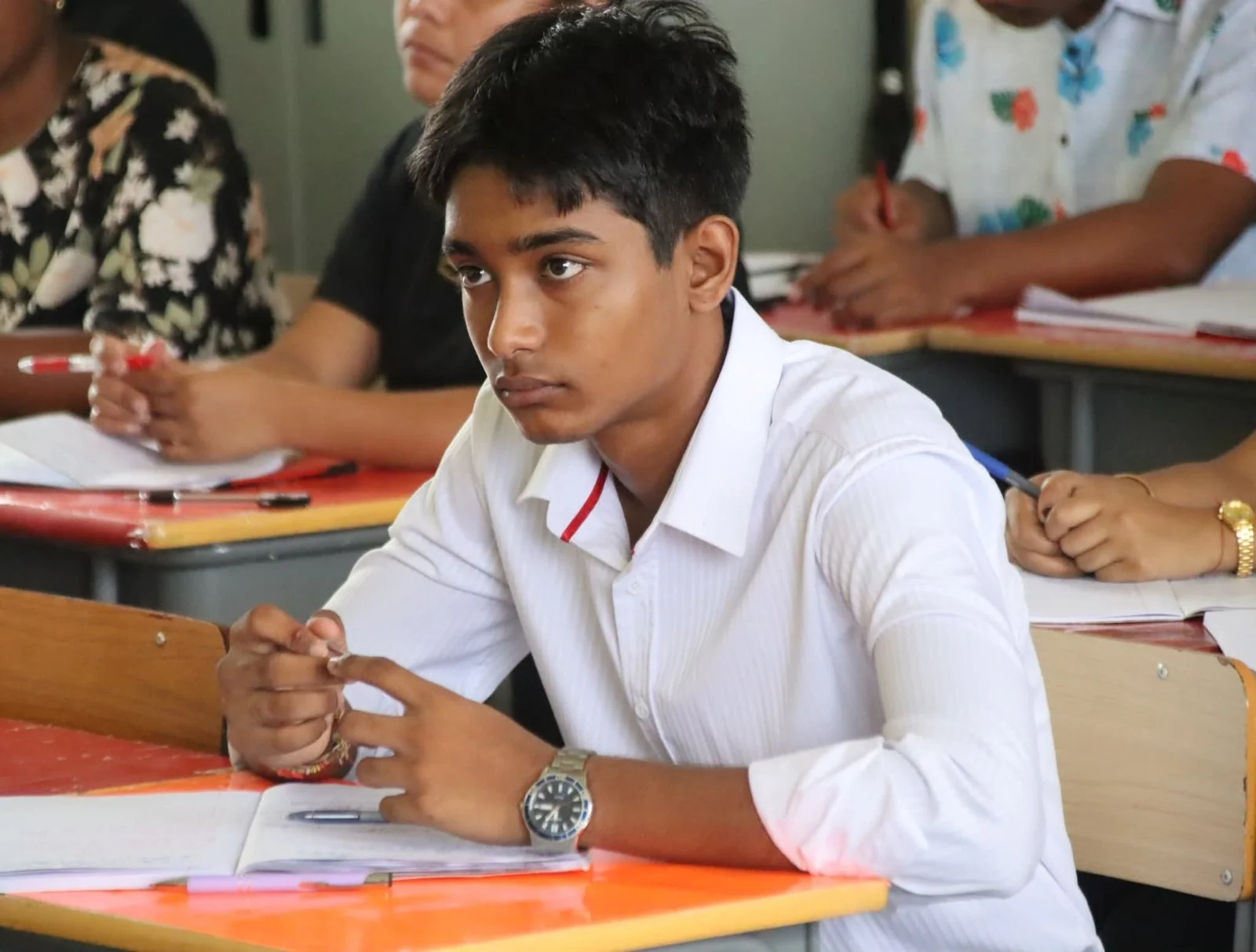
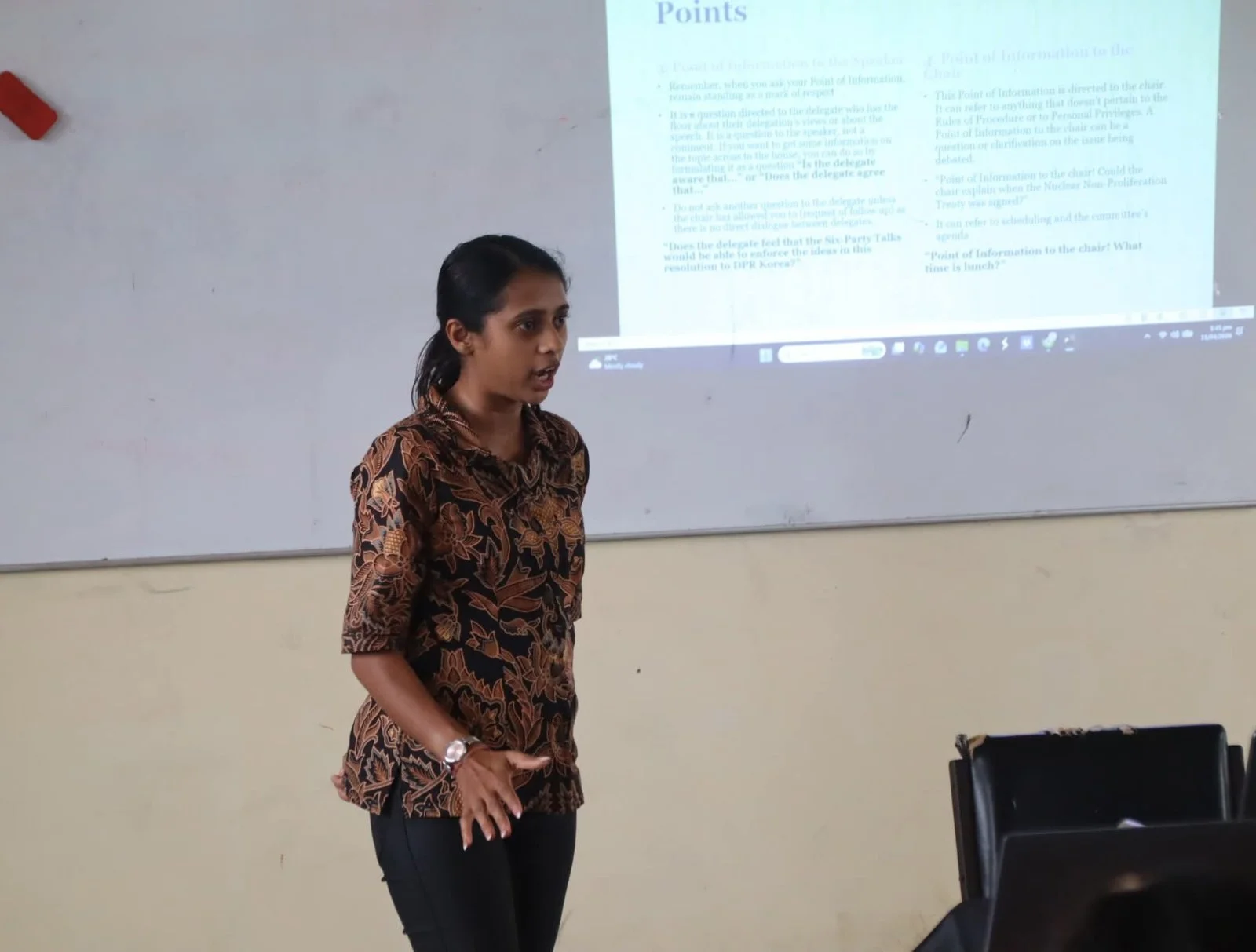
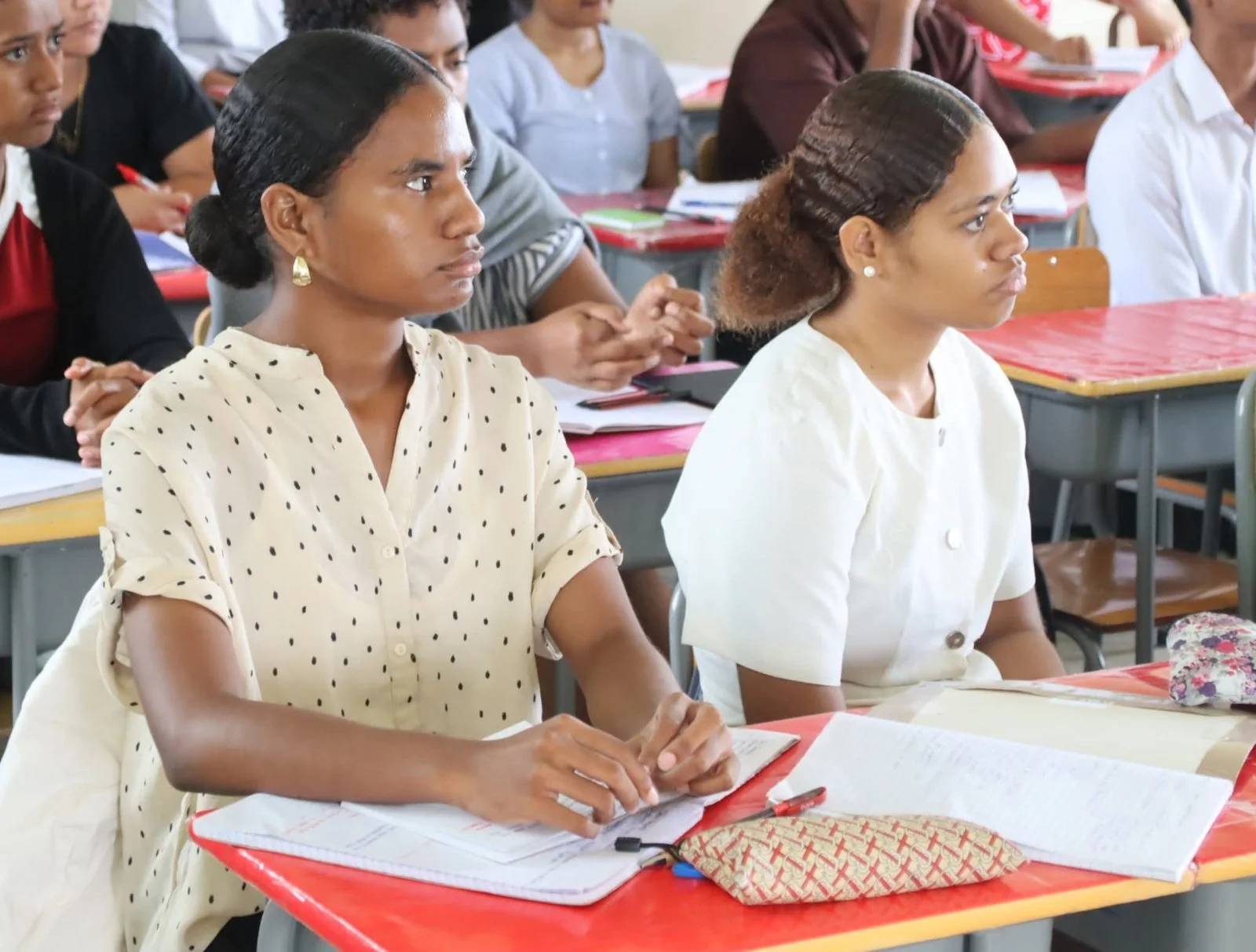
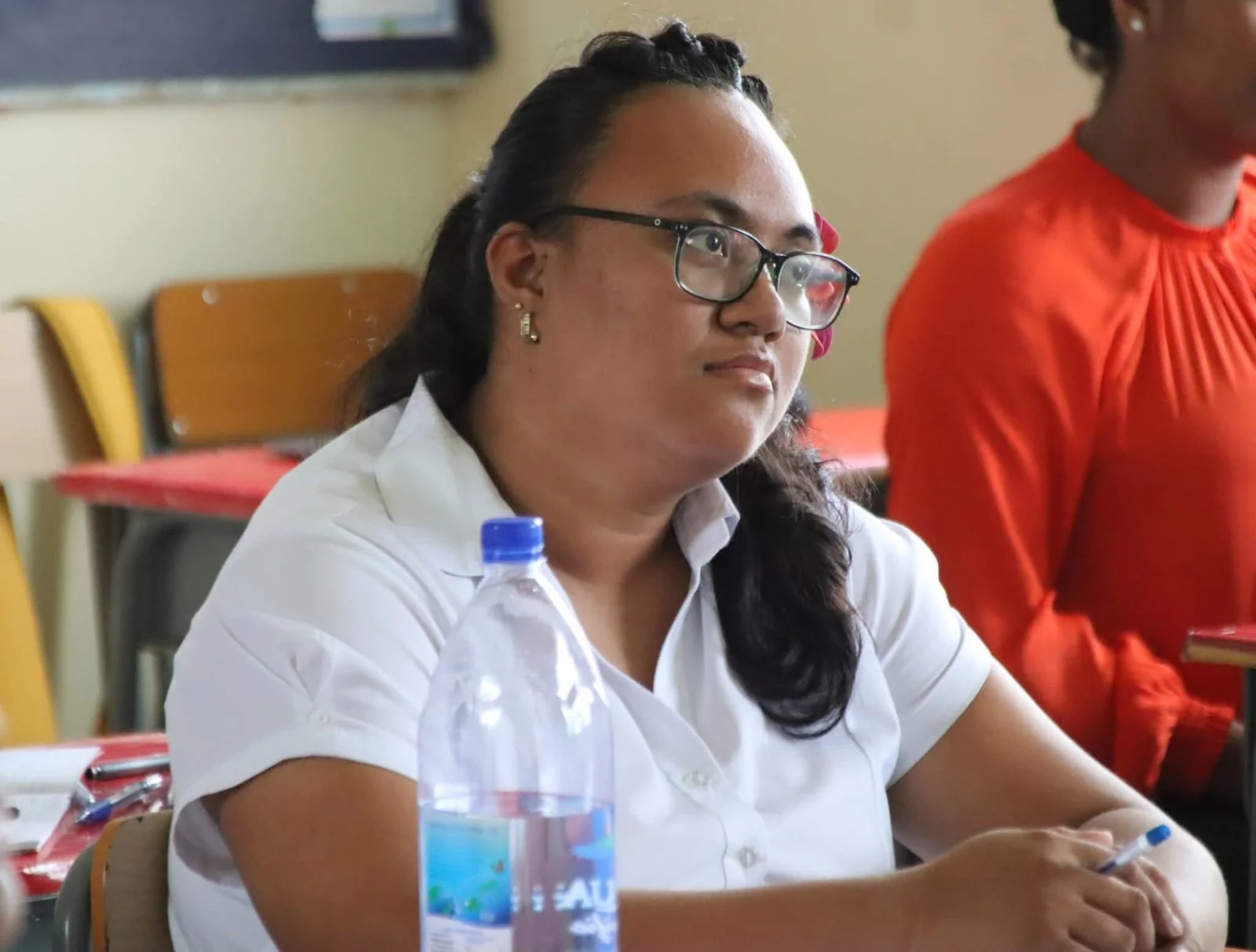
The session was facilitated by the Honourable Vice-President of the United Nations Association of Fiji, Mr. Vipin Maharaj.
The class commenced with an important and light-hearted activity recapping the five key points of Model United Nations (MUN), engagingly strengthening prior learning.
The importance of discipline in note-taking was shared, highlighting the importance of maintaining organized and detailed records throughout the programme.
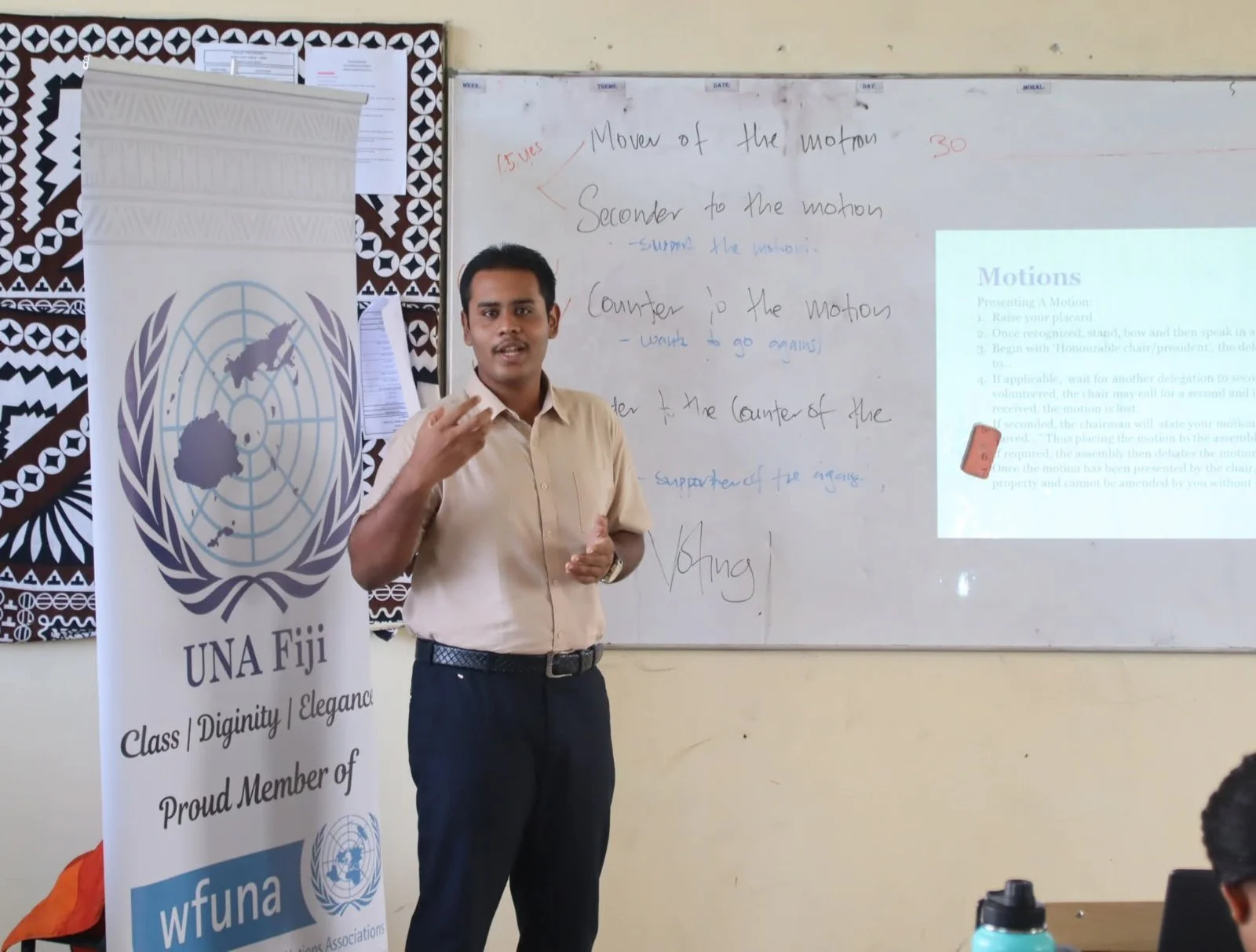
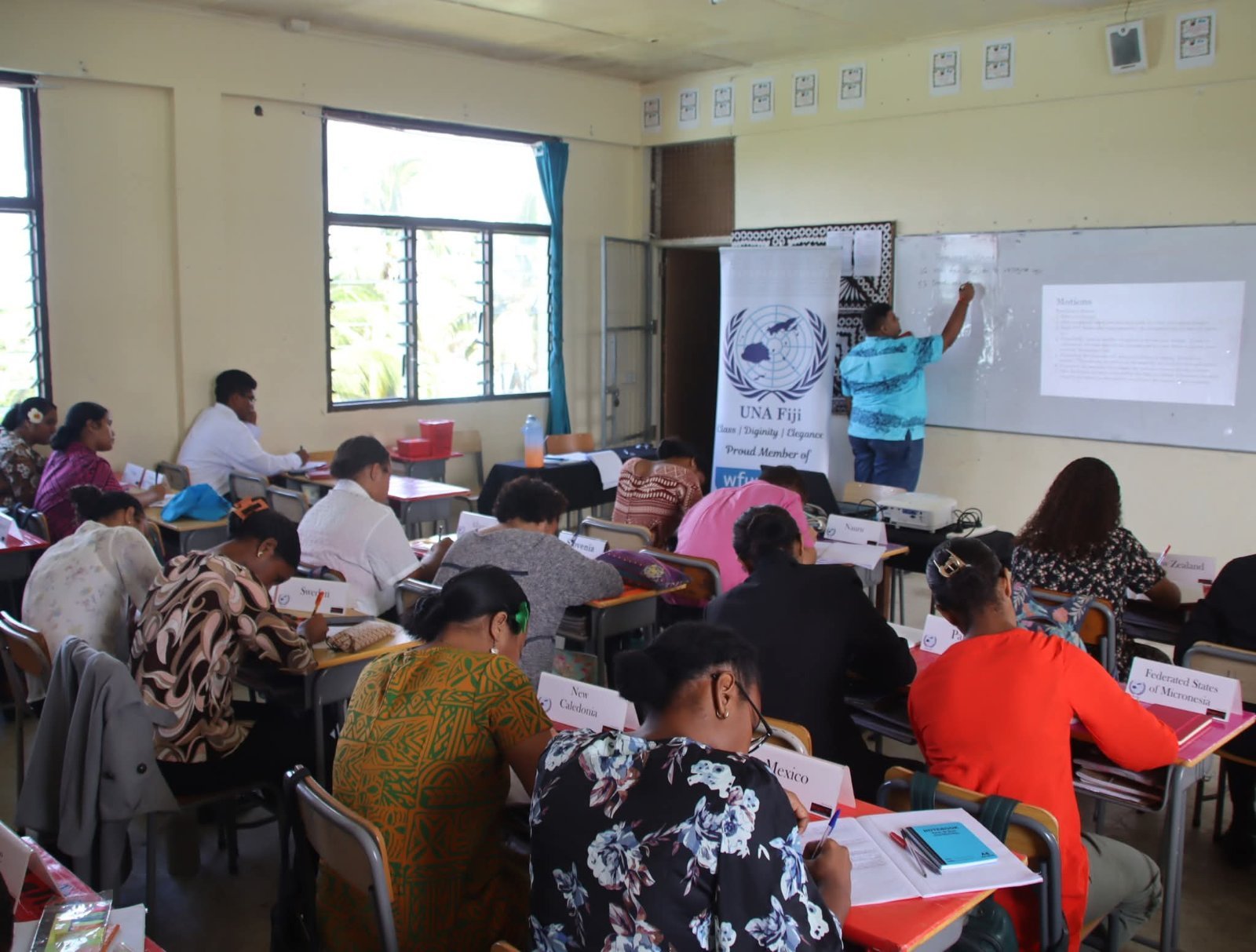
The session then transitioned into an introduction to motions, where trainees were guided on the importance of being clear, precise, and specific when addressing fellow delegates. Mr. Maharaj further introduced the Five Powers within MUN, providing trainees with a deeper understanding of their role and influence in debate.
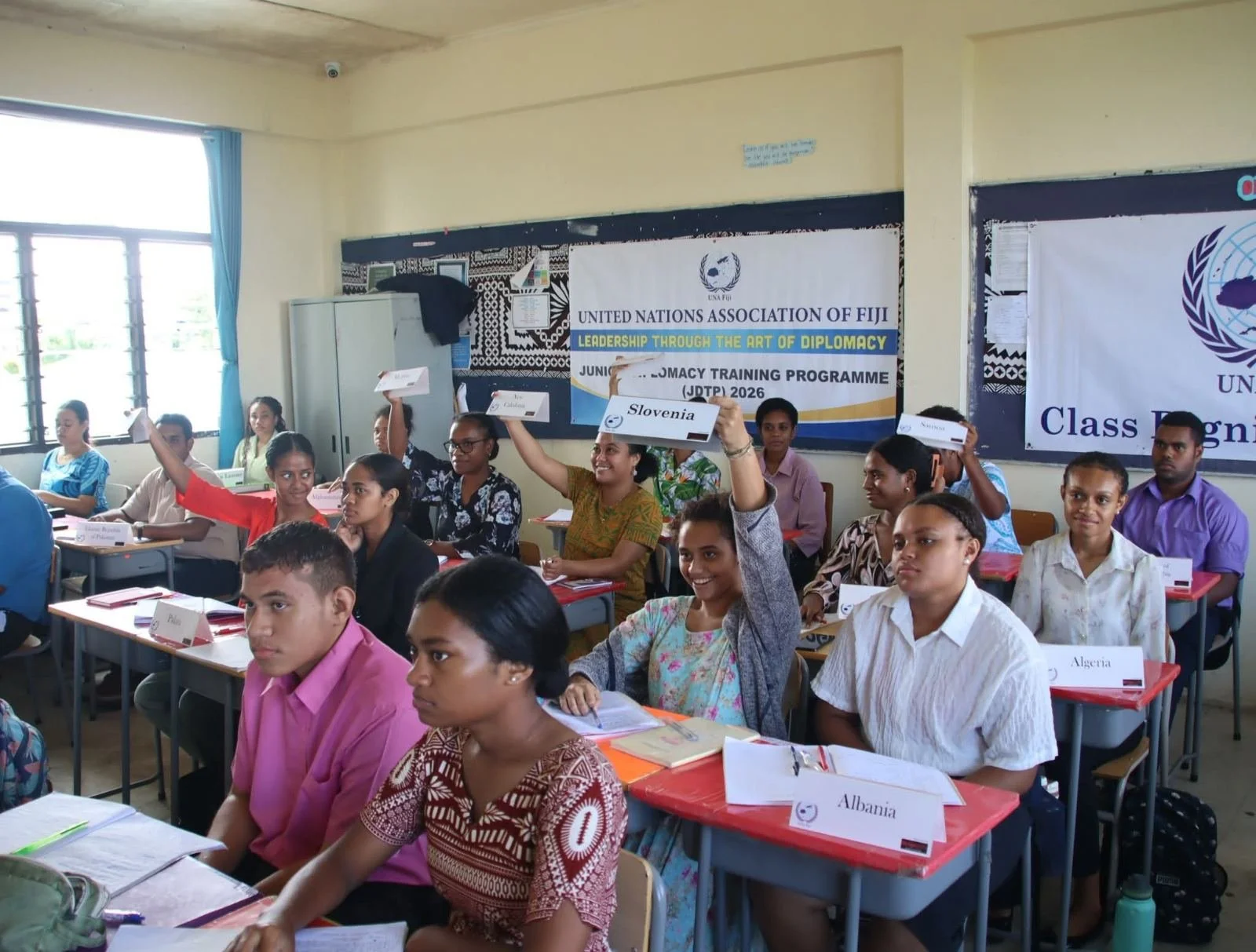
Key terms associated with motions, including “seconding,” “countering,” and the use of the gavel, were thoroughly discussed. A light-hearted “close your eyes” activity followed, testing trainees on their understanding of the procedures involved in moving motions, making the learning process both interactive and memorable.
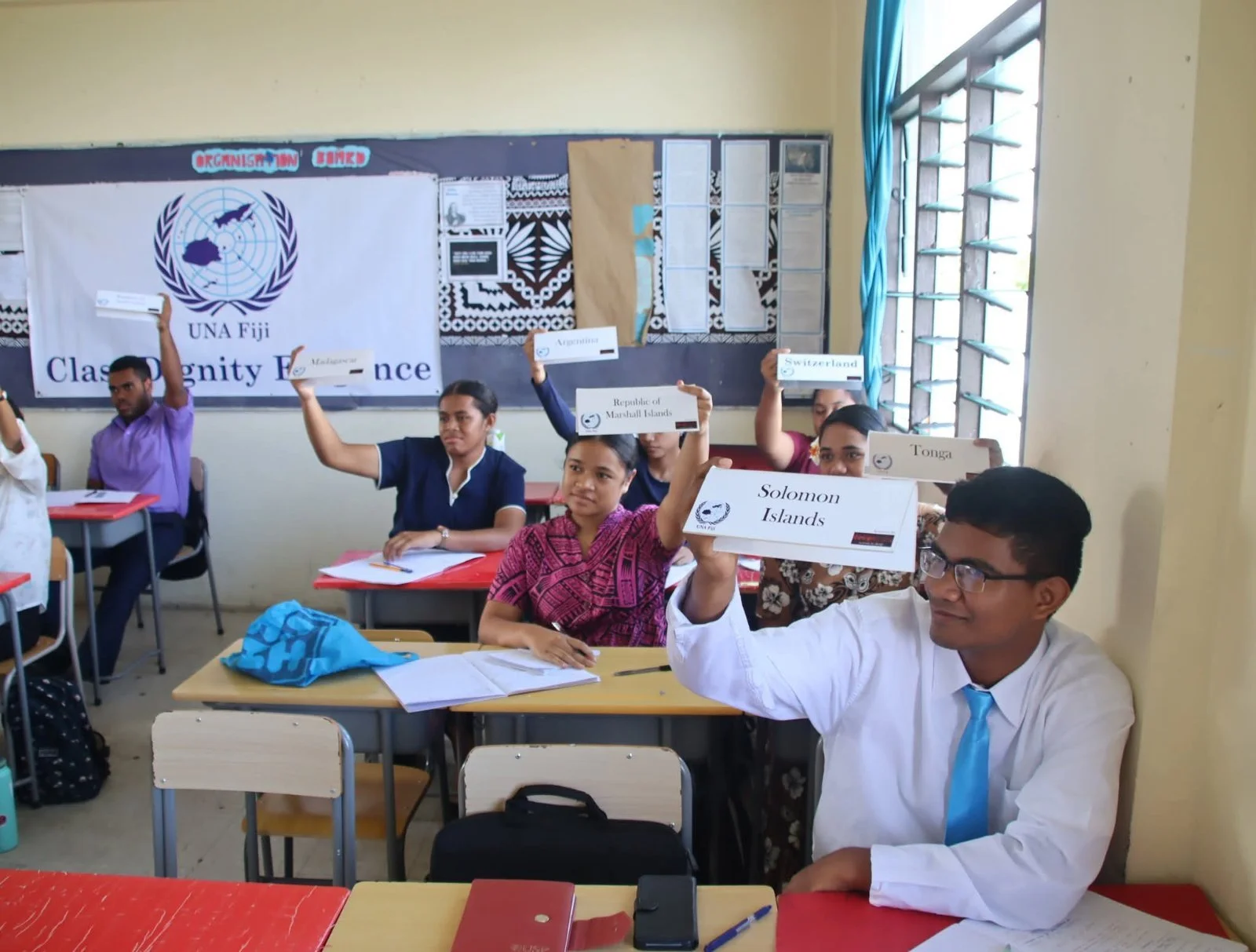
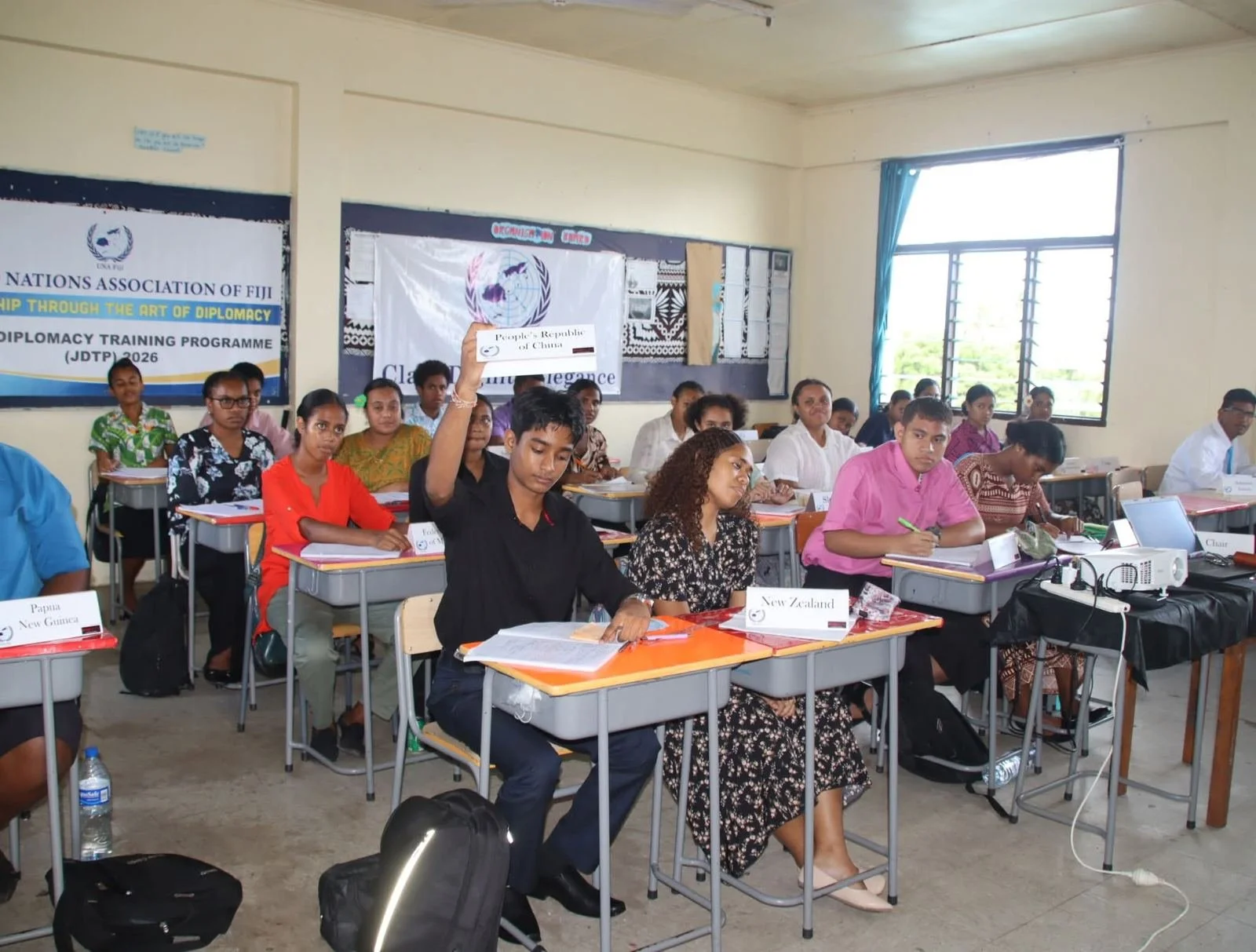
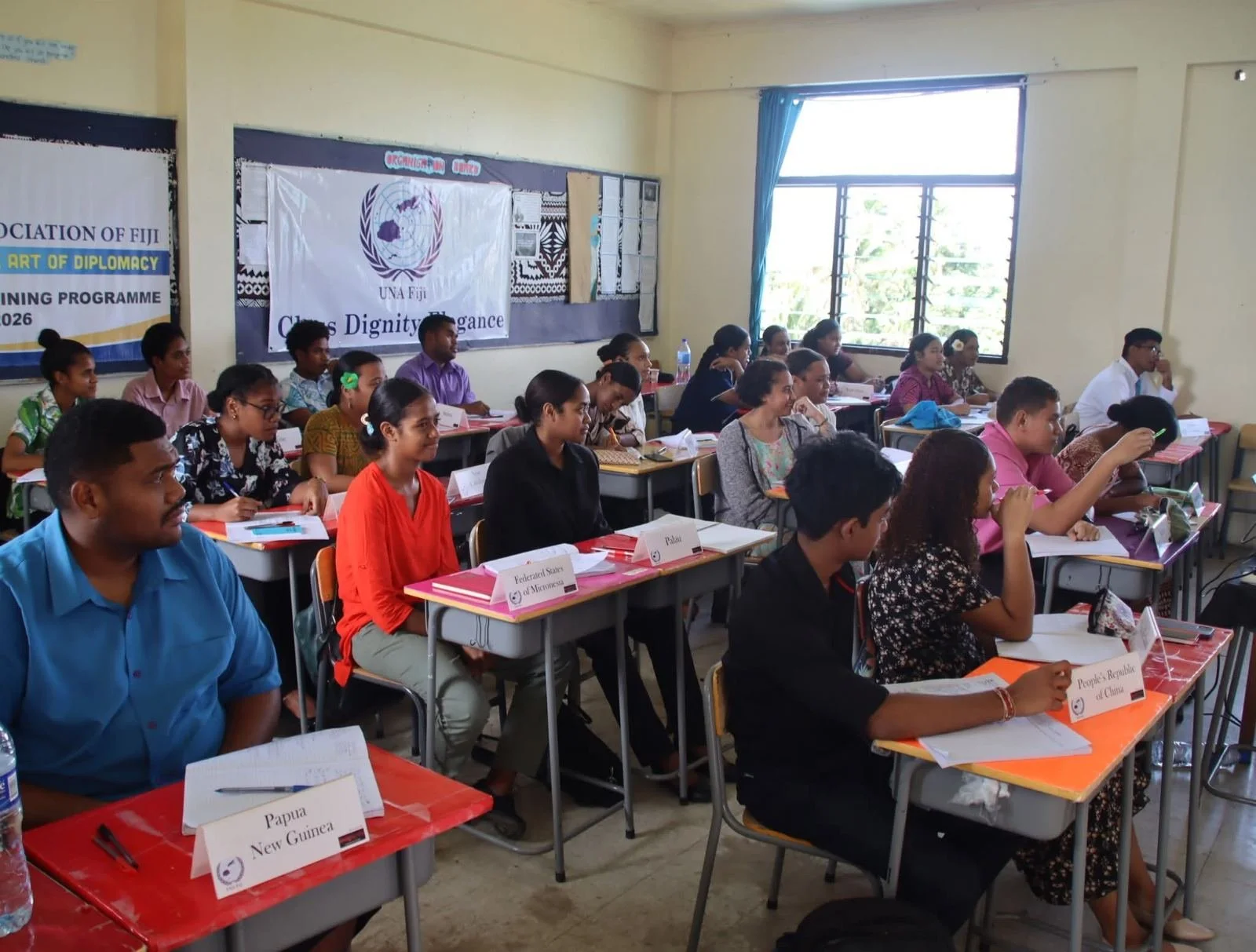
Trainees were then provided with placards to actively practice moving motions, allowing them to build confidence and familiarity with formal debate procedures. The purpose and authority of the Chairperson in a United Nations debate were also explored, alongside the distinction between open and closed debates.
Mr. Maharaj encouraged trainees to write down their motions before speaking if needed, reminding them that there is no shame in using notes. He also advised trainees to pace themselves, stay calm, and avoid rushing, as many mistakes happen when speakers move too quickly. It is important to avoid filler words and speak clearly and concisely.
Trainees engaged in discussions to clarify key differences between various motions, laying a strong foundation for their understanding. Following that, trainees continued with practical applications, attempting to move motions themselves to strengthen both structure and delivery.
Further discussions enabled trainees to differentiate between various voting procedures and understand their relevance to specific motions. The facilitators used hypothetical case studies, providing a practical context for applying motions in MUN settings.
Trainees were also encouraged not to fear making mistakes, but rather to view them as opportunities for growth and improvement. Through continuous trial and error, trainees developed a stronger grasp of the first six motions of MUN, becoming increasingly confident in their application.
The session concluded formally with a motion to adjourn, effectively bringing the session to a close.
𝐖𝐈𝐓𝐇 𝐂𝐋𝐀𝐒𝐒, 𝐃𝐈𝐆𝐍𝐈𝐓𝐘, 𝐀𝐍𝐃 𝐄𝐋𝐄𝐆𝐀𝐍𝐂𝐄